Need mobile internet without paying for calls and texts you rarely use? A data only SIM card can be a practical option for tablets, hotspots, secondary phones, and travelers who mainly need internet access on the go. Unlike a traditional SIM plan, it focuses on mobile data rather than voice and SMS services.
This blog post will explain how data only SIM cards work, pros and cons, who they are best for, and what to consider before choosing a plan.
1. What is a Data Only SIM Card?
Not every device needs a full phone plan. Tablets, mobile hotspots, routers, and secondary devices may only need cellular data, which is where a data only SIM card can be useful.
In these cases, a data only SIM card can be a better option.
Data Only SIM Card Definition
A data only SIM card is a physical SIM or eSIM connected to a mobile plan designed primarily or exclusively for cellular data. Once activated in a compatible device, such as a tablet, hotspot, router, or supported smartphone, it connects to the carrier’s cellular network for internet access.
Most true data-only plans do not include traditional cellular voice calls or SMS/MMS. However, you can still use the data connection for internet-based communication through apps such as WhatsApp, FaceTime, Messenger, or other VoIP and messaging services.
How Data Only SIM Cards Work?
A data only SIM card connects your device to a mobile network for internet access without relying on traditional voice calling or SMS services.
Once activated as a physical SIM or eSIM in a compatible phone, tablet, hotspot, or router, the service uses the carrier’s cellular network to provide mobile data according to your plan.
You can use it for browsing, streaming, navigation, video calls, and messaging apps, while data usage, speed, coverage, and validity depend on the provider and plan you choose.

2. Pros and Cons of Data Only SIM Card
Before deciding whether a data only SIM card is a good choice for you, it’s worth considering the following pros and cons:
| Pros | Cons |
| – Potentially lower cost: Some data-only plans can be affordable if you only need a limited amount of mobile data, although pricing depends heavily on the data allowance, provider, and plan duration. – Flexible plan options: Choose from prepaid, pay-as-you-go, short-term, or subscription plans depending on your needs. – Supports many connected devices: Depending on the provider and plan, data-only service may be available for tablets, hotspots, routers, laptops, cameras, and other connected devices. Always check whether the plan supports your specific device type before buying. – Simple and convenient: Provides dedicated cellular internet for compatible devices without requiring a traditional phone plan with calling and texting features. – Useful for travel: International or regional data-only SIMs and eSIMs can provide internet access abroad without relying entirely on public Wi-Fi, as long as the plan covers your destination. | – No traditional calls or SMS: Most data only SIM plans do not include standard voice calling or text messaging. – App dependence: Calls and messages may require internet-based apps such as WhatsApp, Messenger, or FaceTime. – Calling and verification limitations: A data-only plan may not provide a regular phone number, standard cellular calling, or SMS verification. Do not assume internet-based calling is a substitute for conventional emergency calling; available emergency features depend on the device, network, and location. – Data limits: Some prepaid plans may have fixed allowances, and extra data can increase the overall cost. – Coverage varies: Performance depends on the provider’s network and your location. |
3. Who Should Use a Data Only SIM Card?
A data only SIM card is best suited for users who mainly need mobile internet rather than traditional calls or SMS. These are some of the most typical use cases.
- Travelers: Useful for maps, messaging apps, browsing, and travel services while abroad.
- Digital nomads and remote workers: Provides mobile internet for email, video calls, cloud tools, and working on the go.
- Tablet and hotspot users: Ideal for devices that need cellular data but do not require a regular phone plan.
- Content creators: Helpful for uploading photos, videos, livestreams, and social media content away from Wi-Fi.
- Families and groups: A data-only SIM in a compatible mobile hotspot can provide internet access to several devices, subject to the plan’s hotspot and device-connection limits.
- IoT and smart device users: Suitable for connected devices such as trackers, routers, cameras, and other equipment that primarily use mobile data.
>>>Read more: How Much Does A SIM Card Cost? Stay Connected With Affordable Offers
4. Factors to Consider Before Choosing a Data Only SIM Card
When buying a data only SIM card, your main considerations should be your device, data SIM plan, duration, and connectivity.
Check out this comprehensive buying guide:
Your Device
Your data needs depend more on what you do than on the device itself. Basic browsing and email use relatively little data, while HD video streaming, large downloads, cloud backups, video calls, and hotspot use can consume much more.
For portable Wi-Fi devices, consider how many devices you’ll be connecting to at once. Since smaller gadgets that only need to send simple information don’t need much data, you may choose a lower plan with less data.
Data Plan
Select a plan that provides enough data for your online activities.
While email and basic web browsing require minimal data, video content consumption is significantly higher.
For the best result, compare various plans to determine which provides the most value for your investment.
Duration
A prepaid plan is an option if you require internet service for a short period, such as during a trip.
Additionally, you don’t need to sign a long-term contract. Instead of a multi-month plan, it may be advantageous to opt for a one-month data SIM plan.
On the other hand, look for plans that offer more data per month and a longer duration for devices that are frequently used. For international travel, confirm that the plan covers every destination on your trip and that your unlocked device supports the networks used there.
Connectivity
If 5G matters to you, check whether the plan and device support the carrier’s 5G network. Having a data-only SIM does not automatically guarantee 5G access, and actual availability depends on the provider, device compatibility, network coverage, and location.
Some providers include 5G access at no extra charge on eligible plans, while others may apply different plan requirements. Compare coverage, speed policies, and pricing rather than choosing a plan based on 5G alone.
Hotspot and Tethering
If you plan to share the connection with a laptop or other devices, confirm that the plan allows hotspot or tethering use. Some providers include it with the main data allowance, while others set separate hotspot limits or reduce speeds after a certain amount of usage.
5. Want a Low-Cost Mobile Service? Explore a Great Alternative
If you are looking for a more affordable way to stay connected, the federal Lifeline program, which is a govenrment assistance program, may help reduce the cost of monthly phone service.
Eligible consumers can receive a monthly discount on qualifying phone or internet service, and participating providers such as Cintex Wireless apply that benefit through their own Lifeline plans.
Eligibility is base on your household income or your participation in qualifying programs like SNAP, SSI, Medicaid, etc.
In particular, Cintex is merging with AirTalk Wireless to ensure a smooth application process. Depending on your state, eligibility, and current offer, AirTalk may provide benefits such as:
- A free or discounted smartphone from popular brands
- Unlimited talk and text
- Monthly mobile data, with allowances varying by plan and location
- Free international calling to more than 200 countries and territories
- Dedicated customer support
- No contract, no activation fee, no credit check
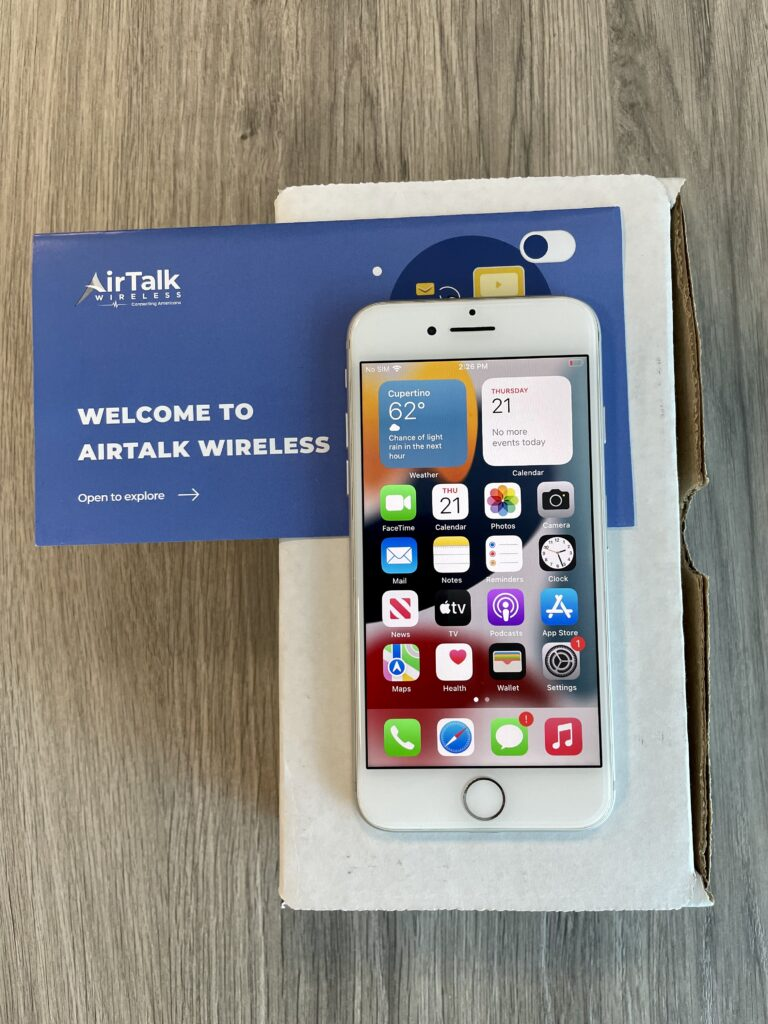
IMPORTANT: The government does not subsidize devices. Lifeline programs cover basic service costs only. Free or discounted devices, upgrade plans, or top-ups are exclusive benefits provided by Cintex and AirTalk Wireless as part of the promotional offers. Terms and conditions apply. Limited-time promotion—offers vary by state, stock availability, and eligibility.
Conclusion
To conclude, a data only SIM card is a flexible choice for anyone who mainly needs mobile internet without traditional calling or texting features. It can be especially useful for tablets, hotspots, secondary devices, and travel. Before choosing a plan, compare coverage, data allowance, validity, hotspot support, and total cost to make sure it fits your needs.