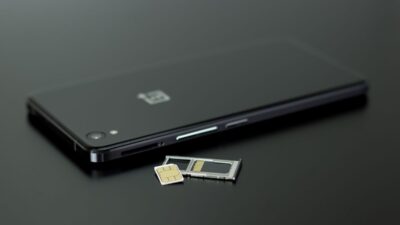
Staying connected yet saving money is crucial when traveling or working overseas. However, many people struggle to get a suitable SIM card while traveling abroad.
Fortunately, a prepaid international SIM card can provide mobile access in one or more destinations without requiring a long-term contract. Some plans connect you directly through a local carrier, while global travel SIMs often use roaming agreements with partner networks.
By comparison, roaming with your home carrier usually lets you keep your existing SIM and phone number, although the rates and included services depend on your plan. This guide describes how a prepaid international SIM card works and where to obtain one.
1. How Does a Prepaid International SIM Card Work?
A prepaid international SIM card is a mobile subscription designed to provide service in one or more countries or regions.
Depending on the provider, it may connect you directly to a local carrier in your destination or use pre-established roaming agreements to access partner networks across several countries.
Also, since it is a prepaid SIM card, you pay for mobile internet, calls, or texts in advance. This makes travel expenses easier to control without requiring a long-term contract or credit check, although automatic renewals, top-ups, or additional usage charges may apply depending on the plan.
International SIM cards are normally available in two types:
- Country-specific SIMs, which are primarily intended for one destination. Some may also work in other countries through international roaming, but additional rates or packages can apply.
- Global or multi-country SIM cards, which are intended for visitors traveling to several destinations during one journey. These plans often include a fixed amount of data for supported countries. Calls, text messages, or a local phone number may not be included because many worldwide travel plans are data-only.
2. What Are the Benefits of a Prepaid International SIM Card?
A prepaid international SIM card offers several advantages for travelers who want reliable mobile service without the commitment of a long-term contract.

- Affordability: A prepaid international SIM card can help you avoid expensive international roaming fees. You pay upfront for the service you need, making it easier to manage your travel budget.
- Immediate Local Connectivity: Once activated, you can access local mobile networks as soon as you arrive at your destination. This makes it easier to use maps, book transportation, contact accommodation, and stay in touch without having to search for WiFi.
- Flexibility: Choose a plan based on your destination, trip length, and data needs. When your plan expires, you can simply top up, switch to a different package, or change providers without being locked into a contract.
- Control and Predictability: Because you pay in advance, it is generally easier to limit your mobile spending and avoid unexpected charges from your home carrier. However, check whether the plan renews automatically, charges for additional usage, or requires another top-up after the allowance expires.
>>>Read more: Pay As You Go eSIM: Flexible Service Without Contracts
3. How to Select the Best Prepaid International SIM Card? Factors to Consider
Before choosing a prepaid international SIM card, there are several factors to consider:
- Consider your itinerary: Do you need an international roaming SIM for one or more destinations? This allows you to pick between a country-specific roaming package and one that includes roaming in many countries.
- Travel duration: It is vital to consider a roaming package based on the number of days you plan to travel.
- Your specific requirements: Evaluate your requirements depending on the number of outgoing/incoming calls you may make with your prepaid international SIM card, as well as the amount of data you may need when traveling internationally.
- eSIM, physical SIM, and unlocked phones check: Make sure your device and SIM type are compatible with the service you want to use by checking whether it is unlocked and whether it supports a physical SIM or dual SIM.
In addition to these factors, you should also check the coverage at your destination, data allowance and speed, whether the plan includes calls and texts or data only, and whether hotspot is supported.
Moreover, review the plan validity, top-up options, activation timing, customer support, whether you need to keep your home number active, and any fair usage limits on unlimited data.
4. Physical SIM vs. eSIM for International Travel
Both traditional SIM cards and eSIMs can help you stay connected overseas, but the price depends on the provider, destination, coverage, and plan rather than the SIM format itself.
However, each has advantages and disadvantages when it comes to international travel.
| Physical SIM card | eSIM | |
| Pros | – Works with most phones, including older models. – Easy to move between compatible devices by swapping the SIM card. – Widely supported by carriers around the world. | – Instant digital activation. – No need to remove or swap a physical SIM card. – Ideal for Dual SIM use. – Easy to switch carriers or plans without changing hardware. |
| Cons | – Need to remove and replace when changing carriers or travel plans. – Easy to be misplaced or damaged during travel. | – Requires an eSIM-compatible device and a carrier that supports eSIM. – Limited eSIM support in some countries. – Carrier-locked phones may prevent you from activating eSIMs from other providers. |
5. How to Get a Prepaid International SIM Card?
Purchasing a prepaid international SIM card is simple. You can easily find them at the airport or order one online and have it delivered to your address.
Buy Online
Buying a prepaid international SIM card online is often the most convenient option.
You can compare plans, prices, data allowances, and coverage before your trip, then have the SIM card delivered to your home or choose an eSIM for instant digital activation.
This may allow you to install or prepare the plan before traveling and connect shortly after arrival, provided the SIM has been activated and the destination is covered.
Buy at the Airport
Many international airports have kiosks or carrier stores that sell prepaid SIM cards to travelers. This is a convenient option if you didn’t purchase a SIM before your trip or need help with activation.
However, airport SIM cards may cost more than those purchased online or from local retailers, and the available plans may be more limited.
Conclusion
Staying connected abroad should make travel easier, not create another source of stress. A prepaid international SIM card can give you more control over your mobile costs and help you access service across supported destinations without relying entirely on your home carrier’s roaming plan.
Before choosing one, take a moment to compare coverage, data limits, validity, calling features, and renewal terms. The right plan is not simply the cheapest option, but the one that fits your route, trip length, and the way you expect to use your phone while away.