
Do you know that Medicaid coverage does not automatically continue? Changes in income, household circumstances, eligibility status, or even missing paperwork can lead to termination.
Understanding the main reasons for Medicaid cancellation can help you respond before a problem turns into a gap in healthcare coverage. Some cancellations reflect a real loss of eligibility, while others may be corrected by submitting information or challenging an incorrect decision.
1. Top Reasons for Medicaid Cancellation
So, what can cause you to lose Medicaid? The exact rules depend on your state and eligibility category, but these are some of the most common reasons.
Income Rises Above the Eligibility Limit
A higher income can affect future eligibility, although some beneficiaries have continuous-eligibility protections that prevent immediate termination during a protected coverage period.
Income standards differ by state and by groups such as adults, children, pregnant individuals, seniors, and people with disabilities.
Household or Family Circumstances Change
Marriage, divorce, the end of a pregnancy, a dependent leaving the household, or another family change can affect household size and the eligibility calculation.
A change does not automatically mean Medicaid will end, but the state may need to redetermine whether you still qualify under the same category or another.
Moving Permanently to Another State
One of the main reasons for Medicaid cancellation is that you have moved permanently to another state.
This program is administered by individual states, so coverage generally does not transfer automatically when you establish permanent residence elsewhere.
A person moving out of state may need to close the old case and apply for Medicaid in the new state.
Missing the Medicaid Renewal
Medicaid eligibility is periodically renewed.
If the state cannot renew your coverage automatically, it may send a renewal form or request information. Failing to respond can lead to procedural termination, but the state must follow applicable notice and renewal rules before ending coverage.
The Centers for Medicare & Medicaid Services (CMS) requires states to follow renewal procedures before ending coverage.

Failing to Submit Requested Documents
A Medicaid agency may ask for proof of income, residence, household information, immigration status, assets, or another eligibility factor.
If the requested evidence is not supplied within the allowed period, the agency may be unable to confirm eligibility and can close the case.
Not Responding to a Change-in-Circumstances Request
States may review eligibility when they receive information suggesting that circumstances have changed.
If the agency requests clarification and does not receive it, coverage may be affected, subject to the enrollee’s eligibility category and applicable continuous-coverage rules.
No Longer Meeting a Specific Eligibility Category
Some people qualify because they belong to a particular Medicaid group, such as pregnancy-related coverage or another state-defined category.
When the circumstances supporting that category end, the state may reassess eligibility.
When someone no longer qualifies under one Medicaid category, the state generally must evaluate whether they remain eligible under another applicable Medicaid pathway before terminating coverage.
Note: Pregnancy-related Medicaid does not necessarily end when the pregnancy ends. Many states provide 12 months of postpartum coverage, so check your state’s current rule before assuming eligibility has ended.
Long-term-care Asset or Transfer Rules
Medicaid long-term care programs may impose separate income, resource, and asset-transfer requirements.
Giving away or transferring assets for less than fair market value during an applicable look-back period can create a penalty or delay long-term care eligibility.
These rules are complex and should not be confused with the eligibility rules for every Medicaid enrollee.
Administrative or Data-matching Errors
This is also among the most common reasons for Medicaid cancellation.
Coverage can occasionally be affected by incorrect records, lost paperwork, system problems, or mismatched data.
Administrative mistakes are one reason it is important to read every termination notice carefully rather than assuming the decision is correct.
Failure to Meet State-Specific Program Requirements
States operate Medicaid within federal requirements but still have their own eligibility procedures and program rules.
Income limits, reporting procedures, renewal timelines, and optional Medicaid groups can differ by state.
For this reason, always use your state Medicaid agency as the final source for your specific case to see the reasons for Medicaid cancellation.
>>>Read more: How To Find Optometrist That Accept Medicaid In 2026? Updated Guide
2. What Happens If Medicaid Is Canceled?
When Medicaid determines that your coverage will end, the state generally sends a notice explaining the decision, effective date, and available hearing or appeal rights.
CMS guidance requires advance notice and fair-hearing protections in covered termination situations.
After coverage ends, Medicaid will normally stop paying for services received outside any applicable coverage period.
Therefore, prescriptions, appointments, treatments, and other care may require another form of insurance or payment.
Losing Medicaid can also open another insurance option.
HealthCare.gov states that people who lose Medicaid may qualify for a Marketplace Special Enrollment Period, including a window of up to 90 days after Medicaid coverage ends.
3. What to Do if Your Medicaid Gets Cancelled?
Now you know top reasons for Medicaid cancellation. If you are asking what to do if your Medicaid gets canceled, start with the termination notice. The reason listed there determines which response makes the most sense.
Then, take the following actions:
Contact Your Medicaid Office
Call your state Medicaid agency or the number on the notice and ask why coverage ended, what date the decision takes effect, and whether any information is missing.
A simple documentation or processing issue may be easier to resolve once the exact problem is identified.
Ask Whether the Case Can Be Reopened or Corrected
If coverage ended because of missing information or an administrative mistake, ask whether the case can be corrected or reopened after you provide the required evidence.
Procedures and deadlines differ by state, so act promptly after receiving the notice.
Reapply
A new application may be appropriate if the old case cannot be reopened, but you currently meet Medicaid requirements.
Reapplying can also help when your circumstances have changed again after the original termination.
Appeal the Decision
If you believe the Medicaid agency made an incorrect eligibility decision, review the notice for instructions on requesting a fair hearing.
Federal Medicaid rules provide hearing rights when applicants or beneficiaries disagree with certain agency actions.
Explore Medicare Coverage Options
People who are eligible for Medicare can review whether Medicare can cover some of their healthcare needs after Medicaid ends.
Some beneficiaries qualify for both programs, but Medicare and Medicaid have different eligibility rules and benefits, so losing one does not automatically determine eligibility for the other.
>>>Read more: Medicare And Medicaid For Dummies: Top 5+ Key Differences
4. How Long Does It Take To Get Medicaid Reinstated After Cancellation?
There is no single nationwide reinstatement timeline. The timing depends on your state and on whether the case can be corrected, reopened after a missed renewal, requires a new application, or involves an appeal.
Cases involving a simple renewal or missing paperwork may be resolved sooner, whereas a new application, an eligibility review, or an appeal can take longer.
To avoid any unwanted delay, you should contact your state Medicaid office promptly, and submitting complete information can help avoid additional delays.
5. Don’t Let Medicaid Cancellation Affect Other Benefits
Do you know that Medicaid participation can qualify a household for Lifeline benefits?
It is a federal program that lowers the monthly cost of eligible phone service or internet service. Medicaid is specifically listed as a qualifying government assistance program.
If your Medicaid coverage is cancelled, do not automatically assume that Lifeline must end as well.
You may still qualify through income or another eligible program. Current Lifeline rules allow qualification through programs such as SNAP, SSI, Medicaid, and certain Tribal programs, or through the applicable income standard.
Please note that Lifeline benefits are non-transferable and are offered through an Eligible Telecommunications Carrier like Cintex Wireless, which is merging with AirTalk Wireless.
Depending on the state, eligibility, and current promotions, AirTalk may offer Lifeline-supported service along with promotional devices that include free talk and text, etc.
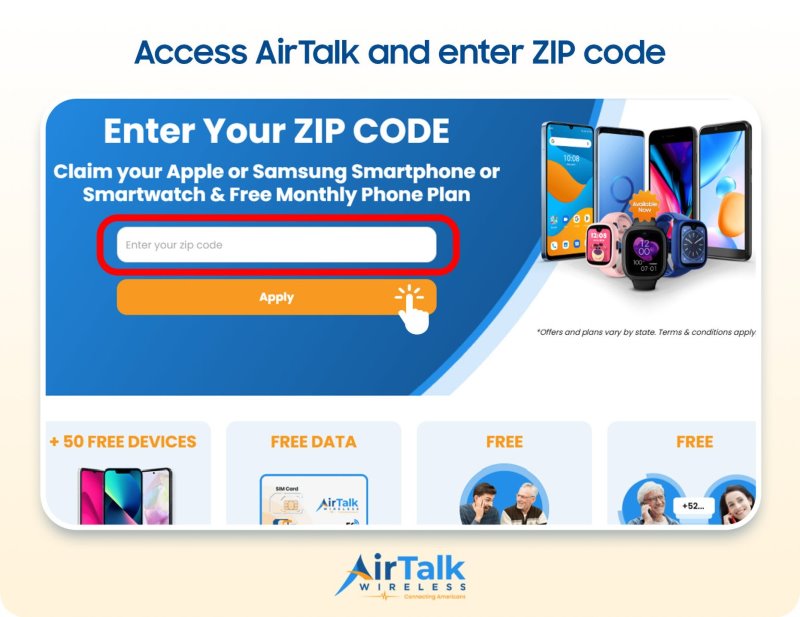
DISCLAIMER: The government does not cover device costs, only basic service through Lifeline. Any free or discounted devices, upgrades, or top-ups are limited-time Cintex Wireless offers and may vary by state, eligibility, and availability. Terms and conditions apply.
Conclusion
The reasons for Medicaid cancellation can range from income changes and missed renewals to missing documents or administrative errors.
Understanding them means you know how to avoid Medicaid cancellation, keep your information up to date, respond to Medicaid requests on time, and complete each renewal carefully.
If coverage ends, review the notice quickly so you can correct the issue, reapply, or appeal when appropriate.