Caring for a family member can take hours each day, making compensation an important question. How much does Medicaid pay family caregivers in New York? The answer depends on the care program, the recipient’s location, and the hours approved for assistance.
This guide explains current CDPAP base rates, which relatives may qualify, how to estimate earnings, and the steps to take before providing paid care.
1. How Much Does Medicaid Pay Family Caregivers in New York?
To understand how much Medicaid pays family caregivers in New York, start with CDPAP rather than looking for one statewide Medicaid caregiver rate.
New York Medicaid does not pay every family caregiver the same hourly amount. If a family member is hired as a CDPAP personal assistant, earnings depend on the care recipient’s location, the wage offered for the position, authorized hours, and applicable payroll rules.
As of January 1, 2026, PPL lists these minimum base wage rates for CDPAP personal assistants: $20.65 per hour for consumers living in Bronx, Kings, New York, Queens, or Richmond County; $20.05 in Nassau, Suffolk, or Westchester County; and $18.65 in all other New York counties.
Public Partnerships LLC (PPL), New York’s statewide CDPAP fiscal intermediary, lists these minimum base hourly rates effective January 1, 2026:
| Where the care recipient lives | Minimum base hourly rate |
| Bronx, Kings, New York, Queens, or Richmond County | $20.65 |
| Nassau, Suffolk, or Westchester County | $20.05 |
| Any other New York county | $18.65 |
These are minimum base wage rates, not guaranteed monthly earnings. Your actual gross pay depends on the wage listed in your offer, the number of authorized hours you work, applicable overtime and wage rules, and payroll deductions.
PPL provides the personal assistant’s wage information as part of the employment process, so confirm your individual rate and the care recipient’s authorization before estimating your income.
2. Which New York Medicaid Programs Pay Family Caregivers?
When researching how much does Medicaid pay family caregivers in New York, first identify the care program: receiving Medicaid home care does not automatically mean a relative can be hired. Check who authorizes the services and whether the program allows the care recipient to select a family member.
Consumer Directed Personal Assistance Program
CDPAP is the main New York Medicaid route for an eligible person to choose and direct their own personal assistant, who may be a qualifying relative. The care recipient, or an eligible designated representative acting on their behalf, manages the assistant’s work.
PPL handles statewide fiscal intermediary functions, including wage processing. The New York State Department of Health’s CDPAP information is a useful starting point for current program guidance.
Medicaid Managed Long-Term Care Plans
A Managed Long-Term Care (MLTC) plan may arrange and authorize services for an enrolled member, including CDPAP when appropriate. MLTC is not a separate caregiver wage on top of CDPAP pay.
Ask the plan whether consumer-directed assistance is available, how an assessment is arranged, and who will issue the service authorization. Under the current statewide CDPAP structure, enrolling through a different PPL facilitator does not change PPL’s pay and benefits structure.
Other Home and Community-Based Services
Other Medicaid home and community-based services may help a person remain at home, but their staffing and payment rules can differ. Some services use agency employees or have restrictions on hiring relatives.
Before assuming you can be paid, ask the plan or local social services district to identify the specific service, its family-caregiver rules, and the organization responsible for payroll.
3. What Determines a Family Caregiver’s Pay in New York?
To estimate how much does Medicaid pay family caregivers in New York each month, you need two factors: your local base rate and approved care hours.
- Location & Rate: PPL sets the base hourly rate according to where the care recipient lives (e.g., $20.65 in NYC vs. $18.65 in upstate NY). Always review your personal assistant offer letter to verify your exact rate.
- Authorized Hours: The care plan determines how many CDPAP hours are authorized. Your earnings depend on the hours you are permitted to work and actually record. Overtime and other wage rules may apply depending on the hours worked and your circumstances, so don’t assume that every additional hour is automatically paid at 1.5 times the base rate.
- Pay Calculation Example: Multiply your base rate by weekly authorized hours, then multiply by 4.33. At $18.65/hour for 20 weekly hours, gross monthly pay is roughly $1,615 before taxes and deductions.
>>> Read More: How To Get Free Braces With Medicaid: What You Should Know 2026?
4. Who Can Become a Paid Family Caregiver in New York?
Before asking how much Medicaid pays family caregivers in New York, confirm that the care recipient qualifies for CDPAP and has an approved care plan.
For people age 21 and older subject to the current Minimum Needs Requirements, this generally means needing at least limited assistance with physical maneuvering with more than two activities of daily living (ADLs).
For someone with Alzheimer’s disease or dementia, the alternative standard is supervision with more than one ADL.
Certain people with qualifying pre-September 2025 authorization may have Legacy Status under the previous criteria.
Can an Adult Child or Sibling Be Paid?
Potentially, yes. An adult child, sibling, or another eligible adult relative can serve as a CDPAP personal assistant if the recipient qualifies and the relative completes the required enrollment and employment steps.
Can a Parent Care for an Adult Child?
Yes. A parent may serve as a CDPAP personal assistant for an adult child age 21 or older when the other requirements are met. A parent cannot serve as the CDPAP assistant for a child under 21.
When Are Spouses and Other Relatives Restricted?
A spouse or designated representative cannot serve as the recipient’s CDPAP personal assistant. Other eligible relatives may be allowed to provide paid care if they meet the program’s requirements.
5. How to Become a Paid Family Caregiver in New York?
If you’re trying to determine how much you could earn as a family caregiver in New York, the first step is confirming that the care recipient qualifies for CDPAP and has authorized hours. You cannot simply begin providing care and submit those hours for Medicaid payment later.
- Request a Community Health Assessment: Ensure the care recipient has active Medicaid, then contact their health plan or local district to request an assessment for CDPAP eligibility.
- Complete PPL Onboarding: Once CDPAP is authorized, the recipient selects you as their personal assistant. Complete registration with PPL (the statewide fiscal intermediary), including tax forms and EVV setup.
- Log Approved Hours: Work only authorized hours and submit timesheets electronically via required verification tools. If care needs increase, request a formal reassessment before working additional hours.
6. Keep Caregiving Responsibilities and Medicaid Updates Within Reach
As a caregiver, you may need your phone to keep up with your Medicaid agency. Reliable service can make the routine tasks easier to manage.
Medicaid participation is one way a consumer may qualify for Lifeline, a federal program that helps eligible households lower the costs of phone service or internet service.
Eligibility may also be based on household income or participation in another qualifying assistance program.
More importantly, you will need to apply to Eligible Telecommunication Carriers (ETCs) to receive the benefit. And sometimes, these carriers also take a step further.
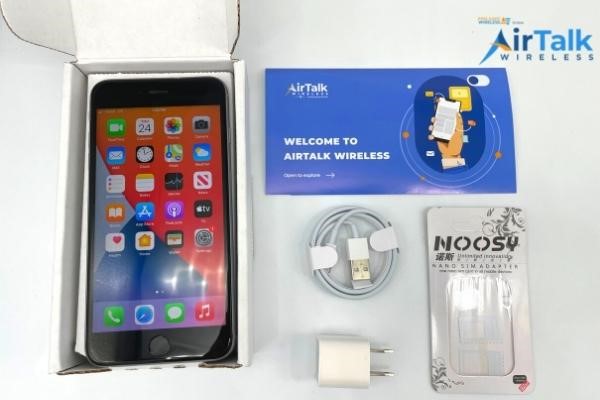
Cintex Wireless is one of those ETCs, offering Lifeline service for eligible consumers who need an affordable way to stay connected. The carrier also layers the benefit with its own device offer, contributing to making the benefit more sustainable.
Cintex Wireless has merged into AirTalk Wireless, giving eligible consumers with a more easy-to-navigate enrollment process and more phone models to pick from.
Note: Eligibility varies by state and program. Offers depend on availability and qualifications. AirTalk Wireless and Cintex Wireless operate under the federal Lifeline Program as an Eligible Telecommunications Carrier (ETC). Service is non-transferable and limited to one service per household.
7. FAQs
Can a Spouse Get Paid as a Caregiver in New York?
No. A spouse cannot serve as the recipient’s paid CDPAP personal assistant. Ask the Medicaid plan about other available care arrangements.
Can a Parent Get Paid to Care for an Adult Child?
Potentially, yes. A parent may serve as a CDPAP assistant for an adult child age 21 or older if the recipient qualifies and the parent completes the required enrollment process.
Does Medicaid Pay Family Caregivers for 24-Hour Care?
Not automatically. Continuous 24-hour CDPAP care involves more than one personal assistant. The authorized care plan, hours worked, timekeeping, and applicable work-hour rules determine what can be paid.
Are Family Caregiver Payments Considered Taxable Income?
Tax treatment depends on the payment arrangement and the caregiver’s circumstances. PPL provides wage and tax documentation for CDPAP assistants. If you’re unsure how your payments should be reported, consult a tax professional.
Can Medicaid Pay a Family Caregiver Retroactively?
Don’t assume so. Payment for earlier caregiving depends on authorization, enrollment, timekeeping records, and applicable payroll rules. Informal care provided before enrollment is not automatically reimbursed.
Conclusion
The answer to how much does Medicaid pay family caregivers in New York depends on where the care recipient lives: PPL’s 2026 minimum base rates for eligible CDPAP assistants range from $18.65 to $20.65 per hour.
Actual earnings also depend on approved hours worked and applicable payroll rules. For a reliable estimate, confirm the recipient’s eligibility and care authorization, then check the assistant’s rate and timekeeping requirements before work begins.