
Ohio Medicaid eligibility depends on the Medicaid category you apply under, your household size, and your income. Some categories also have resource limits, while MAGI-based programs generally do not.
This guide breaks down the main eligibility groups, income standards, and the ways you can apply.
1. What Determines Ohio Medicaid Eligibility?
To qualify for Ohio Medicaid, you generally must meet the requirements for the specific Medicaid category you’re applying under. These can include Ohio residency, U.S. citizenship or qualifying immigration status, applicable identification requirements, and financial eligibility.
The rules differ by group. Low-income adults, pregnant women, children, and people who are aged, blind, or disabled can have different income and resource requirements.
The Ohio Department of Medicaid encourages applying even if you’re unsure whether you qualify, since income limits vary widely by category and a caseworker will review your specific situation.
2. What Are the Basic Requirements for Ohio Medicaid?
Before looking at income, Ohio considers several basic eligibility factors. The exact requirements and exceptions depend on the Medicaid category and the applicant’s circumstances.
- Residency: You generally must live in Ohio to receive Ohio Medicaid.
- Citizenship or immigration status: U.S. citizens and certain qualified noncitizens may qualify, subject to the rules for their Medicaid category.
- Social Security number: Applicants generally provide an SSN or information showing that they have applied for one, subject to applicable exceptions.
- Financial eligibility: Income and, for some Medicaid categories, resources must fall within the applicable limits.

3. What Are the Latest Ohio Medicaid Income Limits by Group?
Income limits depend entirely on your household size and which category you fall into. Ohio publishes separate 2026 income charts for different applicant groups.
The table below gives you the general shape before you check the exact figures for your situation.
| Group | 2026 Ohio standard | Example monthly limit for household size 1 |
| Adults age 19–64 | 133% FPL* | $1,769 |
| Pregnant Women | 200% FPL* | $2,660 |
| Children with insurance | 156% FPL* | $2,075 |
| Children without insurance | 206% FPL* | $2,740 |
| Parents/Caretaker Relatives | 90% FPL* | $1,197 |
| Aged, Blind, or Disabled | Separate ABD rules | $994 income standard; $2,000 resource limit generally applies |
| Nursing Home/Medicaid Waivers | Separate long-term-care rules | $2,982/month income level; $2,000 resource limit generally applies to a single applicant |
MAGI-based eligibility can be affected by the federal 5% income disregard, so the published FPL percentage and the effective eligibility threshold are not always identical. Limits can also vary by household size and Medicaid category. Confirm the current figure with Ohio Medicaid before applying.
>>> Read more: Ohio Medicaid Income Limits 2026: Important Things To Know
Do Asset Limits Affect Ohio Medicaid Eligibility?
Whether an asset test applies depends entirely on which category you’re in, not on Medicaid as a whole.
- MAGI Medicaid, the category covering most expansion adults, children, and pregnant women, generally does not use an asset test
- Seniors, disabled individuals, and long-term care applicants may face resource limits on top of income limits
- Asset rules depend on the specific Medicaid category, so the same household could face very different resource requirements depending on who in the household is applying
4. What Happens If Your Income Is Too High for Ohio Medicaid?
Being over an income limit does not necessarily end the analysis, but the available options depend on the Medicaid category.
Some aged, blind, or disabled applicants may qualify through medically needy rules, while certain long-term-care applicants may be able to use a Qualified Income Trust when the applicable requirements are met.
These pathways do not apply to every Medicaid applicant, so don’t assume that being slightly over an income limit automatically makes you eligible through a spend-down or trust.
Applying is still worth doing even when you’re unsure, since a caseworker reviews deductions that can change the outcome in your favor.
5. How Do You Apply for Ohio Medicaid?
Ohio provides several ways to apply for Medicaid, including online, by phone, and through your local county agency. You don’t need to determine your eligibility on your own before submitting an application. Here’s how each one works.
- Online: visit the Ohio Benefits Self-Service Portal to apply and manage your case
- By phone: call the Ohio Medicaid Consumer Hotline at 800-324-8680
- In person: contact your local county Department of Job and Family Services (JFS) office
How Can You Check Your Ohio Medicaid Eligibility Status?
After applying, you can check your case through your Ohio Benefits account, contact Ohio Medicaid, or review notices sent to you. If the agency asks for additional information, responding promptly can help prevent unnecessary delays.
- Log in to your online Ohio Benefits account to check your current application status
- Contact Ohio Medicaid directly by phone for a status update
- Check any notices mailed or sent to your online account, since these often contain your determination or next steps
- Respond promptly to any request for additional documents, since delays here are the most common reason a decision takes longer than expected
6. Ohio Medicaid Eligibility Can Also Connect You to Other Benefits
If you qualify for Ohio Medicaid, that eligibility can also help you qualify for Lifeline, a government assistance program that provides a monthly discount toward qualifying phone service or internet service.
Lifeline offers subsidies for your monthly wireless service bill for low-income individuals in the US, up to $9.25 a month standard or $34.25 a month on Tribal lands.
Medicaid enrollment, SNAP, SSI, Section 8, Veterans Pension, or income at or below 135% of the federal poverty guidelines all qualify.
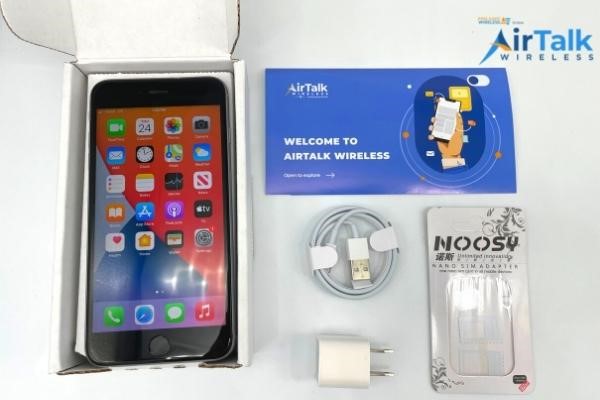
You can apply through Eligible Telecommunication Carriers (ETCs) like Cintex Wireless, which will give you a wider range of telecommunication benefits and advantages (including a free smartphone and service plan).
Many choose Cintex Wireless for its simple procedure. Notably, the carrier has also been reported to have merged into AirTalk Wireless, another ETC that has served in the industry for more than 2 decades.
This translates to a much faster application review, a more advanced platform, and a wider phone selection.
Some of the common models you can find when applying:
| Device | Original Price | Price After Discount |
| iPhone 11 | $228.85 | $89.99 |
| iPhone XS | $149.50 | $79.99 |
| iPhone SE 3 | $143.75 | $49.99 |
| iPhone X | $155.25 | $49.99 |
These deals are extremely popular and subject to change. Be sure to check the latest availability directly on the AirTalk website before applying.
Note: Eligibility varies by state and program. Offers depend on availability and qualifications. AirTalk Wireless and Cintex Wireless operate under the federal Lifeline Program as an Eligible Telecommunications Carrier (ETC). Service is non-transferable and limited to one service per household.
7. Frequently Asked Questions
Q1. What are the new Medicaid eligibility requirements in Ohio?
The core requirements stay residency, citizenship or qualified non-citizen status, a Social Security number, and income within your category’s limit, with 2026 income figures updated from the prior year.
Q2. What income is too high for Medicaid?
It depends on your category. Expansion adults face a lower limit than pregnant women or children, and even income slightly over the limit may still qualify through a spend-down pathway.
Q3. How can I check my Medicaid eligibility in Ohio?
Apply through the Ohio Benefits Self-Service Portal, call the Consumer Hotline at 800-324-8680, or visit your county Job and Family Services office to get an official determination.
Q4. What is the maximum income to qualify for Medicaid in Ohio?
It ranges by group, from about $1,304 a month for parents and caretaker relatives to about $2,818 a month for children in 2026, with different limits for pregnant women and aged, blind, or disabled applicants.
>>> Read more: Stay Connected with the Free Government Phone Ohio Plan? 5 Easy Steps
Conclusion
Ohio Medicaid eligibility starts with four basic requirements that are easy for most residents to meet: residency, citizenship, an SSN, and a completed application.
The real differences show up once you look at which group you fall into and its specific income limit. Apply even if you’re not sure you qualify, since a caseworker reviews deductions and exceptions that could put you within range.