
Medicaid pregnancy coverage plays a major role in maternity care in the United States, financing about 41% of all births nationwide.
For eligible pregnant individuals, coverage can include prenatal care, labor and delivery, and postpartum care, with eligibility and benefits varying by state.
This guide explains who may qualify, how income limits work, what pregnancy Medicaid covers, how long coverage lasts, and where to apply.
1. What Is Medicaid Pregnancy Coverage?
Medicaid pregnancy coverage provides health coverage for eligible pregnant individuals, including pregnancy-related prenatal care, labor and delivery, and postpartum services.
In most states, eligible beneficiaries can receive up to 12 months of postpartum coverage after the pregnancy ends, although the exact eligibility rules and covered services vary by state.
Medicaid is the largest single payer of pregnancy-related care in the country, financing 41% of all US births.
Federal Medicaid rules generally prohibit cost sharing for covered pregnancy-related services. However, Medicaid programs can have different rules for services that are not considered pregnancy-related, so your exact coverage and costs can depend on your eligibility category and state.
2. Who Qualifies for Medicaid Pregnancy Coverage?
There are a few requirements, and pregnancy income limits work differently than standard Medicaid. Meeting all of them, not just the income piece, is what gets an application approved.
Pregnancy and residency: you must be pregnant and living in the state where you apply
Income: Federal Medicaid rules establish a mandatory income standard of at least 133% of the federal poverty level for eligible pregnant women.
Under MAGI rules, a 5-percentage-point income disregard can result in an effective threshold of 138% FPL when determining eligibility. States can set higher pregnancy income limits, so the actual limit varies considerably by state and household size.
Citizenship or immigration status: Medicaid eligibility generally requires U.S. citizenship or an eligible immigration status, although the rules vary by state and coverage category.
People who do not qualify for full Medicaid because of immigration status may still qualify for limited emergency Medicaid or other state pregnancy coverage programs in some circumstances.
No enrollment windows: you can apply at any time of year, at any point during your pregnancy; there is no restricted open enrollment period to work around
3. What Is the Income Limit for Medicaid Pregnancy Coverage?
There is no single income limit that applies to pregnancy Medicaid nationwide.
Federal rules establish a minimum eligibility standard, while states can extend pregnancy Medicaid to people with higher incomes. The applicable limit also depends on household size and the state’s Medicaid rules.
State pregnancy Medicaid income limits vary widely. Some states set eligibility close to the federal minimum, while others extend coverage well above 200% of the federal poverty level.
| State | Pregnancy Medicaid Income Limit |
| Utah | About 139% FPL, close to the federal floor |
| Florida | About 196% FPL |
| Texas | About 198% FPL |
| New York | Up to about 218% FPL |
| Connecticut | About 258% FPL |
| Iowa | About 375% FPL, among the highest in the country |
These figures are provided for reference only. Medicaid income limits vary by household size and state and can change as state rules are updated. Check your state’s Medicaid agency for the current limit that applies to your situation.
4. What Does Medicaid Pregnancy Coverage Include?
Coverage goes well beyond the delivery room. Five categories make up most of what Medicaid pays for during and after pregnancy. Knowing all five helps you use the benefit fully instead of only at the hospital.
- Prenatal care: routine prenatal visits, pregnancy-related tests and screenings, ultrasounds when medically appropriate, and other covered services needed during pregnancy.
- Labor and delivery: hospital stays, delivery services, and medical care during childbirth
- Postpartum care: comprehensive coverage for 365 days after the pregnancy ends, regardless of how it concludes
- Other services: family planning, mental health services, and treatment for conditions that threaten a safe delivery
- Newborn coverage: A baby born to a mother who has qualifying Medicaid coverage at the time of birth may be automatically deemed eligible for Medicaid through the child’s first birthday, without a separate application in applicable cases.
5. How Long Does Medicaid Pregnancy Coverage Last After Birth?
Medicaid pregnancy coverage generally continues for 12 months after the pregnancy ends in 49 states and the District of Columbia.
Wisconsin’s 12-month postpartum extension took effect July 1, 2026, leaving Arkansas as the only state that has not adopted the full 12-month extension.
After the postpartum period ends, coverage does not necessarily continue under the pregnancy Medicaid category.
You may qualify for another Medicaid category depending on your income, household circumstances, age, disability status, or other eligibility factors.
6. How Do You Apply for Medicaid Pregnancy Coverage?
The application process varies by state, but you can generally apply through your state Medicaid agency or through HealthCare.gov. Some states also offer Presumptive Eligibility for pregnant women, which can provide temporary coverage while a full Medicaid determination is pending.
- Visit Healthcare.gov, which routes you to your state’s Medicaid program, or apply directly through your state’s Medicaid agency portal
- Gather proof of income, household size, and residency before you start
- Ask whether your state offers Presumptive Eligibility for pregnant women, which may provide temporary Medicaid coverage while your full application is being reviewed.
- If you do not qualify for full Medicaid because of income, immigration status, or another eligibility requirement, ask whether your state offers a CHIP pregnancy program or another state-funded pregnancy coverage option.
>>> Read more: Pregnancy Medicaid NC: Income Limits and How to Apply
7. Medicaid Pregnancy Coverage Can Connect You to Other Benefits
You just learned how to apply for one benefit. The same household likely qualifies for a second one that lowers a monthly bill instead of a medical cost.
What Is the Lifeline Program?
Lifeline is a federal program run by the FCC that discounts a monthly phone service or internet service, up to $9.25 a month for standard households or $34.25 a month on Tribal lands.
Medicaid enrollment, including pregnancy Medicaid, automatically qualifies your household. If that is out of your picture, then qualifying by meeting the income threshold or participating in other programs like SSI, SNAP, Section 8 housing, etc.
How Do Providers Work With Lifeline?
Importantly, you do not need to apply directly to the government. You will enroll with Eligible Telecommunications Carriers to receive the benefit. And these carriers tend to take another step further by offering a free device to make the benefit more sustainable.
Cintex Wireless is one of those carriers, and it applies the Lifeline discount to the service plan and pairs it with its own device offer, so approved applicants get more than just a smaller bill.
So, eligible consumers can receive the following telecommunication benefits:
- A free 5G smartphone
- $0 monthly service (Unlimited talk, text, and a monthly data allowance)
- Nationwide network coverage
- No long-term contract required
Recently, the carrier also announced that it has merged into AirTalk Wireless. This brings a lot to the table. Generally, applicants can now access a more advanced yet easy-to-navigate platform and a broader device selection.
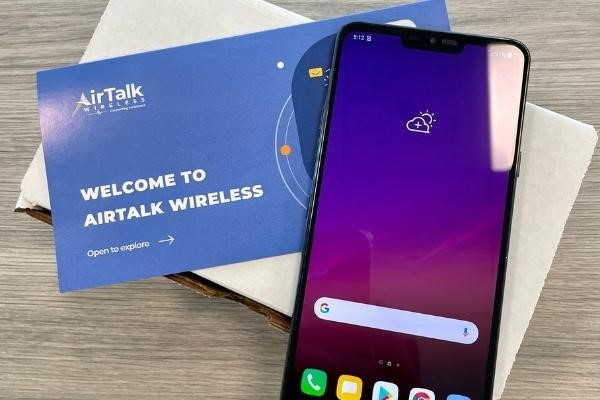
IMPORTANT: The government does not subsidize devices. Lifeline programs cover basic service costs only. Free or discounted devices, upgrade plans, or top-ups are exclusive benefits provided by AirTalk Wireless and Cintex Wireless as part of the promotional offers. Terms and conditions apply. Limited-time promotion—offers vary by state, stock availability, and eligibility.
8. Frequently Asked Questions
Q1. How much does Medicaid cover while pregnant?
Medicaid covers many pregnancy-related services, including prenatal care, labor and delivery, and postpartum care. Federal Medicaid rules prohibit cost sharing for covered pregnancy-related services, although the exact coverage and eligibility rules can vary by state.
Q2. What free things can I get with pregnancy Medicaid?
Coverage can include prenatal visits, pregnancy-related tests and screenings, labor and delivery, behavioral health care, and postpartum services. In most states, eligible beneficiaries can receive 12 months of postpartum coverage after the pregnancy ends.
Q3. What money can you claim while pregnant?
Medicaid provides health coverage rather than a cash payment. Depending on income and other eligibility requirements, pregnant individuals may also qualify for WIC, which provides nutrition assistance and related support during pregnancy and after childbirth.
Q4. Does Medicaid pregnancy coverage end after the baby is born?
Not necessarily. In most states, eligible pregnancy Medicaid beneficiaries receive 12 months of postpartum coverage after the pregnancy ends. As of 2026, Arkansas is the only state that has not adopted the full 12-month extension. After that period, you may qualify for another Medicaid category depending on your circumstances.
>>> Read more: How To Apply For WIC Benefits In A Few Minutes? The Latest Guide
Conclusion
Medicaid pregnancy coverage can extend well beyond labor and delivery, helping eligible pregnant individuals access prenatal care, childbirth services, and postpartum care. Pregnancy-related services generally have no Medicaid cost sharing, while the exact eligibility rules and covered benefits depend on the state.
If you think you may qualify, applying early can help you connect with coverage before more prenatal care is needed. And if your state offers Presumptive Eligibility for pregnant women, ask whether that temporary option is available while your full application is being reviewed.