
Can SSI see what you buy? Maybe you just used your benefits to replace a broken refrigerator, but now you’re wondering whether Social Security can question that purchase. Could something as ordinary as spending your own money affect your monthly payment?
The answer isn’t as simple as checking your bank balance. Social Security can review certain financial records, but that doesn’t mean every purchase is monitored. Find out what SSA can actually see, which spending decisions matter, and when keeping a receipt could save you trouble.
1. Can SSI See What You Buy?
The Social Security Administration (SSA), which administers Supplemental Security Income (SSI), does not routinely watch purchases as they happen. It can, however, examine relevant financial records to decide whether someone qualifies for payments or continues to meet program requirements.
For anyone asking can SSI see what you buy, the important distinction is between checking your financial accounts and examining individual purchases. A bank statement may show that you spent $48 at a pharmacy, including the merchant and transaction date, without revealing every product you bought.
Paying for groceries, clothing, or other legitimate needs is not automatically an SSI violation. What matters is whether income, resources, or particular spending arrangements trigger an applicable rule.
2. What Financial Information Can Social Security Check?
SSA can review financial information to verify SSI eligibility, but not every type of review reveals the same details.
Bank Accounts and Balance Verification
SSA uses a process called Access to Financial Institutions (AFI) to identify certain financial accounts and obtain historical account balances.
When applying for or receiving SSI, you generally must give SSA permission to request financial records from financial institutions. This authorization is an SSI eligibility requirement.
AFI helps SSA determine whether you have reported your accounts accurately and whether your resources meet program limits.
However, AFI is primarily an account-and-balance verification system, not a service that automatically shows SSA every purchase you make.
Bank Statements and Other Financial Records
SSA may also request bank statements or other supporting documents when it needs additional information.
These records can reveal:
- Deposits and withdrawals.
- Transfers between accounts.
- Transaction amounts and dates.
- Merchant names or payment descriptions.
For example, a statement might show a $150 purchase at a department store without identifying each item purchased.
SSA may ask about transactions when they raise questions about income, account ownership, or resources. A large unexplained deposit or transfer could require clarification.
That doesn’t mean ordinary purchases automatically trigger an investigation. The purpose is to verify information relevant to SSI eligibility and payment accuracy.

3. Can Your Purchases Affect SSI Eligibility?
Yes, certain purchases can affect your SSI eligibility, but ordinary spending doesn’t automatically put your benefits at risk.
SSI eligibility depends partly on your countable income and resources. In 2026, the resource limit remains $2,000 for an individual and $3,000 for an eligible couple. However, not everything you buy counts toward these limits.
Which Purchases Could Affect SSI?
SSA generally distinguishes everyday personal belongings from assets held for investment or financial value.
| Purchase or transaction | General SSI treatment |
| Groceries and clothing | Ordinary expenses that generally don’t create countable resources |
| Furniture, appliances, or a personal computer | Generally excluded as household goods or personal effects |
| One vehicle used for transportation | Generally excluded from countable resources |
| Stocks or jewelry held primarily for investment | May count toward SSI resource limits |
| Giving away money or property | May trigger resource-transfer rules, depending on the circumstances |
For example, replacing a broken refrigerator generally won’t create a countable resource. Buying stocks with the same money, however, may affect your eligibility because those investments usually count toward your resource limit.
Does Spending Money Reduce Your Countable Resources?
It can, but timing matters.
SSA generally evaluates countable resources at the beginning of each month. Spending money later doesn’t change the resources you held at the start of that month, although it may affect what counts in the following month.
Similarly, spending income doesn’t erase how SSA counted it when you originally received it.
Giving away money or selling property for less than fair market value is different from making an ordinary purchase. Such transfers may result in up to 36 months of SSI ineligibility, although exceptions apply.
The important distinction is what you purchase, how the resulting property is treated under SSI rules, and whether the transaction affects your countable income or resources.
>>> Read more: Is MetroPlus Medicaid Or Medicare? It Depends on Your Plan
4. When Are There Restrictions on How SSI Money Is Spent?
The question can SSI see what you buy carries additional significance when someone else handles benefits or money is kept in a restricted account. These arrangements impose duties beyond ordinary monthly SSI spending.
Spending by a Representative Payee
SSA may appoint a representative payee for someone unable to manage their benefits. The payee must act in the recipient’s best interests, first covering housing, food, medical care, and other immediate needs.
Appropriate personal purchases may follow, while unused money should be saved for the recipient. Payees must keep records because SSA can request explanations or accounting reports, even when an annual reporting exemption applies.
Children’s Dedicated Accounts
Certain large past-due SSI payments for children with disabilities must be deposited into a separate dedicated account.
Unlike regular monthly SSI payments, these funds have specific spending restrictions.
Permitted expenses generally include medical treatment, education, job skills training, and qualifying disability-related services or equipment.
Ordinary groceries, clothing, and housing costs generally cannot be paid from this account. However, SSA may permit certain emergency expenditures when necessary to prevent a child from becoming homeless or malnourished. Contact SSA before relying on this exception.
Representative payees must keep receipts and other records showing how dedicated-account funds were used.
Regular monthly SSI payments are different and may be used for the child’s ordinary living expenses.
5. What Should You Report and Keep Records Of?
People searching can SSI see what you buy sometimes assume they must submit every receipt. For most recipients, the more important responsibility is reporting changes that may affect SSI eligibility or payment amounts.
Notify SSA about new or changed income, relevant bank accounts, countable resources, living arrangements, and gifts or transfers of property. Changes in account ownership or substantial unexplained deposits may also need documentation. Generally, report changes promptly and no later than 10 days after the end of the month in which they occurred.
Keep statements covering periods SSA asks about, proof of significant purchases or transfers, and confirmation numbers or copies of submitted reports. That evidence can help explain why a balance changed or where funds went.
You generally don’t need to submit receipts for every grocery trip or personal purchase. However, keeping proof of significant purchases, transfers, or changes in account balances can help answer questions during an SSA review. Representative payees and those managing children’s dedicated accounts may have stricter recordkeeping responsibilities.
6. Another Way to Manage Your Monthly Expenses
When SSA’s letter asks about a deposit from months ago, the work starts after you read it: find the right statement, get someone on the phone to clarify, and send the paper back through a channel the agency approves. The worry behind “can SSI see what you buy” quickly turns into a practical one, which is how to handle all of this without adding another bill.
Phone costs are one of the few household expenses with a program built to lower them. Lifeline is a government assistance program that gives eligible households a monthly discount on communication service.
It generally offers up to $9.25 per month toward eligible broadband or bundled service, and up to $34.25 for qualifying households on Tribal lands. Voice-only service may receive a lower amount.
Who gets it? SSI is one qualifying route, as are Medicaid, SNAP, and household income at or below 135% of the Federal Poverty Guidelines. Verification is required, so receiving SSI does not enroll you automatically. Each household receives one benefit, which cannot be transferred.
The discount is applied by an Eligible Telecommunications Carrier (ETC). Cintex Wireless has offered Lifeline-supported service as an ETC, and it also provides free or discounted phones, which suits a paperwork-heavy stretch when you need a device you can trust.
Its merger into AirTalk Wireless, another ETC, opens up more devices and plans through one streamlined experience.
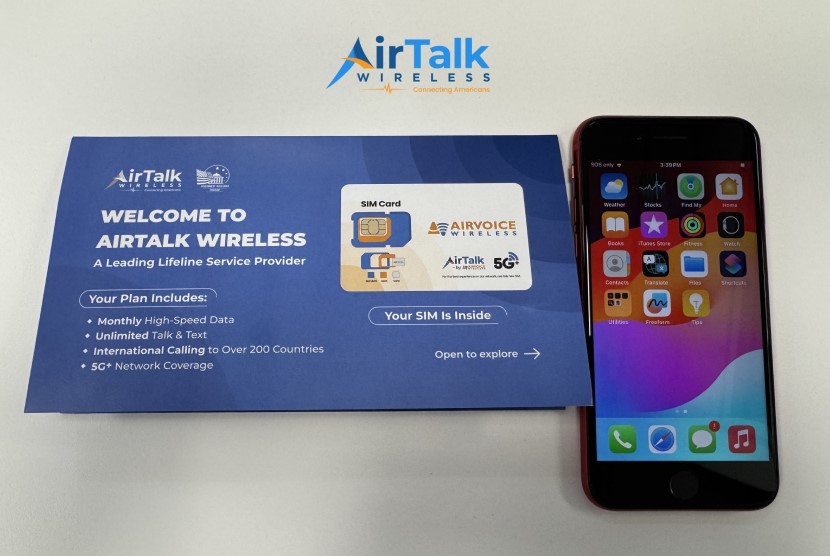
AirTalk Wireless may offer promotional phones, as well as the option to bring a compatible phone of your own, depending on location, eligibility, and stock. Features and data allowances vary by plan. Visit the AirTalk Wireless official website to check local availability and complete verification.
IMPORTANT: The government does not subsidize devices. Lifeline programs cover basic service costs only. Free or discounted devices, upgrade plans, or top-ups are exclusive benefits provided by AirTalk Wireless and Cintex Wireless as part of the promotional offers. Terms and conditions apply. Limited-time promotion—offers vary by state, stock availability, and eligibility.
Conclusion
Understanding whether SSI can see what you buy helps separate everyday spending from the financial information Social Security may review. While SSA can verify account balances and request transaction records, ordinary purchases don’t automatically put your benefits at risk.
Knowing which resources count, when additional records matter, and what changes to report can help you manage your money with greater confidence. You can focus on meeting your everyday needs without feeling that every purchase is something to worry about.