
Income-restricted apartments are becoming increasingly competitive due to rising rents and a scarcity of affordable housing. That is why many people are seeking low income housing near me to help them find secure housing.
In fact, various renters struggle not because they are not qualified, but because they are confused about income limitations, housing types, and where to apply. This tutorial describes how low income apartments near me no waiting list work, what constitutes low income, and how to apply efficiently.
What Are Low Income Apartments with No Waiting List?
Generally, low-income apartments refer to affordable rental units for households earning below a certain income limit, with rents kept at a lower, more manageable level.
These flats are part of government-sponsored initiatives designed to give low- and moderate-income people and families with affordable housing alternatives.
When people say low income housing with no waiting list, they usually mean the housing is available through a process that moves faster than traditional affordable housing programs.
It is often because applications are handled under immediate eligibility, first-come, first-served rules, or to fill current vacancies quickly.
Who Is Eligible for Low Income Apartments?
Qualifying for a low income housing near me involves more than simply demonstrating interest. Instead, you must also fulfill particular criteria.

- Income Limits
- Area Median Income (AMI): Qualification is frequently determined as a percentage of the AMI for your area. For instance, if your area’s AMI is $60,000, a low income apartment may be limited to individuals earning 50% or less of that amount.
- Income Tiers: Several programs have income restrictions at different levels, such as 30%, 50%, or 80% of the AMI.
- Household Size and Composition
The income limit may vary depending on the number of people in your family. Larger households may have a somewhat higher income limit.
- Citizenship and Residency Requirements
Specific programs may require extra qualifications, such as being a US citizen or legal resident.
>>>Read more: Where To Find Low Income Apartments Indianapolis In 2026?
Where to Find Low Income Housing Near Me?
Apartments with income restrictions are available via a variety of municipal, state, and federal programs.
Here are some of the most frequent programs that offer low income units:
Housing Choice Vouchers
Also known as Section 8, this initiative offers rental payments directly to your landlord to cover a portion of the rent in a privately owned rental.
This government program provides housing assistance to very low-income families, as well as the elderly and disabled.
Eligible families may select any rental that satisfies the program’s conditions, as long as the property owner accepts vouchers.
Participating households typically spend around 30% of their income, though limits may vary depending on circumstances. On behalf of the household, the government pays the remaining sum straight to the landlord.
Public Housing
The government owns and operates public housing properties designed primarily for low-income families, retirees, and individuals with disabilities.
These flats have rents significantly below the market rate. This allows tenants to pay just 30% of their income for rent and utilities, even if their income is relatively low.
However, for decades, some properties have faced maintenance and funding challenges. Cities around the country have begun or are preparing to renovate their public housing.
They also use novel approaches, like dispersing lower-density units throughout neighborhoods and concentrating new developments in mixed-income buildings or communities.
Income-Restricted Multifamily Housing
Looking for a low income housing near me? Rent for income-restricted multifamily housing is often based on the AMI.
In particular, a tenant earning 80% of AMI (low income) would pay more than a tenant earning 50% of AMI (very low income).
Renters who match the specified income requirements apply directly to the apartment leasing office or property management.
Low-Income Housing Tax Credit (LIHTC)
The LIHTC program is one of the best-known affordable housing initiatives.
Developers receive tax credits to develop or refurbish apartments for low-income residents, who then pay rent based on their earnings.
Established by the Tax Reform Act of 1986, this program provides State and local LIHTC-allocating agencies with approximately $10.5 billion in annual budget authority to issue tax credits for the acquisition, rehabilitation, or new construction of rental housing for low-income households.
How to Apply for Low Income Apartments Near Me No Waiting List?
Applying for low income housing with no waiting list might take some time, so it’s important to understand the stages involved:
- Check the income requirements in your area to make sure you qualify. You may be asked to provide documents such as proof of income, tax returns, or other financial records.
- Look for available properties through online searches, local housing authority websites, or rental platforms that list low income housing near me.
- Get your documents ready before applying. This may include identification, proof of income, household information, and residency documents such as pay stubs or past tax returns.
- Fill out the application carefully and ensure all required information is included, as incomplete applications may not be accepted.
Lifeline Program to Support Renters Managing Work and Housing
Staying connected is an essential aspect of the housing application process, not an added convenience.
For example, housing authorities and apartment managers frequently use phone calls to verify eligibility, request updated documents, and inform applicants when a unit becomes available.
If a tenant cannot be reached within the specified timeframe, the chance may be provided to another person on the waiting list.
Fortunately, the Lifeline program helps low-income people stay connected.
It is a government assistance program that promotes access to daily requirements, such as housing coordination or government services, by providing monthly savings on phone service and internet services to eligible households.
Importantly, if you apply for Lifeline through Eligible Telecommunications Carrier (ETC) such as Cintex Wireless or AirTalk Wireless, you can receive discounted or free phone deals featuring calling, texting, and mobile broadband.
If you’re comparing providers, it’s helpful to know that Cintex Wireless is merging with AirTalk Wireless, potentially offering a more unified experience and expanded choices.
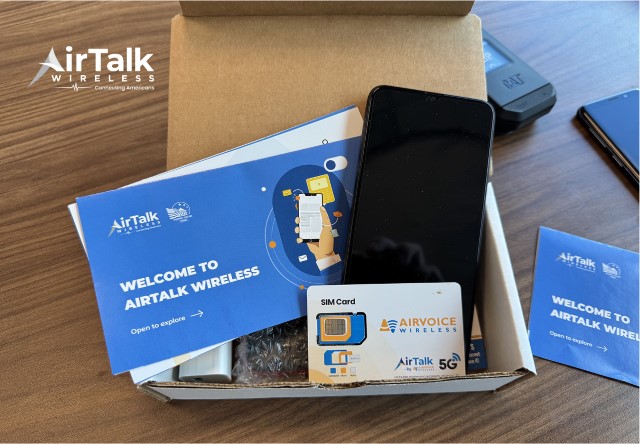
When choosing one of the two carriers, the application process becomes easier as follows:
- Only eligible consumers may enroll in Lifeline service. So you should start by confirming your eligibility, which is based on income limit or participation through other federal programs like SNAP, Medicaid, etc.
- Go to airtalkwireless.com for the application
- Select your state by entering ZIP code and choose your preferred plan, and a free or discounted device
- Next, fill in the essential information and upload proof of qualification with SNAP, Medicaid, or other income-related documents if required.
- Complete the application and wait for approval.
IMPORTANT: The government does not subsidize devices. Lifeline programs cover basic service costs only. Free or discounted devices, upgrade plans, or top-ups are exclusive benefits provided by Cintex Wireless as part of our promotional offers. Terms and conditions apply. Limited-time promotion-offers vary by state, stock availability, and eligibility.
Conclusion
To summarize, low income housing near me offers residents a secure and affordable housing alternative. However, availability is limited, and the application process may take time.
Understanding qualifying requirements, housing options, and where to apply might help you avoid frequent delays.