Can you own a home and be on Medicaid? Yes, in most cases, your primary residence does not count against you. That surprises many people who assume owning property automatically disqualifies them. The exemption has limits, though, and it works differently depending on which Medicaid program you’re applying for.
Read our complete guide below to see the 2026 equity limit, who gets an automatic exemption, and what happens to the home after you pass away.
1. Can You Own a Home and Be on Medicaid?
Yes, many people can own a home and still qualify for Medicaid. However, whether the home affects eligibility depends on the type of Medicaid coverage, the applicant’s circumstances, and state-specific rules.
This exemption mainly matters for seniors, disabled applicants, and long-term care Medicaid; regular Medicaid for working-age adults has no asset test at all.
MAGI-based Medicaid programs generally determine eligibility using income and household factors rather than asset limits. These rules commonly apply to adults, children, and pregnant individuals.
Homeownership only becomes relevant under certain Non-MAGI and long-term care rules, which apply mainly to seniors and people applying for nursing home or in-home care services.
A primary residence and a second home are treated very differently under these rules. Your primary home can qualify for the exemptions covered below. A second home, vacation property, or other real estate may be treated differently and can count as a resource under many asset-tested Medicaid programs.
2. What Is the Medicaid Home Equity Limit for 2026?
For nursing home and long-term care Medicaid, your home stays exempt only if its equity falls under your Medicaid state’s limit. In 2026, that limit is $752,000 at the federal minimum or up to $1,130,000 in states that set it higher.
Some states, including California under its current Medicaid/Medi-Cal asset rules, may treat home equity differently from the federal standard. Always check your state’s current rules before relying on a specific exemption.
| Situation | 2026 Equity Limit |
| Most states (federal minimum) | $752,000 |
| States with higher limit | Up to $1,130,000 |
| California | No limit |
| Regular MAGI Medicaid (under 65, non-disabled) | No equity test applies |

>>> Read more: Are College Students Eligible for Medicaid? A Clear Guide
3. When Does Medicaid Look at the Equity in Your Home?
The home-equity rule is mainly a long-term-care issue, not something most Medicaid applicants ever run into.
It applies specifically to nursing home Medicaid and Home and Community-Based Services waivers, not to standard adult or family Medicaid coverage.
States can set their limit within federal rules, which is why the exact figure varies so widely. The federal government sets a floor and a ceiling each year, and each state chooses where within that range its own limit falls; some default to the federal minimum, others set it as high as allowed.
Home equity is different from the market value of the house. Equity means what you actually own: the home’s value minus anything still owed on a mortgage or lien.
A $600,000 home with a $200,000 mortgage balance has $400,000 in equity, well under even the lowest 2026 limit, even though the home’s full market value sounds much higher.
4. Does It Matter Who Still Lives in the Home?
For long-term care Medicaid home equity rules, certain situations can protect the home from the equity limit, including when a spouse, child under 21, or blind or disabled child lives there. Outside those situations, the equity limit above applies.
- Spouse living in the home -> fully exempt, no cap
- Child under 21 living in the home -> fully exempt, no cap
- Blind or permanently disabled child (any age) living in the home -> fully exempt, no cap
- No qualifying occupant -> equity limit applies
5. Can Medicaid Recover Money From Your Home Later?
Yes, Medicaid can recover money from your home after you pass away through a process called the Medicaid Estate Recovery Program (MERP).
This is separate from a Medicaid lien, which the state can place on your home while you’re alive to secure future repayment; a Medicaid lien does not automatically mean you lose your home, and whether it affects the property depends on the situation and state rules.
Medicaid estate recovery generally occurs after death and may apply to certain Medicaid benefits, especially long-term care services such as nursing facility care and Home and Community-Based Services (HCBS). Specific recovery rules vary by state.
The rule generally applies to benefits received at age 55 or older, or to anyone who was permanently institutionalized regardless of age. If the home is part of the probate estate and there’s no other cash available to cover the debt, the home may need to be sold to repay the state.
Federal law protects certain family members from this recovery entirely:
- A surviving spouse
- A child under age 21
- A blind or disabled child of any age
- A sibling who lived in the home for at least one year before the Medicaid recipient entered a facility and holds an equity interest in the property
States must also offer an undue-hardship process. If losing the home would create serious financial hardship for surviving heirs, they can request a waiver from estate recovery, though the exact criteria and paperwork vary by state.
>>> Read more: Nursing Homes for Dementia Patients That Accept Medicaid: 2026 Guide
6. Other Benefits You May Get with Medicaid Eligibility
Here’s something most people never connect: the same Medicaid card that protects your home also unlocks a completely separate savings program, one that has nothing to do with your house.
It’s called Lifeline, run by the Federal Communications Commission to keep phone and internet service affordable for lower-income households. If you’re already on Medicaid, that enrollment alone qualifies you; no extra proof needed.
Or you can qualify by meeting the income limit or participating in other programs; besides Medicaid, it can be SSI, SNAP, etc.
Most households save $9.25 off their bill every month. Families on Tribal lands save up to $34.25 a month, applied automatically once approved.
Lifeline itself only lowers a bill; it doesn’t send anyone a phone. Getting a device depends on the provider you choose.
Lifeline providers like Cintex Wireless stack that Lifeline savings with their own promotions, which is how eligible customers get a free 5G smartphone and a bill that lands at $0 most months.
UPDATE: Cintex Wireless is merging into AirTalk Wireless. This can be beneficial to customers since they can expect quicker approvals and wider phone selection thanks to this merger.
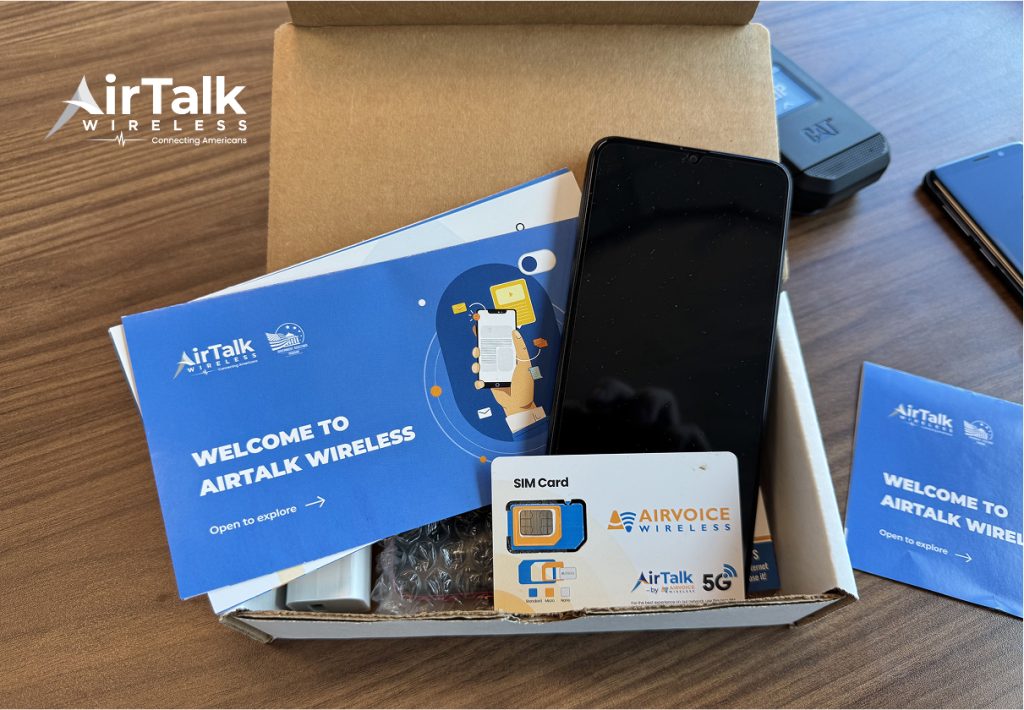
DISCLAIMER: The government does not subsidize devices. Lifeline programs cover basic service costs only. Free or discounted devices, upgrade plans, or top-ups are exclusive benefits provided by AirTalk Wireless and Cintex Wireless as part of the promotional offers. Terms and conditions apply. Limited-time promotion—offers vary by state, stock availability, and eligibility.
7. Frequently Asked Questions
Q1. Can they take your house if you’re on Medicaid?
Usually not simply because you own a home. Medicaid rules may allow certain protections while you are alive, but liens or other state-specific rules can apply in limited situations.
Q2. How do you protect your assets from Medicaid?
Asset treatment depends on the Medicaid category. Some programs have resource limits, while others, such as MAGI-based Medicaid, generally do not use asset tests.
Q3. What is the maximum amount of assets to qualify for Medicaid?
For most Non-MAGI programs, the individual resource limit is generally $2,000, separate from the home equity rule covered above. Our Medicaid asset limits guide breaks down the full resource categories.
Q4. Does Medicaid count a second home as an asset?
Generally yes. The primary residence exemptions above apply specifically to the home you live in. A second home or vacation property is typically counted as a resource and can affect your eligibility.
Q5. Does your house count as an asset if your spouse still lives there?
No. A home with a spouse living in it is fully exempt from the equity limit, regardless of the property’s value, as long as the spouse continues to reside there.
Q6. What happens to your home if you move into a nursing facility?
In some cases, a home may remain exempt if the applicant expresses an intent to return home, although state rules and circumstances can affect how long that exemption applies. Some states limit how long this intent-to-return status lasts, after which the home may become a countable asset if no qualifying relative lives there.
Conclusion
Can you own a home and be on Medicaid? In many cases, yes. Owning a home alone does not automatically prevent someone from qualifying, but the way your home is treated depends on your Medicaid category, state rules, and personal circumstances.
Understanding the difference between a primary residence exemption, home equity limits, and estate recovery rules can help you better prepare when applying for Medicaid or planning for future healthcare needs. Because these rules can vary, checking your state’s current Medicaid guidelines is the best way to understand how your home may be treated.