
Can you use Medicaid out of state? Sometimes. Medicaid is jointly funded by the federal and state governments, but each state administers its own program, so coverage does not automatically work like a nationwide health plan.
Temporary travel, emergency treatment, planned out-of-state care, and a permanent move all follow different rules. Knowing which situation you are dealing with is the key to understanding what Medicaid may cover.
1. Can You Use Medicaid Out Of State?
Medicaid generally covers you through the state where you are enrolled.
Because eligibility rules, provider networks, and benefits differ by state, you normally cannot use your plan for routine care anywhere in the country or simply transfer enrollment to another state.
For anyone asking, does Medicaid cover you in different states? Emergency care is the clearest exception, but it is not the only one.
Federal Medicaid rules require states to arrange for certain covered services furnished outside their borders, including emergencies and situations in which appropriate care is more readily available elsewhere.
Routine appointments during a vacation are less straightforward.
Being temporarily outside your state does not automatically end your Medicaid eligibility.
Federal residency rules protect eligible residents who are temporarily absent and intend to return, although whether a particular out-of-state service will be paid is a separate coverage question.
Before receiving non-emergency care, contact your Medicaid plan because the provider may need authorization or may not be able to bill your home state’s program.

2. When Can You Use Medicaid in Another State?
Federal rules recognize several circumstances in which an enrolled resident may receive Medicaid-covered care outside the home state.
The exact payment process still depends on your state program and provider.
Emergency Medical Condition
Can you use Medicaid out of state? As mentioned earlier, if a medical emergency occurs while you are temporarily outside your home state, Medicaid can cover eligible emergency services.
States are required to make arrangements so beneficiaries can obtain emergency medical care when needed.
Returning Home Could Endanger Your Health
Out-of-state care may also be covered when you need medical treatment and requiring you to travel back to your home state could endanger your health.
This situation is separate from an immediate emergency. Federal Medicaid rules specifically recognize it as another circumstance in which the home-state program must provide for out-of-state services.
The Care Is Closer Than In-State Options
Out-of-state care may also be covered when the necessary medical service is more readily available in another state.
This situation can occur for people living near a state border where the nearest appropriate hospital or specialist is actually located outside their home state.
General Practice in Your Locality to Use Out-of-State Providers
Some border communities routinely rely on doctors or hospitals in a neighboring state.
Federal Medicaid rules allow states to pay for out-of-state services when using those providers is a normal practice for residents in that locality.
Prior-Authorized Non-Emergency Out-of-State Treatment
A state Medicaid program may approve planned treatment outside the state when appropriate care is unavailable locally or when another provider is medically necessary.
Authorization should be obtained before treatment whenever possible, as approval and provider enrollment requirements can affect whether Medicaid pays the claim.
>>>Read more: Medicaid Renewal Online Instructions: 2026 Beginner Guide
3. Can You Transfer Medicaid Benefits Between States?
No. Medicaid benefits cannot simply be transferred from one state to another, and a person generally cannot remain enrolled in two states’ Medicaid programs simultaneously.
A permanent move usually requires ending coverage in your previous state and submitting a new application in your new state.
Who is Eligible?
Eligibility must be determined again under the new state’s rules.
Although federal law establishes the broad Medicaid framework, states can set different income limits, asset rules, eligibility groups, long-term care programs, and waiver services.
For this reason, qualifying in your previous state does not guarantee eligibility in the new one.
How to Transfer
Before relocating, research the new state’s Medicaid requirements and gather the documents needed for an application.
When you move permanently, report the change to your current Medicaid program and apply in the new state as soon as you meet its residency requirements.
There is no formal Medicaid transfer between states, but federal rules prohibit states from requiring you to live there for a minimum period before qualifying as a resident.
Careful timing can reduce a coverage gap, but there is no formal state-to-state transfer process.
4. Things to Do Before Moving to Another State
Can you use Medicaid out of state? If you’re moving permanently, start by checking the Medicaid eligibility rules in your destination state.
You should pay particular attention to income and asset limits, disability requirements, managed care plans, and any long-term-care services you currently receive.
Next, contact your existing Medicaid office before the move to ask how and when your case should be closed.
At the same time, contact the new state’s Medicaid agency to learn when you can submit an application and which documents will be required.
medicaid.gov provides state-specific contacts for applications, eligibility questions, provider searches, and claims.
If you depend on prescriptions, specialists, home care, or long-term services, plan those needs in advance.
HCBS waiver programs in particular can differ significantly between states, so a service available under your current Medicaid program may not have an identical equivalent after you move.
Keep copies of identification, income records, medical information, current Medicaid documents, and notices showing when old coverage ends. These records can make the new application easier to complete.
>>>Read more: 10 Reasons For Medicaid Cancellation: Don’t Miss Your Medicaid Coverage!
5. How to Maximize Your Medicaid Benefits with Lifeline Program
Can you use Medicaid out of state? In case you cannot continue your Medicaid benefits, your participation can help you qualify for support outside of healthcare.
Participation in Medicaid is one of the qualifying pathways for Lifeline, a federal program that reduces the monthly cost of eligible phone service or internet service.
Households can also qualify through certain other assistance programs or income at or below 135% of the applicable Federal Poverty Guidelines.
Lifeline itself provides a monthly service discount of up to $9.25, or up to $34.25 for qualifying households on Tribal lands.
Moreover, if you apply for Lifeline, you can get reliable phone service and a mobile device through an Eligible Telecommunication Carrier, like Cintex Wireless, which can be especially useful while traveling or moving.
Notably, Cintex Wireless has partnered with Lifeline for years and is merging with AirTalk Wireless.
Depending on the state, eligibility, and current promotions, applicants may find benefits such as:
- Lifeline-supported phone service
- Talk, text, and mobile data
- A SIM or compatible service option
- A free or discounted smartphone through provider promotions
- Additional calling features, depending on the plan
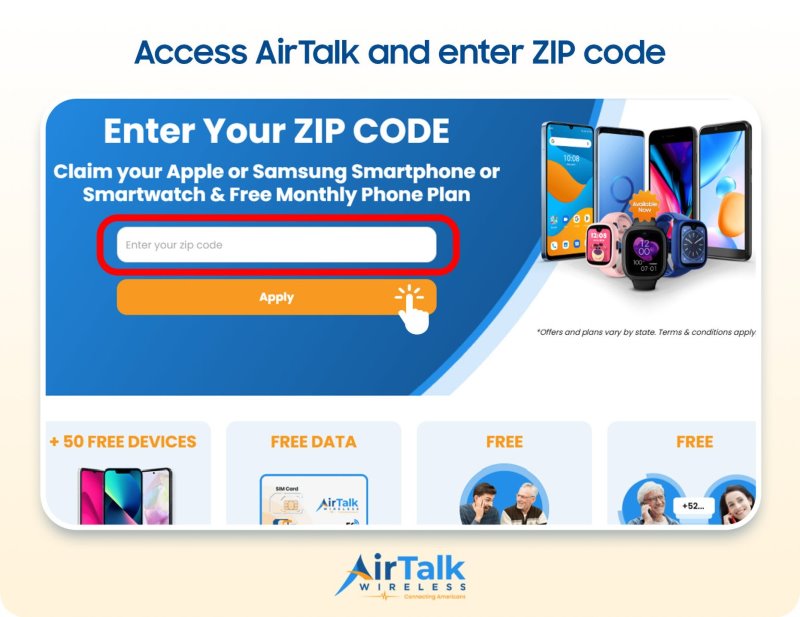
Please note that only one Lifeline benefit is allowed per household, and the benefit cannot be transferred to another person.
If you move, update your address and check whether your current Lifeline company serves the new location. USAC also allows eligible customers to transfer their Lifeline benefit to another participating company when necessary.
DISCLAIMER: The government does not cover device costs, only basic service through Lifeline. Any free or discounted devices, upgrades, or top-ups are limited-time Cintex Wireless and AirTalk Wireless offers and may vary by state, eligibility, and availability. Terms and conditions apply.
FAQs
Does Medicaid work while traveling?
Yes, but mainly for emergencies or certain approved out-of-state care. Routine treatment usually remains tied to your home-state Medicaid plan.
Can you bill an out of state Medicaid patient?
Potentially. An out-of-state provider may be able to bill the patient’s home-state Medicaid program, but payment depends on that state’s provider-enrollment, authorization, and billing requirements.
Does Medicaid work outside the US?
Generally, no. Federal Medicaid funds generally cannot be used to pay healthcare providers located outside the United States, so travelers should not rely on Medicaid for medical care abroad.
Conclusion
Can you use Medicaid out of state? Yes, in certain situations, particularly emergencies and some approved or locally customary out-of-state care, but Medicaid is not nationwide routine coverage.
Temporary travelers should confirm their benefits before receiving non-emergency treatment, while anyone moving permanently must end coverage in their former state and apply under the new state’s Medicaid rules.