
Waking up exhausted despite a full night’s sleep can be frustrating, especially when you don’t know what’s causing it. Your doctor may recommend a sleep study, but paying for the test could be another concern.
So, does Medicaid cover sleep study testing? It may, depending on medical necessity and your state’s coverage rules. This guide explains which tests Medicaid may cover, how to get approval, and what to do if your request is denied.
1. Does Medicaid Cover Sleep Study?
Medicaid may cover a medically necessary sleep study, subject to your state’s coverage policy and your individual plan’s requirements. Coverage is not automatic simply because you snore, feel tired, or have trouble sleeping.
Your treating provider generally needs to evaluate your symptoms, order appropriate testing, and document why it is necessary. Records may include your sleep history, witnessed breathing pauses, daytime sleepiness, relevant conditions, and previous evaluations. Prior authorization may also be required.
Coverage requirements vary by state and can change over time. For example, North Carolina Medicaid updated its sleep-study policy effective July 1, 2026.
The update removed prior authorization for unattended home sleep tests and expanded certain criteria for supervised sleep studies, including some cases involving chronic insomnia, restless legs syndrome, or snoring with additional symptoms.
Medical documentation is still required, so check your own Medicaid plan’s policy before scheduling.
2. Which Types of Sleep Studies Can Medicaid Cover?
When checking does Medicaid cover sleep study, identify the exact test your clinician recommends. Home testing and overnight laboratory testing collect different information, so they are not interchangeable for every patient.
Overnight Sleep Studies at a Sleep Center
An overnight sleep study, also called polysomnography, monitors your sleep stages, breathing, oxygen levels, heart activity, and movement while trained staff oversee the test.
Doctors may recommend this type of study when they need more detailed information or suspect conditions that home testing cannot evaluate reliably.
Laboratory testing is generally preferred for patients with certain serious heart or respiratory conditions, suspected sleep-related hypoventilation, or severe insomnia.
Medicaid coverage depends on the medical reason for testing and the requirements of your state or health plan.
At-Home Sleep Apnea Tests
A home sleep apnea test uses portable equipment to monitor breathing-related measurements while you sleep at home.
It may be appropriate for adults with suspected moderate-to-severe obstructive sleep apnea who don’t have certain complicating medical conditions.
However, home testing doesn’t collect all the information recorded during an overnight laboratory study. If the results are negative, unclear, or technically inadequate, your clinician may recommend polysomnography instead.
For children under 18, the American Academy of Sleep Medicine does not recommend home sleep apnea testing to diagnose obstructive sleep apnea. Pediatric patients need an age-appropriate evaluation.
Before scheduling either test, confirm that your Medicaid plan covers the recommended procedure and any required follow-up testing.
3. How to Get a Sleep Study Through Medicaid?
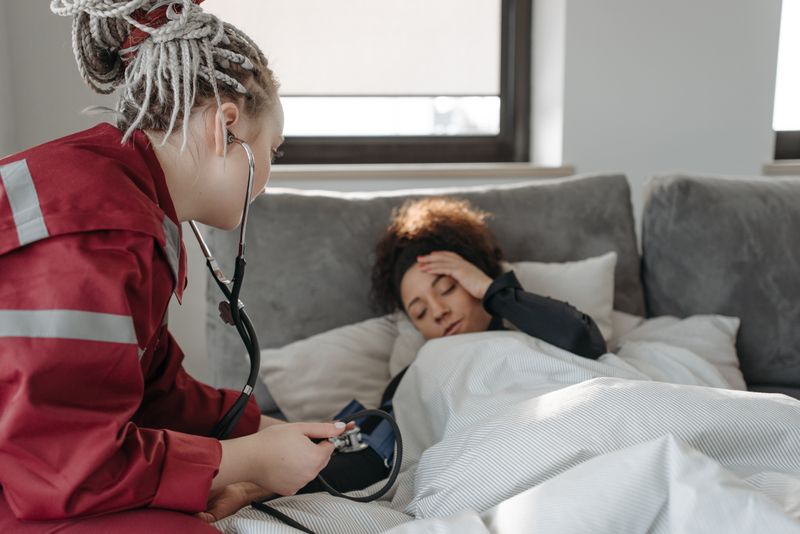
Getting a sleep study usually begins with an appointment with your healthcare provider. Explain your symptoms and how they affect your daily life so your clinician can determine whether testing is appropriate.
If a sleep study is recommended, follow these steps:
- Confirm the recommended test. Ask your clinician whether you need an at-home sleep apnea test or an overnight laboratory study.
- Check Medicaid coverage. Contact your plan to confirm whether the test is covered and if a referral or prior authorization is required.
- Find a participating provider. Use your plan’s directory and confirm that the sleep center and interpreting specialist accept your specific Medicaid coverage.
- Verify approval before scheduling. Make sure any required authorization covers the correct procedure, provider, and testing date.
Keep your referral, authorization details, and preparation instructions together in case the testing provider requests them.
>>> Read More: Does Medicaid Cover Home Health Care? Key Facts to Know
4. What Could You Pay for a Sleep Study?
There is no single nationwide Medicaid sleep-study copay. State rules, your eligibility group, exemptions, and plan benefits determine whether covered testing involves an out-of-pocket charge. Medicaid’s cost-sharing guidance explains that permitted charges and exemptions vary.
For a medically necessary sleep study covered by Medicaid, your out-of-pocket responsibility depends on your state’s cost-sharing rules and eligibility category. Some members have no copay, while others may owe a permitted amount.
Participating Medicaid providers generally must accept Medicaid payment plus any legally permitted patient cost-sharing as payment in full for covered services.
Before scheduling, ask your plan whether the recommended test, sleep center, and professional interpretation are covered. Also confirm whether any copay applies.
If a provider asks you to pay privately, clarify why Medicaid isn’t being billed before agreeing to a self-pay arrangement.
An advertised cash price is not necessarily what you owe through Medicaid. If you receive an unexpected bill, contact your plan to verify whether the charge is allowed.
5. What If Medicaid Denies Your Sleep Study?
Read the written denial before arranging another test or paying privately. The notice should explain the decision and how to challenge it. Common issues to investigate include missing clinical records, an authorization problem, an unsuitable testing setting, or provider participation.
If you are still determining how does Medicaid cover sleep study in your situation, ask the ordering clinician to compare the denial with the submitted records. The office may need to correct an error, supply additional evidence, or explain why the requested test is appropriate.
Follow the appeal instructions in your denial notice. Medicaid managed care members generally have 60 calendar days from the notice date to request a plan appeal, while fee-for-service Medicaid may follow different procedures.
Ask your clinician whether additional documentation could support the appeal. If a delay could seriously affect your health, check whether expedited review is available.
Keep copies of your request and submission confirmation. A corrected claim or a new authorization request doesn’t necessarily extend the formal appeal deadline.
Remember that repeat sleep studies, CPAP equipment, and follow-up treatment may have separate coverage requirements.
6. Stay Connected Before and After Your Sleep Study
A sleep study sounds simple until you start asking whether Medicaid will pay for it. Benefit questions, scheduling, and instructions for the equipment all come by phone, and results usually follow the same way, so a dropped line can set you back a step. A phone bill that crowds your budget makes that more likely.
If the phone bill is the part you want to lower, Lifeline may be worth a look. It is a federal program that provides a monthly discount to eligible households to lower wireless service costs.
It is overseen by the FCC and funded through the Universal Service Fund, and USAC handles the work of verifying who is eligible.
To qualify, eligibility is based on household income and participation in qualifying programs, and Medicaid is one of them. Each household receives one benefit that cannot be passed to someone else.
The program sets the rules, but the service itself comes from an Eligible Telecommunications Carrier (ETC), so signing up with one is what turns approval into a working plan.
Cintex Wireless is an ETC that offers free or discounted phones alongside its Lifeline-supported plans, which means you start with a device that works. It is now merging into AirTalk Wireless, another ETC, to widen the choices and simplify applying.

Depending on your eligibility and location, AirTalk Wireless offers may include:
- Unlimited talk and text
- A monthly data allowance
- Smartphone options
- No-contract service, so review the terms of the offer you select
IMPORTANT: The government does not subsidize devices. Lifeline programs cover basic service costs only. Free or discounted devices, upgrade plans, or top-ups are exclusive benefits provided by AirTalk Wireless and Cintex Wireless as part of the promotional offers. Terms and conditions apply. Limited-time promotion—offers vary by state, stock availability, and eligibility.
Conclusion
The answer to does Medicaid cover sleep study depends on medical necessity, the recommended test, and your state and plan rules.
Before scheduling, confirm whether home or laboratory testing is appropriate and check any referral or authorization requirements. Make sure your provider accepts your Medicaid plan, too.
If coverage is denied, review the notice with your clinician and follow the appeal instructions before the deadline.