
How much money can you make and still get SSI? Maybe your manager just offered you extra shifts, and the additional income would help with groceries or overdue bills. But you’re worried that earning more could mean losing the benefits you depend on.
The good news is that Social Security doesn’t count every dollar you earn against your SSI payment. So where does the actual limit fall in 2026? See how the calculation works, what could change your personal limit, and why earning more doesn’t always mean losing every benefit.
1. What Is the SSI Earnings Limit in 2026?
If you’re asking “how much money can you make and still get SSI,” start with the federal payment and the type of income you receive. In 2026, the maximum federal SSI payment is $994 per month for an individual.
With the full federal rate, wages as your only income, and only the standard exclusions, your federal cash payment generally reaches $0 at $2,073 in monthly gross wages.
The $2,073 figure is an estimate for this one scenario, not a cap. It shifts with other income, living arrangements, and state supplements. SSA uses a separate test, substantial gainful activity (SGA), when deciding whether an adult applicant meets the disability rules.
The 2026 nonblind SGA guideline is $1,690 per month, and it is not applied to initial SSI claims based on blindness. Once you receive SSI, the payment formula in the next section is what generally decides how much you get. Social Security Disability Insurance (SSDI) has its own work rules.
2. How Does SSA Calculate the Wages That Count?
Start with gross pay to estimate how much of a paycheck SSA will count. Two standard exclusions can reduce the amount before SSA calculates your payment.
Earned Income, Unearned Income and Exclusions
Earned income includes wages and net earnings from self-employment. Unearned income includes payments such as pensions and unemployment benefits.
SSA generally applies the $20 general income exclusion to unearned income first. Any unused portion can go toward wages, along with the $65 earned income exclusion. SSA then counts half the remaining wages.
How Much Money Can You Make and Still Get SSI?
Say you receive $1,000 in gross wages, have no other income, and qualify for the full federal rate before income is counted. Subtract $85 in standard exclusions and divide the remaining $915 by two. That leaves $457.50 in countable income and an estimated $536.50 federal SSI payment before rounding.
| Monthly gross wages | Countable wages | Estimated federal SSI |
| $1,000 | $457.50 | $536.50 |
| $2,073 | $994.00 | $0 |
Both examples assume an individual with the full federal rate, wages only, and standard exclusions.

3. Why Your Personal Earnings Limit May Be Different?
Two workers asking “how much money can you make and still get SSI” can get different answers even when their pay stubs match. A pension can use up the $20 exclusion and further reduce your payment.
SSA may also count some income from a spouse you live with or, for a child receiving SSI, from parents in the home. This is called deeming.
Help with shelter costs can reduce the federal payment. A state supplement can change the total you receive under separate state rules. SSA also checks countable resources, such as money held in bank accounts, under a separate test. The general limits are $2,000 for an individual and $3,000 for a couple.
>>> Read more: Can a Person on SSI Inherit a House and Keep Benefits?
4. Can You Keep SSI or Medicaid After Earning More?
If “how much money can you make and still get SSI” is your main question, consider both your cash payment and your Medicaid coverage. Work incentives can affect what SSA counts, and Medicaid may continue even after wages bring the cash payment to zero.
Work Incentives That Can Lower Countable Income
SSA may deduct eligible out-of-pocket expenses you need to work because of a disability, such as certain costs for specialized transportation. People who are blind may qualify for a separate work expense exclusion. Eligible students under 22 may also exclude some earnings, subject to monthly and annual limits.
If your earnings are above the SGA level but your countable income is still below the federal rate, you may still receive a reduced SSI payment under a work rule SSA calls Section 1619(a).
What If SSI Cash Payments Stop but Medicaid Continues?
Under SSA’s Section 1619(b) eligibility guide, some workers who are blind or have a disability can keep Medicaid when earnings end their SSI cash payments. SSA considers prior SSI cash and Medicaid eligibility, whether you need Medicaid to keep working, and whether you meet the other SSI rules. Earnings thresholds vary by state, and some workers qualify for an individual threshold.
5. Report New Earnings Before They Cause an Overpayment
A monthly reporting routine matters as much as answering “how much money can you make and still get SSI.” An extra payday or a change of employer can affect what SSA needs from you.
Step 1. Track gross wages
Save your pay stubs and employer details. Record each paycheck in the month you receive it and use gross pay before taxes and deductions when reporting wages.
Step 2. Report wages on time
SSA encourages reporting by the 6th of the following month. The general deadline is the 10th. Promptly report when you start or stop working, change employers, or have another reportable change.
Step 3. Use an available reporting method
Report through your my Social Security account. If you receive SSI, you can also use the SSA Mobile Wage Reporting app, the automated telephone wage reporting line, or your local Social Security office.
If you authorize the Payroll Information Exchange (PIE), keep reporting until SSA confirms it receives your payroll information. Continue reporting wages from employers PIE doesn’t cover.
Step 4. Keep confirmations
Save submission receipts with your pay stubs. If your payment seems inconsistent with what you reported, contact SSA with those records so it can review the difference.
>>> Read more: Can You Claim Someone on SSI as a Dependent? Who Pays?
6. Working More Shouldn’t Mean Overpaying for Phone Service
A supervisor texts about an open shift, your pay stub lands in a payroll portal, and you still need to reach SSA about the extra hours. While you work out how much money you can make and still get SSI, one thing holds all of it together: a phone that works when you need it.
That matters even more because SSA expects your wages every month, and you can report them by app, phone, or online. But a phone bill can eat into the very paycheck you are trying to stretch.
This is where Lifeline helps. It is a government assistance program that lowers the monthly cost of phone service or internet service, with a standard discount of up to $9.25 per month, or up to $34.25 on qualifying Tribal lands.
For SSI recipients, the path is straightforward. Receiving SSI is one qualifying route, though service still requires a separate application and eligibility verification.
The benefit is limited to one per household and is non-transferable. Because Lifeline works through Eligible Telecommunications Carriers (ETCs), your next step is choosing a carrier.
Cintex Wireless is a participating Lifeline provider that offers talk, text, and data, along with a free or discounted device depending on availability, stock, and timing.
Cintex has now merged into AirTalk Wireless, an ETC that has been serving eligible households for years. For applicants, that can mean a faster online application and more device choices, whether you bring a compatible phone or pick an available offer.
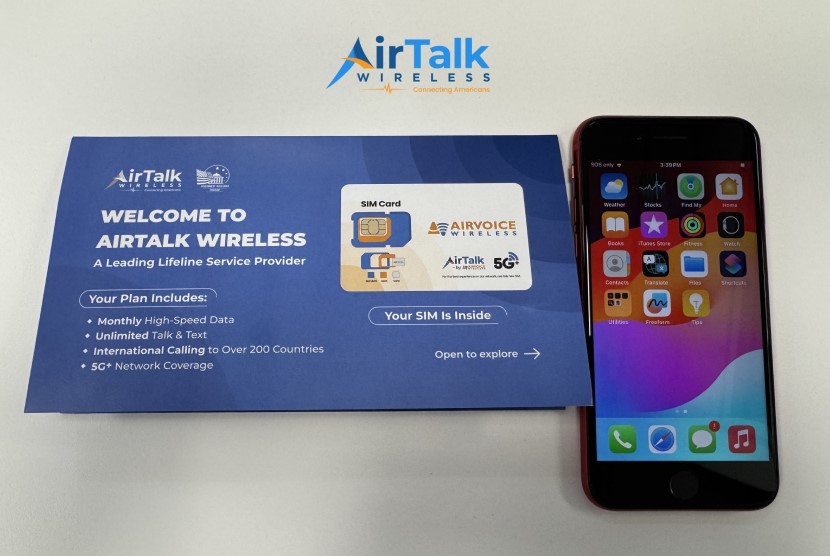
Once you are connected, use talk for calls to your employer or SSA, text for shift changes, and data for pay stubs and SSA online services. For many working SSI households, applying through AirTalk Wireless is a smart way to keep that lifeline in your pocket.
IMPORTANT: The government does not subsidize devices. Lifeline programs cover basic service costs only. Free or discounted devices, upgrade plans, or top-ups are exclusive benefits provided by AirTalk Wireless and Cintex Wireless as part of the promotional offers. Terms and conditions apply. Limited-time promotion—offers vary by state, stock availability, and eligibility.
Conclusion
If you’re wondering “how much money can you make and still get SSI,” start with your gross wages and subtract the exclusions that apply to you. Report your wages to SSA for the month you receive them. If earnings bring your SSI cash payment to zero, ask SSA whether you can keep Medicaid under Section 1619(b).