
What is considered a low-income household? A low-income household is a household whose income falls below specific limits set by programs such as the Federal Poverty Level (FPL) or Area Median Income (AMI).
These limits depend on your household size, location, and the type of assistance you apply for. You may qualify for benefits like housing support, healthcare, or free phone service if your income meets the criteria.
Read on to check your status and find out which programs you can access.
1. What Is Considered a Low Income Household?
What is poverty level income for one person? A low-income household is one whose income falls below limits set by government programs, most often based on the Federal Poverty Level (FPL) or Area Median Income (AMI).
For a single person in 2026, the FPL is $15,960 per year in the lower 48 states and Washington, D.C. That equals about $1,330 per month. In Alaska and Hawaii, the limits are higher at about $19,950 and $18,360.
The FPL is set by the U.S. Department of Health and Human Services. Programs like Medicaid, SNAP, and ACA subsidies use it to decide eligibility. The guideline updates every year based on inflation.
Many programs do not use 100% of the FPL. They use higher percentages:
| % of Poverty | Example (1 person) |
| 100% | $15,960 |
| 135% | ~$21,546 |
| 150% | ~$23,940 |
| 200% | ~$31,920 |
*Percentages may change annually
- 135% => used for the Lifeline programs
- 150%–200% => used for broader assistance
So, why is there no single definition of low income?
You may see different answers because programs use different systems:
- Federal Poverty Guidelines (FPL): used for healthcare and many benefits
- Area Median Income (AMI): used for housing programs and varies by location
- Program-based rules: some programs set their own limits, such as 150% or 200% of FPL
Tip: You should check which standard applies to your situation before deciding if you qualify.

>>> Read more: How to Get a Free iPhone from the Government in Less Than 30 Minutes
2. What Is the Maximum Income to Qualify for Low-Income Housing?
The answer depends on your location and household size. Most housing programs use Area Median Income (AMI), not a fixed national number.
AMI is based on the median income in your local area. The U.S. Department of Housing and Urban Development (HUD) sets these limits each year. Because income levels vary by city and state, your eligibility will change depending on where you live.
2.1. 2025/2026 Examples (Estimates)
Below are examples of the maximum income for US residents:
- 30% AMI (extremely low income):
For example, in high-cost areas, extremely low-income (30% AMI) may range roughly from $15,000 to $30,000 for one person. - 50% AMI (very low income):
Around ~$24,850+ for one person in high-cost areas - 80% AMI (low income):
Higher limits that vary widely by location
2.2. How Location Changes Your Eligibility
- In a high-cost city, income limits are higher
- In a smaller or rural area, limits are lower
For example, the same income may qualify you in one state but not in another. A person earning $40,000 may meet low-income criteria in a large city but exceed limits in a smaller town.
You should check your local AMI limits before applying. Housing programs such as Section 8 use these local numbers to decide eligibility.
3. If I Meet The Minimum Income Requirement, Am I Eligible For The Support Program?
If your income meets the required limit, you can apply for several support programs that help reduce daily living costs. These programs use income thresholds such as 135% of the Federal Poverty Level (FPL) or local income limits.
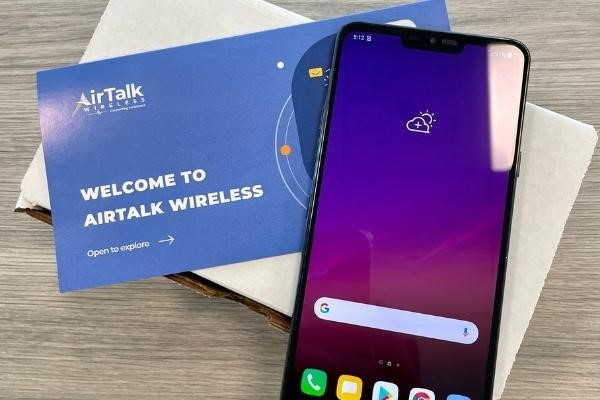
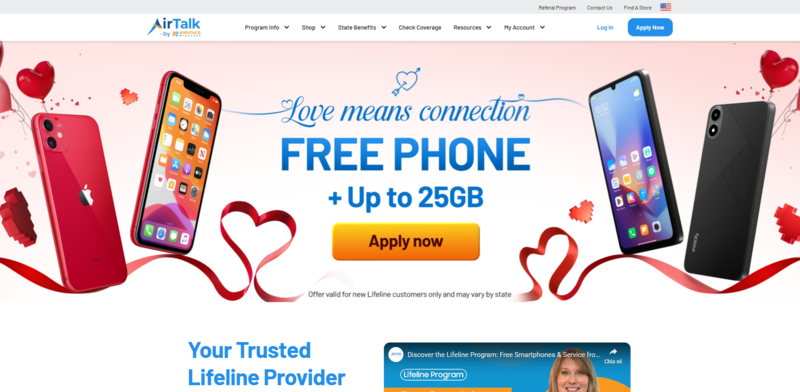
For example, if your income is at or below 135% of the FPL, you may qualify for the Lifeline program. Licensed Lifeline provider like AirTalk Wireless and Cintex Wireless offers free government smartphones and phone service or internet service plans. Depending on your location and provider, you may receive:
- Free or discounted smartphones (including iPhone or Samsung models)
- Unlimited talk and text
- Monthly data plans
Notably, Cintex Wireless is currently merging with AirTalk Wireless, aiming to deliver a better overall experience and a wider selection of phone options. As a result, customers can expect a smoother application process, more device choices, and more consistent support throughout their service.
In addition to Lifeline, you may also qualify for other programs:
- Medicaid / Health Insurance Marketplace
You can get low-cost or free health coverage based on your income level. - Section 8 Housing / Affordable Housing
You can receive rental support if your income falls below local AMI limits. - SNAP (Food Assistance)
You can get monthly benefits to help pay for groceries.
Each program has its own rules, but you only need to meet one income requirement or participate in a qualifying program. You should check your eligibility and apply as soon as possible to access available benefits.
>>> Read more: Where Can I Get a Free iPhone Without Scams?
4. Tips to Qualify Faster for Assistance Programs
You can improve your chances of approval by preparing your application carefully. Many users delay approval because of missing details or incorrect information.
4.1. Prepare your income documents
You should gather clear proof of income before applying. Common documents include:
- recent pay stubs
- tax returns
- benefit letters (SNAP, SSI, Medicaid)
Make sure your documents match the information in your application. Clear and complete files help speed up the review process.
4.2. Use the correct household size
You should report the full number of people living in your household. Income limits increase with household size, so this step can affect your eligibility.
For example:
- 1 person => lower income limit
- 4 people => higher income limit
An incorrect household size may lead to delays or rejection.
4.3. Apply with trusted providers
You should choose reliable providers when applying for programs like Lifeline. Many users choose AirTalk Wireless and Cintex Wireless because they offer:
- a wide range of device options, including iPhones
- simple online application systems
- nationwide coverage
- support during enrollment and activation
A trusted provider helps you avoid errors and reduces processing time.
>>> Compare to choose trusted providers through: Which Are the Best Free Gov Phone Companies in the US?
4.4. Compare benefits before applying
You should review different providers before submitting your application. Each provider offers different:
- phone models
- data plans
- upgrade options
Some providers also run limited-time promotions with better device offers. You can choose the option that fits your needs and apply right away.
Final Words
A clear answer to what is considered a low income household depends on three key factors: your income, your household size, and the program you apply for. Some programs use national poverty guidelines, while others use local income data. You should compare your income with both standards to get the right result.
If your income meets the limits, you can apply for support programs today and start receiving benefits.