
As 5G networks continue to expand, many users wonder whether they need a special 5G SIM card to access faster speeds and better connectivity. However, the answer may vary.
This blog post will explain what a 5G SIM card is, how it works, whether you actually need one, and how to check if your current SIM is 5G-ready.
1. Do I Need a New SIM Card for 5G?
It depends. In most circumstances, you may simply continue using your existing SIM card, which will connect to a 5G network when paired with a 5G plan and device.
Many existing 4G/LTE SIM cards can also work with 5G, although compatibility and provisioning requirements vary by carrier.
However, there are several factors to consider:
- Your phone must be 5G compatible: If you have an older phone that is not 5G-compatible, you will need to upgrade to a new 5G-compatible phone to use 5G.
- Your SIM card must be compatible with 5G: Many existing SIM cards already support 5G, but some older cards may need to be replaced or reprovisioned, particularly for certain newer 5G features. Contact your carrier if you are unsure.
- Your cellphone plan must support 5G: To access a 5G network, you must have a cell plan that includes 5G service. If you’re not sure if your current plan includes 5G, check with your mobile service provider.
2. What Is A 5G SIM Card?
A 5G SIM card is a carrier-issued SIM that authenticates your mobile subscription and is provisioned to support the carrier’s 5G services and compatible network features.
5G is the most recent generation of mobile connectivity.
Compared with previous network generations, 5G can provide faster speeds, lower latency, and greater network capacity, although actual performance varies by carrier, location, device, and network conditions.

The 5G SIM card has the following features:
- Updated carrier provisioning: A newer SIM may contain or support updated subscriber and network information required by the carrier’s current services. However, switching between 4G and 5G also depends on the phone, carrier configuration, software, and available coverage.
- Support for 5G Standalone (SA): 5G Standalone uses a dedicated 5G core network rather than relying on existing 4G infrastructure. Some carriers may require a newer 5G-compatible SIM to access certain 5G SA features, as older SIM cards may not support all required network authentication or provisioning functions.
- Improved security: Newer SIM cards may support updated authentication and security mechanisms introduced with modern 5G networks, helping provide stronger protection than some older-generation SIMs.
- Carrier requirements: In some cases, carriers issue 5G SIMs primarily to ensure compatibility with their latest network services. Providing newer SIM technology can reduce activation problems and make network support easier for both customers and carriers.
As mentioned earlier, you need a compatible phone, a compatible SIM, and a carrier plan to support 5G SIM cards.
In addition, you also need to be within your carrier’s 5G coverage area.
Availability can vary by location, so even with a 5G-ready phone and plan, your device may fall back to 4G or LTE where 5G service is weak or unavailable.
3. Key Benefits of 5G SIM
If your carrier recommends upgrading to a newer SIM, the main benefits relate to compatibility with its current and future network services:
- Support for newer 5G features: A newer SIM may be required for certain services such as 5G Standalone, depending on the carrier and device.
- Updated security support: Newer SIM technology can support authentication and subscriber-identity protections designed for modern mobile networks.
- Better carrier compatibility: Using the SIM recommended by your carrier helps ensure that your account is correctly provisioned for its current 4G and 5G services.
- Future network readiness: Replacing a very old SIM can help avoid compatibility problems as carriers introduce newer network technologies and retire older infrastructure.
However, replacing the SIM alone does not make 5G faster. Speed and coverage still depend primarily on your phone, carrier, plan, location, spectrum, and network conditions.
4. 4G vs 5G SIM Card: What Are the Differences?
The main difference between a 4G and a 5G SIM card lies in the capabilities and features offered by each technology.
5G SIM cards may have extra features such as increased security protocols, improved network slicing for higher quality of service, etc. These features are often not accessible on 4G SIM cards.
Here’s a general breakdown of what differentiates them:
| Features | 4G/LTE SIM Card | 5G SIM Card |
| Physical Size | Usually nano-SIM | Usually nano-SIM or eSIM |
| Main Function | Authenticates the subscriber | Authenticates the subscriber |
| 5G Access | May already support 5G | Designed/provisioned for current carrier 5G services |
| 5G Standalone | May not support all carrier implementations | May support 5G SA when required by the carrier |
| Security | Supports carrier authentication and security | May support newer authentication and privacy features |
| Carrier Requirements | Often not necessary | May be recommended for older SIMs or newer 5G features |
5. How to Check 5G SIM Card?
Below is a step-by-step guide to check if your SIM supports 5G technology on iOS and Android:
On iPhone
- Go to Settings > Cellular > Cellular Data Options > Voice & Data.
- Look for “5G Auto” or “5G On”.
- If 5G options appear, your iPhone supports 5G, and your current carrier settings provide 5G options. This does not necessarily confirm that an older physical SIM supports every 5G feature offered by your carrier. However, contact your carrier to confirm whether your SIM and mobile plan are fully 5G-enabled.
On Android
- Open Settings > Network & Internet > SIMs or a similar mobile network menu, depending on your phone.
- Select your active SIM or carrier.
- Open Preferred Network Type or Network Mode.
- If 5G appears as an available option, the phone supports a 5G network mode, but the menu alone may not confirm whether your SIM, plan, and account provisioning support every 5G service from your carrier. Menu names may vary between Android manufacturers and carriers.
If these steps do not provide a clear answer, check your carrier account or activation information for any SIM upgrade requirements.
Signing in to your carrier’s official website or app to review your SIM and plan is also helpful.
You can also contact your carrier directly and ask whether your current SIM needs to be replaced or upgraded for 5G service.
>>>Read more: How To Switch SIM Cards? Important Things To Know
6. Is It Worth Getting a 5G Phone?
A 5G phone can be worth considering if you want faster mobile speeds, better network performance, and access to newer 5G services where coverage is available.
If cost is a concern, eligible low-income households may qualify for discounted mobile service through the federal Lifeline program. It is a government assistance program that helps eligible low-income households have stable connectivity through a monthly discount.
Lifeline is limited to one benefit per eligible household, and the service cannot be transferred to another person.
Also, it is available to households that meet income requirements or participate in qualifying assistance programs.
What’s great about this program is that participating providers, such as Cintex Wireless.
This company can offer eligible customers promotional 4G/5G smartphones and SIM service at little or no cost, depending on location, eligibility, plan, and device availability.
Notably, Cintex is merging with AirTalk Wireless to offer more upgraded phones to applicants (offers vary by state and current stock).
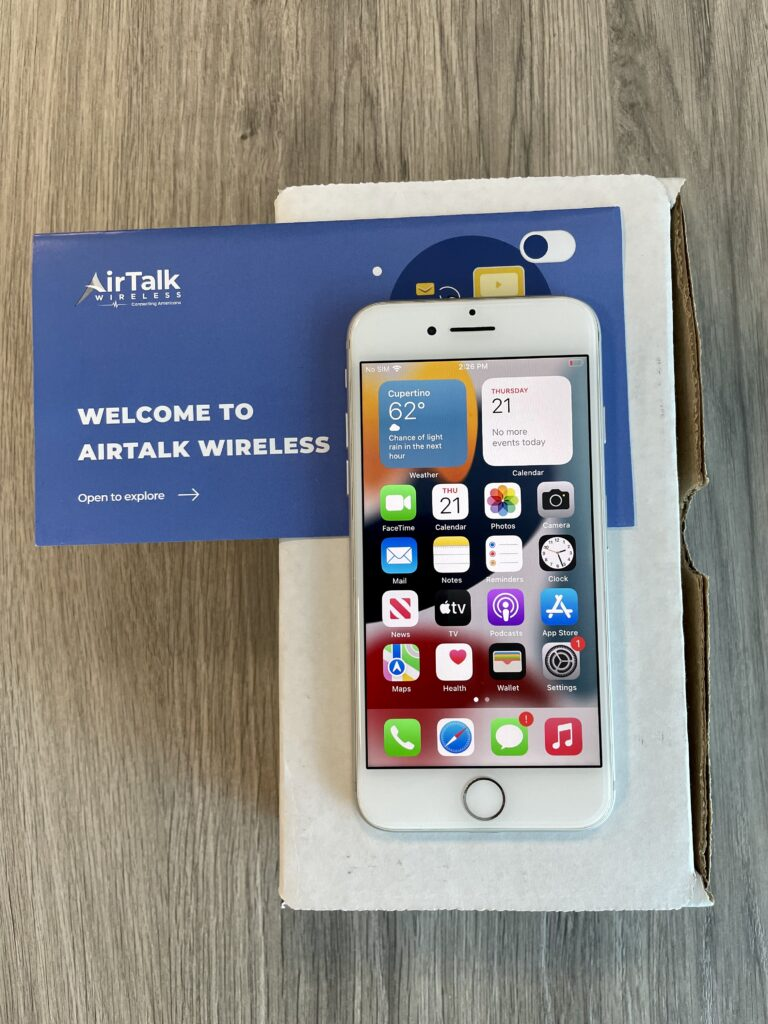
Below are some popular models:
IMPORTANT: The government does not subsidize devices. Lifeline programs cover basic service costs only. Free or discounted devices, upgrade plans, or top-ups are exclusive benefits provided by Cintex and AirTalk Wireless as part of the promotional offers. Terms and conditions apply. Limited-time promotion—offers vary by state, stock availability, and eligibility.
Conclusion
A 5G SIM card may be useful when your carrier requires newer SIM technology for services such as 5G Standalone, but you do not automatically need a new SIM just because you upgrade to a 5G phone. Many existing SIM cards can continue working with 5G when the device, plan, carrier provisioning, and coverage are compatible.
If you are still wondering whether you need a new SIM card for 5G, check with your carrier before replacing it. A new SIM may improve compatibility with newer network features, but your actual 5G speed and coverage depend mainly on the phone, network, plan, and location.