
Healthcare bills may be difficult to manage, especially when you’re not sure which assistance programs you’re eligible for or what treatments are covered.
Medicaid Hawaii, also known as Med-QUEST, provides eligible Hawaii residents with affordable healthcare coverage for services such as doctor visits, hospital treatment, medications, and behavioral health services. This article explains who may be eligible, what benefits are offered, and how to apply for coverage in Hawaii.
1. What is Medicaid Hawaii?
Medicaid is a joint federal-state healthcare program designed to assist low-income people and families who meet specific eligibility criteria.
In Hawaii, Medicaid is administered through Med-QUEST. Depending on your eligibility category, coverage may include:
- Visits to health care providers (including physicians and nurse practitioners)
- Inpatient and outpatient hospital services
- Preventive care (e.g., vaccinations)
- Early and periodic screening, diagnostic, and treatment services
- Lab tests and X-rays
- Mental health services
- Dialysis services
- Medical transportation
- Substance use treatment
- Rural health clinic services
- Long-term care (e.g., nursing facility care, home health services)
The exact benefits depend on your Medicaid program and eligibility group, so it’s important to check your specific coverage rather than assume every service is included.
For further information about the available coverages, contact the Med-QUEST Eligibility Branch Office on your island.
If you’re asking, “What is the number for Medicaid in Hawaii?”, Med-QUEST’s statewide Customer Service Call Center is 1-800-316-8005. Oahu residents can also call (808) 524-3370.
2. Who is Eligible for Medicaid in Hawaii?
Here are things you should know to determine your eligibility for Medicaid benefits in Hawaii:
Eligibility for Medicaid in Hawaii
Hawaii Medicaid supports a variety of populations. In general, to be qualified, you must:
- Be a Hawaiian resident.
- Be a US citizen or a qualifying non-citizen.
Eligibility is also determined by income, household size, age, and other variables. Here are the primary groups who could qualify:
- Children aged 0 to 18 can qualify if their family income is up to 313% of the Federal Poverty Level (FPL).
- Children who are eligible before age 6 remain eligible until they reach 6. Whereas children aged 6-19 only need their eligibility redetermined every two years.
- Pregnant women qualify with household income up to 196% of FPL, and coverage for the mother lasts a year after the baby is born.
- Parents and other adults qualify with a household income up to 138% of the FPL.
Note: Income limits above are expressed as a percentage of the Federal Poverty Level (FPL) after Hawaii’s standard 5% income disregard, which is the figure used when a household’s income is actually tested for eligibility. FPL dollar amounts are updated annually (typically each January/February) and may vary slightly by household size. For the current limits and official verification, contact Med-QUEST at 1-800-316-8005 or visit medquest.hawaii.gov.
It’s also important not to apply one rule across the board. Most MAGI-based Medicaid categories do not use an asset test, while certain programs for seniors, people with disabilities, and long-term care can have different financial rules.
What Disqualifies You for Medicaid in Hawaii
You may be ineligible if your income is above the limit for your category, you don’t meet residency or immigration requirements, or you don’t satisfy another requirement of the program you’re applying for.
However, being over one income limit doesn’t necessarily close every door. Hawaii has multiple Medicaid and related coverage categories, so your circumstances may qualify you for a different program.
When in doubt, it’s better to check your eligibility than count yourself out before applying.
>>>Read more: 10 Reasons For Medicaid Cancellation: Don’t Miss Your Medicaid Coverage!
3. How to Apply for Medicaid Hawaii?
Once you’ve checked the basic requirements, applying is fairly straightforward. Med-QUEST accepts applications online, by phone, and by paper application.
Gather Documents
Have information about your identity, household, income, residency, and immigration status ready if applicable. Additional documentation may be requested depending on your eligibility category.
| Identity & Residency Documents | – Social Security card – Birth certificate or U.S. passport – Hawaii driver’s license or state ID – Proof of Hawaii residency (utility bill, lease, or bank statement) |
| Income Documents | – Social Security award letter or SSA-1099 – Pension and retirement income statements – Documentation of any other income sources |
| Asset Documents | – Bank statements for all checking, savings, and CD accounts (60 months of statements for nursing home or waiver applications, matching the five-year look-back) – Retirement account statements – Life insurance policies showing face value and cash value – Vehicle registration or title Property deed and tax assessment |
| Medical Documents | – Medicare ID card, if you have one Health insurance cards – Documentation of diagnoses and care needs |
Applicants seeking long-term-care Medicaid may need more extensive financial and medical documentation than someone applying for standard MAGI-based coverage.
Select an Application Method
There are various methods to apply for Medicaid in Hawaii, so file whichever way best suits your situation:
- Apply online: Visit https://medquest.hawaii.gov. This is the fastest technique and is available at all times.
- Apply by phone: Call 1-800-316-8005 to talk with a benefits counselor who can assist you with your application over the phone.
- Apply in-person: Visit your Hawaii Medicaid office. Remember to bring proof of identification, income, and residence.
- Apply by mail: Download the paper application from the Hawaii Medicaid website and send it to your local office.
The official Med-QUEST website recommends applying online for a faster application experience.
Complete the Review
After you submit your application, Med-QUEST reviews the information provided. If additional documents or clarification are needed, the agency will contact you.
Responding promptly can help keep your application moving instead of letting it sit on the sidelines waiting for missing information.
Response to Any Request
After submitting, log back in to check for document requests.
Medicaid Hawaii may contact you for further information before choosing, and responding quickly keeps the clock ticking.
4. How Long Does It Take to Get Medicaid Hawaii?
According to federal law 42 CFR 435.912, Med-QUEST has no more than 45 days to decide most applications and no more than 90 days for applicants applying for Medicaid based on disability.
Even if the case includes a financial evaluation and a clinical level-of-care judgment, a senior applying based on age, even for nursing home Medicaid, still falls under the 45-day limit.
The 90-day extension applies only to applications made on the basis of disability, not to age-based cases regardless of complexity.
As a result, a wait of more than 45 days is considered late and worth pursuing rather than something to endure.
If you are accepted, federal law allows you to get up to three months of retroactive coverage for eligible treatments performed prior to the month you ask for, assuming you would have qualified during that time period.
>>>Read more: Medicaid Renewal Online Instructions: 2026 Beginner Guide
5. A Helpful Assistance Program to Stay Connected in 2026
If you are enrolled in Medicaid, you may also qualify for Lifeline, a federal program that helps eligible low-income consumers reduce the cost of phone service or internet service.
Medicaid is one of the government assistance programs that can establish Lifeline eligibility, yet it is not the only way to qualify.
Even if you do not receive Medicaid, you may still be eligible by meeting Lifeline’s household income requirements or participating in another qualifying assistance program, such as SNAP, SSI, Federal Public Housing Assistance, etc.
To receive the benefit, you can apply through a participating Eligible Telecommunications Carrier (ETC) such as Cintex Wireless.
Cintex is merging with AirTalk Wireless, which can provide customers with a more streamlined application experience and access to a broader selection of device offers.
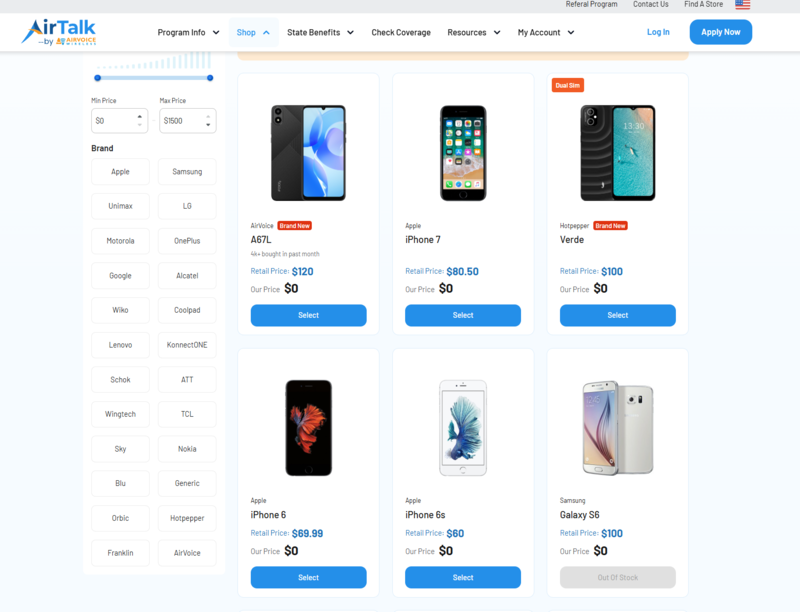
Depending on eligibility, location, and current provider offers, qualified customers may receive discounted wireless service and additional connectivity benefits, such as a free phone, free talk and text, etc.
Available devices vary by location and inventory, but you can expect popular smartphone models such as iPhone 13, iPhone 13 Pro, Samsung Galaxy A42 5G, etc.
Note: Eligibility varies by state and program. Offers depend on availability and qualifications. Cintex Wireless and AirTalk Wireless operate under the federal Lifeline Program as Eligible Telecommunications Carriers (ETCs). Service is non-transferable and limited to one service per household.
Conclusion
Understanding Medicaid Hawaii can help you determine whether you qualify and make the most of the healthcare assistance available to you.
If you are eligible for Medicaid benefits, you can apply for coverage and access essential healthcare services while also exploring other assistance programs that Medicaid participation may help you qualify for.