
Is Zepbound covered by Medicaid? The answer depends on your state Medicaid program, your specific plan, and the medical reason your doctor prescribes it.
Some Medicaid programs cover Zepbound for certain FDA-approved uses, while others do not include weight-loss medications on their formularies. Coverage rules can change, so checking your state’s current Medicaid drug list is the most reliable way to confirm.
This guide covers which states say yes, why two Medicaid members can get opposite answers, and what to do if your state says no.
1. Is Zepbound Covered by Medicaid?
Medicaid coverage for Zepbound depends entirely on your state and the medical reason for your prescription. Federal law does not require state Medicaid programs to cover anti-obesity medications.
Coverage may differ when tirzepatide is prescribed for type 2 diabetes under the brand name Mounjaro. Diabetes-related coverage policies are usually separate from coverage decisions for weight-management medications, so the diagnosis and plan criteria matter.
This is different from a blanket denial. A second FDA-approved use for Zepbound opens coverage in many states that deny it for weight loss alone, which is exactly the path worth checking next.
2. Why Can Two Medicaid Members Get Different Zepbound Coverage Decisions?
Two people on Medicaid, even in similar situations, can receive opposite coverage decisions. This isn’t random; it comes down to four specific variables.
Understanding all four explains most denials that seem to make no sense on the surface.
- Different state Medicaid policies: since Medicaid is managed state by state, only a fraction of programs cover anti-obesity medications like Zepbound at all, so a member’s state alone can decide the outcome
- Different managed care plans: different Medicaid plans may have different formularies, preferred drug lists, or prior authorization requirements within the rules established by the state Medicaid program. This means two Medicaid members in the same state may still receive different coverage decisions depending on their plan.
- Different medical diagnoses: federal rules treat weight management as optional coverage, but many states approve Zepbound for a secondary condition like obstructive sleep apnea instead, so the diagnosis code submitted changes everything
- Different documentation requirements: one doctor may submit complete records showing prior supervised weight loss attempts, while another leaves out details a reviewer needs to approve the claim

3. What Does Medicaid Look at Before Approving Zepbound?
Zepbound is FDA-approved to treat moderate-to-severe obstructive sleep apnea in adults with obesity, separate from its weight-loss approval.
Many state Medicaid programs that deny coverage for weight loss will approve Zepbound if you have a formal sleep apnea diagnosis instead.
Your Diagnosis and Medical Need
Zepbound has an FDA-approved indication for adults with obesity and moderate-to-severe obstructive sleep apnea. However, Medicaid coverage still depends on whether your state program and specific plan include this use in their coverage criteria.
A qualifying diagnosis may support a coverage request, but it does not guarantee approval.
Your Treatment History
Some Medicaid plans may ask for documentation of previous weight-management efforts, lifestyle changes, or other treatments before approving Zepbound. Requirements vary depending on the state program and plan.
Your Doctor’s Documentation
Complete medical records, exact prescription details, and supporting clinical evidence from your doctor’s office often decide a close case, since a thin file is one of the easiest reasons to get denied.
Prior Authorization Review
The final step is a formal review against your specific plan’s criteria, where a pharmacist or medical reviewer confirms every requirement above has actually been met before approval goes through.
>>> Read more: Emergency Dentist That Take Medicaid: How to Find One Fast
4. Why Might Medicaid Deny Zepbound Coverage?
A denial doesn’t always mean something went wrong on your end. Several distinct reasons show up repeatedly across state Medicaid programs. Knowing which one applies to your case tells you what to fix next.
- Weight loss medications are excluded entirely under your state’s current policy
- Documentation is missing or incomplete in the prior authorization request
- Clinical criteria, like a specific BMI threshold, were not clearly met
- Zepbound may require additional approval steps if it is not listed as a preferred medication on your plan’s drug list.
- An issue at the provider or pharmacy level, such as an incorrect billing code, blocked the claim
5. What Can You Do If Your State Doesn’t Cover Zepbound?
A denial on the weight-loss indication is not necessarily the end of the road. A few concrete options exist before paying full price.
Therefore, you should try several different methods to increase your chances of finding an effective solution.
- Check your state Medicaid agency’s Preferred Drug List (PDL) directly, since coverage rules change often
- Ask your doctor whether a sleep apnea diagnosis or another qualifying condition applies to your case
- For children, ask about coverage under Medicaid’s EPSDT benefit if deemed medically necessary
- Explore cash-pay single-dose vials through LillyDirect, which start at $299/month for the 2.5 mg starter dose ($399 for 5 mg) without insurance (pricing is subject to change, so check LillyDirect’s official website for the latest information)
6. You’ve Been Checking What Medicaid Covers, Here’s One More Thing to Check
You just spent this whole article checking what your Medicaid plan does and doesn’t cover. One more quick check is worth it before you close the tab. This can reduce your monthly phone bill by up to $0.
What Is the Lifeline Program?
Lifeline is a federal government program that offers discounts on a monthly phone service or internet service, up to $9.25 a month standard or $34.25 a month on Tribal lands.
Being qualified for Medicaid may help your household qualify. Or other programs like SNAP, SSI, etc or meeting the income threshold can also count.
To get the benefit, you will need to apply through Eligible Telecommunication Carriers (ETCs). The carrier will provide you with the service plan that has already implemented the discount. Some carriers offer more Lifeline benefits rather than a discount (coverage depends on your provider and state)
Benefits Through Approved Providers
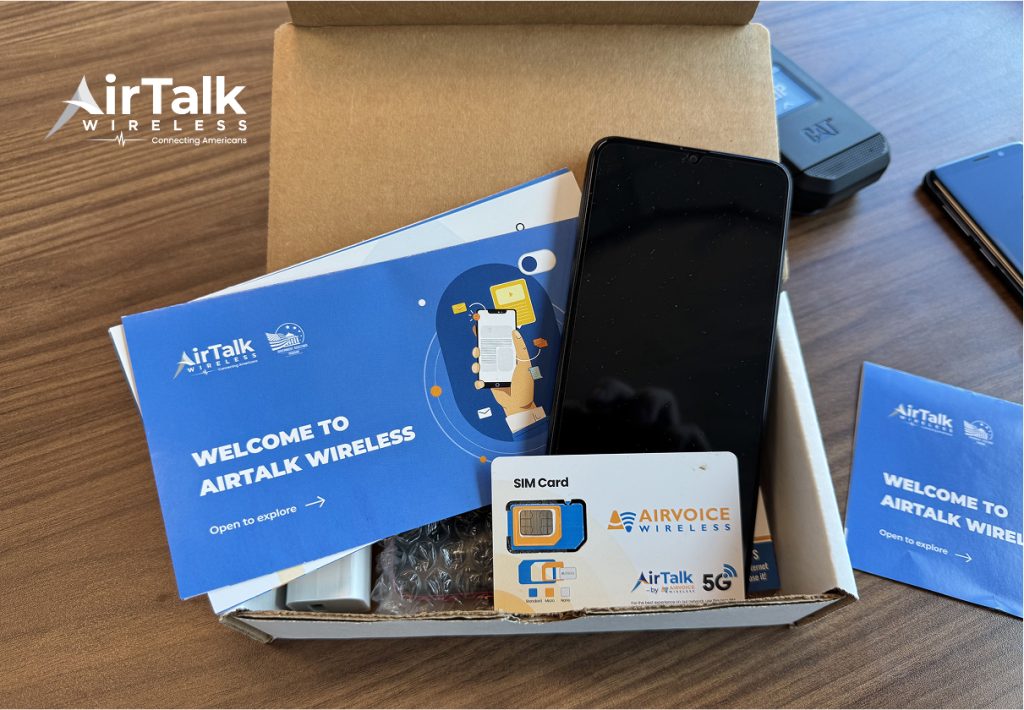
Cintex Wireless is a trusted, federally approved ETC that has built a reputation for straightforward applications, dependable service, and a smooth process from sign-up to approval. Households that qualify get more benefits rather than just a discount, including:
- A free or discounted device, including popular smartphone models
- Lifeline plan that has unlimited text and talk, along with a monthly data allowance
- Nationwide 5G+ network coverage
- Dedicated customer support
Moreover, Cintex Wireless has now merged into AirTalk Wireless, a provider serving for more than 2 decades, and that merger has pushed every one of these benefits further.
Eligible households get access to a larger device lineup, faster application review, and stronger network coverage than either brand offered running on its own.
How to Apply
After clearly Lifeline program and the benefits you can get. Start the application process as below:
- Visit the carrier’s website and enter your ZIP code to check availability
- Choose the plan that fits your needs
- Provide essential information for verification. Upload any proof if requested.
- Submit your application and wait for approval. Once approved, you can start enjoying your telecommunication benefit.
Note: Eligibility varies by state and program. Offers depend on availability and qualifications. AirTalk Wireless and Cintex Wireless operate under the federal Lifeline Program as an Eligible Telecommunications Carrier (ETC). Service is non-transferable and limited to one service per household.
>>> Read more: Medicaid Pregnancy Coverage: How Do You Get Support?
7. Frequently Asked Questions
Q1. What medication is covered by Medicaid for weight loss?
Coverage varies by state and Medicaid plan. Some programs cover certain weight-management medications, while others do not. Check your state’s Medicaid formulary or ask your healthcare provider about covered options.
Q2. How can I get Ozempic with Medicaid?
Ozempic is FDA-approved for type 2 diabetes, and Medicaid coverage for that indication is close to universal across states, unlike Zepbound’s more limited weight-loss coverage.
Q3. Will Medicaid cover Zepbound in 2026?
It depends on your state and the diagnosis behind your prescription. Coverage rules can change during the year as states adjust their formularies, so checking your state’s current Preferred Drug List is the most reliable way to confirm.
Q4. What is the cheapest way to get Zepbound without insurance?
The manufacturer’s self-pay program, LillyDirect, currently offers vials at around $299 to $349 a month, well below the roughly $1,000-plus list price. Prices and availability may change over time. Check the manufacturer’s official website for the most current pricing and eligibility details.
Conclusion
Is Zepbound covered by Medicaid? There is no single nationwide answer. Coverage depends on your state Medicaid program, your plan’s requirements, and the medical reason for your prescription.
If coverage is denied, review the reason with your healthcare provider and Medicaid plan. Understanding the specific requirement behind the decision can help you determine what options may be available next.