
Partial Medicaid can be confusing because it works differently from regular Medicaid coverage. If you already have Medicare, you may qualify for a type of Medicaid assistance designed to help with certain healthcare costs, but the benefits you receive depend on your eligibility category and income level.
This guide explains how partial Medicaid works, what costs it may help cover, the different categories available, and the income limits to know in 2026. Keep reading to understand which program may fit your situation and what steps to take next.
1. What Is Partial Medicaid?
Partial Medicaid, often called partial dual eligibility, means you qualify for state help with specific Medicare costs through a Medicare Savings Program (MSP). You do not receive comprehensive, full-service Medicaid medical benefits. It’s a different kind of help than full Medicaid, not a smaller version of it.
There are four MSP categories, and each one covers something different.
| Category | What It Pays For | 2026 Monthly Income Limit (Individual) |
| QMB (Qualified Medicare Beneficiary) | Part A/B premiums, deductibles, coinsurance | About $1,330 |
| SLMB (Specified Low-Income Medicare Beneficiary) | Part B premium only | $1,596 |
| QI (Qualifying Individual) | Part B premium only, higher income allowed | $1,796 |
| QDWI (Qualified Disabled and Working Individual) | Part A premium for working disabled individuals | $5,385 |
*Note: Figures include the standard federal $20 general income disregard. Several states (such as New York, California, and Connecticut) have higher income limits or no asset limits for MSPs.
2. What Does Partial Medicaid Coverage Include?
Partial Medicaid focuses specifically on the costs tied to Medicare itself rather than general healthcare. Three areas make up most of what it pays for:
- Medicare Premiums: Helps pay for Part A and/or Part B monthly costs depending on your MSP category.
- Cost Sharing: Under the QMB tier, Medicaid covers Medicare deductibles, copays, and coinsurance.
- Extra Help (Part D): Enrolling in QMB, SLMB, or QI automatically qualifies you for Medicare Part D Extra Help (Low-Income Subsidy), which lowers or eliminates your prescription drug copays. (Note: QDWI enrollees must meet separate income checks for Extra Help).

3. What Doesn’t Partial Medicaid Cover?
Besides the services that Partial Medicaid covers, you also need to know what it doesn’t cover. None of these are covered under a partial Medicaid category alone.
- Regular doctor visits or hospital care outside of what Medicare already approves
- Long-term care services like nursing home care
- Extra state benefits like routine dental, vision, or non-emergency medical transportation
4. Who May Qualify for Partial Medicaid Benefits?
Eligibility for partial Medicaid depends on several factors your state agency will check together. Income and household size matter most, but age, disability status, and Medicare enrollment also play a role.
Pregnancy status and your specific state’s Medicaid rules can shift which category applies to you.
Here are the groups that most commonly qualify.
- People above traditional Medicaid income limits. Some individuals may qualify for limited Medicaid-related assistance even if they do not qualify for full Medicaid coverage.
- Medicare beneficiaries. Some Medicare recipients may receive Medicaid help with Medicare costs if they meet financial requirements.
- People eligible for specific state programs. States may offer limited benefit Medicaid categories beyond the four federal MSP tiers.
>>> Read more: What Is the Income Limit for Medicaid in 2026? Verify NOW
5. How Do You Apply for Partial Medicaid Benefits?
Applying for a Medicare Savings Program follows a similar path in every state, though details vary. You will need to gather income and personal information before you start. Processing times differ, so patience helps during the review stage.
- Check eligibility through your state Medicaid agency
- Submit income and personal information
- Provide supporting documents if requested
- Wait for eligibility determination
- Review approved benefits carefully
Because programs differ by state, always apply directly through your state Medicaid office rather than a third party.
6. Partial Medicaid vs. Full Medicaid: What Is the Difference?
Medicaid is not always the same for everyone. Some people get full coverage. Others only get partial or limited benefits. Here is how the two compare.
| Full Medicaid | Partial Medicaid / Limited Benefits | |
| Coverage | Broader healthcare coverage | Specific services or financial assistance |
| Eligibility | Meets Medicaid requirements | May meet requirements for a limited program |
| Benefits | Doctor visits, hospital care, prescriptions (varies by state) | Depends on program type |
| Availability | All states | Varies significantly |
7. Why Did I Only Get Partial Medicaid Coverage?
You received partial Medicaid coverage because your income or assets exceed full Medicaid limits, or because you qualify only for a specific limited program like a Medicare Savings Program rather than comprehensive healthcare services.
This outcome depends on how your state calculated your income against both full Medicaid and MSP thresholds during review.
>>> Read more: What Is The Difference Between Medicare And Medicaid? 2026 Easy Explanation.
8. Qualifying for Partial Medicaid May Open Another Door Too
Qualifying for a Medicare Savings Program means your income already cleared a specific state threshold. That same threshold often unlocks a second benefit, one that helps keep your phone connected.
The Lifeline Program Overview
Lifeline is a federal program, run through the FCC and administered by USAC since 1985, that helps eligible households cover the cost of phone service and internet service through a monthly discount.
Lifeline subsidies level include:
- Up to $9.25 a month for most households
- Up to $34.25 a month for those on Tribal lands.
Qualifying for Medicaid usually meets the income bar automatically. If you are not on Medicaid, you may still qualify through SNAP, SSI, Section 8, Veterans Pension, or by showing your household income falls at or below 135% of the Federal Poverty Guidelines.
How does a Lifeline provider Work?
Lifeline itself only funds the monthly service discount. To maximize your Lifeline subsidies and more telecommunications service benefits, you should apply through Eligible Telecommunications Carriers (ETCs).
An approved carrier, like Cintex Wireless, partners with the Lifeline program to offer a free Lifeline service plan (free device + $0 monthly service)
Moreover, Cintex Wireless has merged into AirTalk Wireless (another top carrier with more than 2 decades of experience ), and supports eligible users in exploring more Lifeline benefits, including:
- A free or discounted smartphone
- Unlimited talk and text
- Monthly data allowance
- International calling to over 200 countries
- Fast shipping after application is reviewed
- No contract, no credit check, and no activation fee
Staying reachable by phone matters most right when you’re waiting on a callback about your MSP status or a document request from your state agency. A working phone means you don’t miss that call.
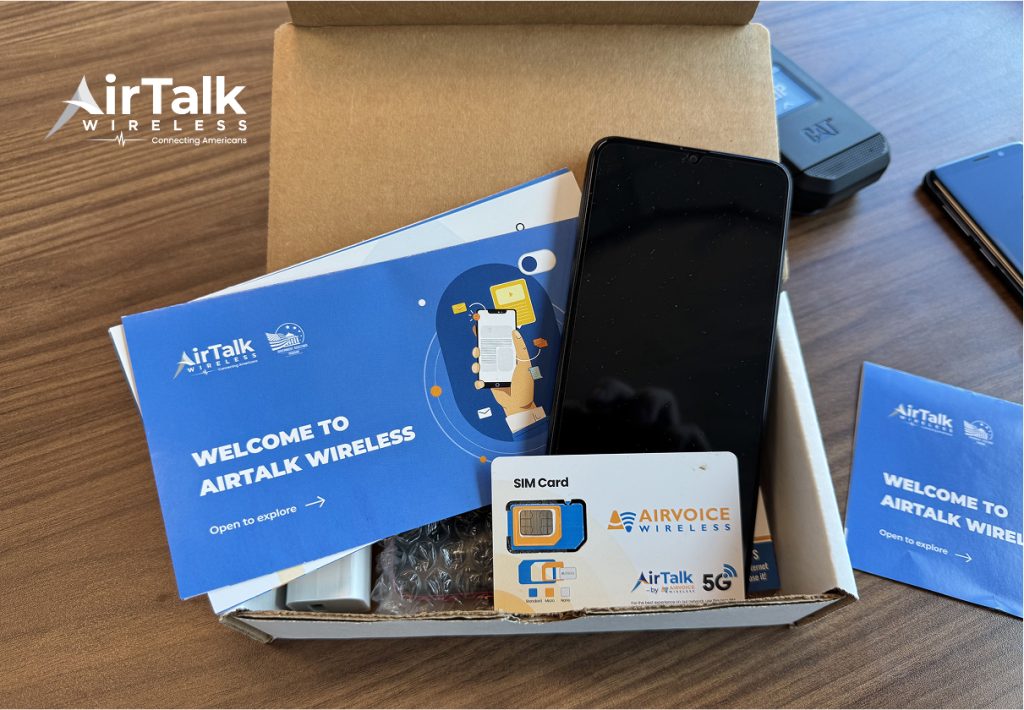
IMPORTANT: The government does not subsidize devices. Lifeline programs cover basic service costs only. Free or discounted devices, upgrade plans, or top-ups are exclusive benefits provided by AirTalk Wireless and Cintex Wireless as part of the promotional offers. Terms and conditions apply. Limited-time promotion—offers vary by state, stock availability, and eligibility.
>>> Read more: Is Free Phone Wireless Legit? Key To Selecting A Reputable Provider
9. Frequently Asked Questions
Q1. What is the difference between QMB and SLMB?
QMB covers Part A and B premiums plus deductibles and coinsurance, while SLMB only covers the Part B premium, with a slightly higher income limit than QMB.
Q2. Does partial Medicaid cover prescriptions?
Indirectly, yes. Qualifying for a Medicare Savings Program automatically enrolls you in Extra Help, which lowers or eliminates your Medicare Part D prescription drug costs.
Q3. Can you have partial Medicaid and full Medicaid at the same time?
Yes. Known as being “dual-eligible” (e.g., QMB Plus), full Medicaid covers medical services like dental or home care, while partial Medicaid pays your Medicare premiums and out-of-pocket costs.
Q4. What does partial Medicaid cover for seniors?
The same coverage applies regardless of age: Medicare premiums, and in some categories, deductibles and coinsurance, plus automatic Extra Help for prescription costs.
Conclusion
Partial Medicaid is not a reduced version of full coverage. It’s a separate track, built through a Medicare Savings Program, that helps pay specific Medicare costs rather than covering healthcare broadly. Before you apply, check which category, QMB, SLMB, QI, or QDWI, actually fits your income so you know what to expect.