
Eye doctor DC Medicaid searches can be frustrating when a clinic appears nearby but doesn’t accept your specific health plan. Even when an office accepts Medicaid, coverage for eye exams and glasses may differ depending on your plan.
This guide explains where to find participating eye doctors in Washington, DC, what vision services may be covered, and how to confirm your benefits before booking. Start with your Medicaid plan to narrow down the right providers.
1. Eye Doctor DC Medicaid: Where Should You Start?
Use your membership card to choose the correct search route:
| Coverage | Where To Start |
| AmeriHealth Caritas DC | Its designated vision-provider roster and Enrollee Services |
| MedStar Family Choice DC | Its provider directory and member services |
| HSCSN | Its provider directory or care manager |
| DC Medicaid FFS | The DC Medicaid portal’s member provider directory |
AmeriHealth directs members to its dedicated vision-provider list. When searching for an eye doctor DC Medicaid covers, call the office to confirm availability, as directory listings do not guarantee acceptance of new patients.
2026 plan transition: Wellpoint DC Medicaid members were automatically assigned to AmeriHealth Caritas DC effective August 1, 2026. A transition period for continuity of care runs through October 31, 2026. Affected members who want to change plans may request a transfer to MedStar Family Choice DC through January 31, 2027. Check your current plan assignment before relying on an older card or provider directory.
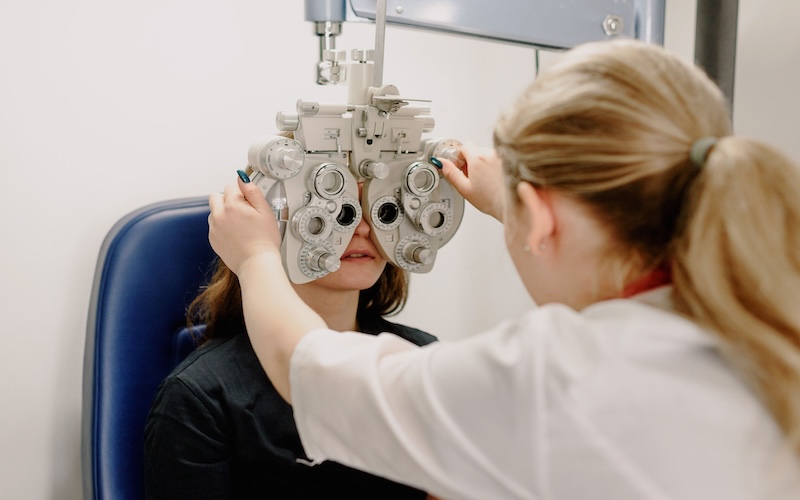
2. Which Type Of Eye Care Do You Need?
Knowing the care you need helps narrow your eye doctor DC Medicaid search.
Optometrist for routine exams and vision correction
Optometrists evaluate eyesight and ocular health and provide prescriptions for corrective lenses. They commonly provide routine examinations and manage certain eye conditions within their professional scope.
Ophthalmologist for medical or surgical eye care
Ophthalmologists are medical doctors who diagnose and treat eye diseases and perform surgery. Your clinician may recommend one for a condition requiring specialist treatment.
For example, a child needing updated glasses may start with an optometrist; someone needing cataract surgery requires an ophthalmologist.
>>> Read more: Eye Doctor Winston Salem NC: How to Find the Right Clinic
3. What Vision Services May DC Medicaid Cover?
When selecting an eye doctor DC Medicaid provider, verify examination coverage separately from benefits for recommended glasses or contacts. Approval for one service does not automatically cover everything recommended during the visit.
- Routine eye examinations: Your benefits may include visits to check eyesight and evaluate the health of your eyes. Confirm frequency limits and provider requirements.
- Glasses: Frames and corrective lenses may qualify for coverage, depending on approval requirements and replacement limits. Optional upgrades require separate confirmation.
- Contact lenses: Coverage is conditional. Ask about qualifying medical circumstances, quantity limits, and prior authorization.
- Necessary medical care: Covered benefits may include tests, medicines, or procedures to diagnose and treat eye conditions or injuries.
For members under age 21, EPSDT requires Medicaid coverage of vision screening, diagnosis, and medically necessary treatment for vision problems, including eyeglasses. For DC Medicaid FFS members specifically, the current handbook lists eye exams at least once every year and as needed, with eyeglasses as needed.
Additional medically necessary services may also be covered when needed to correct or improve an identified health condition.
For DC Medicaid FFS beneficiaries age 21 and older, eyeglass and contact-lens services require prior authorization. The current FFS handbook generally allows one pair of eyeglasses every two years, with exceptions including lost glasses or a prescription change of more than 0.5 diopter.
As of October 1, 2026, DC Medicaid FFS no longer requires cost sharing for covered eyeglasses. You may still have to pay for optional products or upgrades that Medicaid does not cover.
Managed-care requirements can differ. Confirm your exact plan’s examination frequency, eyewear allowance, participating providers, and authorization rules before scheduling or ordering glasses.

4. How To Confirm Coverage And Book Your Eye Appointment
Use these steps to turn your eye doctor DC Medicaid search into an appointment with clear coverage expectations.
Step 1. Identify your exact plan: Check your current membership card or enrollment notice. Confirm whether you have managed-care coverage or DC Medicaid Fee-for-Service (FFS).
Step 2. Search the correct directory: Use your plan’s vision roster or provider directory. FFS members should use the DC Medicaid portal’s member provider directory.
Step 3. Call with the full plan name: Ask whether the office participates in your specific plan. Saying only “Medicaid” may not establish network acceptance.
Step 4. Confirm new-patient availability: When contacting an eye doctor DC Medicaid provider, check whether they accept new patients in your age group, offer the services you need, and have available appointments.
Step 5. Check referral and authorization rules: Confirm whether you need a referral or prior approval, who obtains it, and whether it must be completed before the visit.
Step 6. Verify examination and eyewear benefits separately: Ask about examination coverage, frames, lenses, contacts, replacement limits, and charges for optional upgrades.
Step 7. Save confirmation details: Record the appointment date, location, contact person, and any reference number. Keep referral or authorization documents and bring your current membership card.
>>> Read more: Does Eyemart Express Take Medicaid? 3 Easy Steps to Verify Coverage
5. What If You Cannot Find A DC Medicaid Eye Doctor?
If your eye doctor DC Medicaid search leads to no available appointments, ask your health plan for help finding a provider instead of calling the same offices repeatedly.
Contact member services: Explain the service you need and which offices could not schedule you. Ask your Medicaid plan to help locate an available participating clinician.
Request alternative locations: Ask about other in-network offices within a practical travel distance. Confirm availability before making the trip.
Seek FFS assistance: If you have FFS coverage, contact DC Medicaid or DHCF for help navigating the provider directory and identifying the appropriate assistance channel.
Use the managed-care inquiry form: Since September 1, 2026, DC Medicaid managed-care enrollees can use DHCF’s Enrollee Experience Inquiry Form, also called AskYourDCMCO, to submit issues, concerns, or questions about their health plan.
The form goes directly to the member’s managed-care plan and automatically escalates to DHCF if the plan does not act within two business days. It does not replace the plan’s regular Enrollee Services process.
Ask about transportation: DC Medicaid FFS provides transportation to medical appointments when you need it. For non-urgent appointments, the current handbook says to request transportation at least three days in advance, excluding Saturdays and Sundays. Managed-care members should contact their plan to confirm its transportation process.
Document access barriers: Keep office names, call dates, quoted wait times, and reasons appointments were unavailable. Share this record with your plan when requesting further assistance.
6. Eye Care Takes Follow-Up: Another Medicaid Benefit To Check
Finding an eye doctor through DC Medicaid is only the first step. You may still need to confirm referrals, arrange transportation, or take a call when your glasses are ready, so affordable phone service helps.
If you receive Medicaid, it qualifies you for Lifeline, a federal program that lowers the monthly cost of phone service or internet service.
If you don’t have Medicaid, SNAP, SSI, Federal Public Housing Assistance, or household income at or below 135% of federal poverty guidelines may also work.
Note: Lifeline service is distributed for one benefit per household. And the benefit is non-transferable.
An Eligible Telecommunications Carrier (ETC) provides the service and applies the discount, so you’ll enroll with a participating carrier.
Cintex Wireless is one example of an ETC that offers Lifeline service with free or discounted device promotions. Its merger with AirTalk Wireless is also widening the device choices, and some applications may redirect to AirTalk’s website during the transition.
Typical benefits you can get include:
- Phones and tablets from well-known brands
- Monthly data allowance
- Unlimited talk and text at no cost
- Free calls to select international destinations
- No contract, credit check, or activation fee, etc.
Offers depend on location, eligibility, inventory, and promotional terms. Choose a plan that suits your everyday communication needs so you can return clinic calls, receive reminders, and coordinate follow-up care.
IMPORTANT: The government does not subsidize devices. Lifeline programs cover basic service costs only. Free or discounted devices, upgrade plans, or top-ups are exclusive benefits provided by AirTalk Wireless and Cintex Wireless as part of the promotional offers. Terms and conditions apply. Limited-time promotion—offers vary by state, stock availability, and eligibility.
7. FAQs
Does every eye doctor in Washington, DC accept Medicaid?
No. An eye doctor DC Medicaid search result does not confirm participation in your particular plan. Call the office to verify acceptance and new-patient availability.
Do I need a referral for an eye examination?
It depends. Check with your plan and the office before scheduling. Routine examinations and specialist visits may have different referral or authorization requirements.
Does DC Medicaid cover glasses for adults?
Yes, subject to rules. FFS generally covers one complete pair every 24 months, with specified exceptions. Confirm managed-care benefits and any charges for optional upgrades.
Can children receive additional medically necessary eye care?
Yes. Members under 21 have EPSDT protections for services needed to correct or improve health conditions. Additional care still requires appropriate assessment and applicable authorization.
Conclusion
Finding the right provider starts with knowing your coverage. Before booking, confirm that the office accepts your specific DC Medicaid plan and that the care you need is covered.
If your eye doctor DC Medicaid search isn’t leading to an appointment, contact your plan’s member services for help finding an available provider.