
Do you need a budget-friendly home in Philadelphia? Finding low income housing Philadelphia helps you secure a safe place to live without overspending. Affordable homes in Philadelphia refer to rental units where the government or private owners limit prices based on your earnings. These programs help you spend a smaller part of your paycheck on rent. You can qualify based on your latest family size and income level. Read our guide below to choose the right housing path.
1. What Is Low Income Housing Philadelphia?
Low income housing Philadelphia provides a home for residents with lower annual wages. These properties keep rent at a price you can afford.
Some programs, like public housing and vouchers, cap rent at around 30% of your income, while others use fixed pricing based on income limits. You can find these units in many parts of the city, including North and West Philadelphia.
You should know the four main types of low income housing Philadelphia:
- PHA Public Housing: The Philadelphia Housing Authority (PHA) owns and runs about 13,000 units directly.
- Section 8 Vouchers: You receive a voucher to help pay for a private rental home.
- Project-Based Subsidized Housing: The rent help stays with the apartment building instead of the person.
- Income-Restricted Apartments: Private owners fix the rent below market price based on latest income limits.
>>> Read more: What is considered a low income household? 3 income levels
Waitlist Note: Some previous data suggested shorter waits, but wait times for PHA programs currently last between 7 and 10 years. You should explore private options to find a home faster.

2. The 4 Main Ways to Find Low Income Housing Philadelphia
Securing low income housing Philadelphia today requires you to navigate a competitive and complex system. Because official waitlists are often full, using multiple search methods at once is the best way to find a home.
2.1. Philadelphia Housing Authority (PHA)
The Philadelphia Housing Authority (PHA) is the largest provider of affordable housing in the city. They manage two primary programs:
- Public Housing: PHA owns about 13,000 units ranging from traditional high-rises to scattered-site rowhomes. The general waitlist for these units is currently closed, but lists for seniors and people with disabilities often remain open.
- Housing Choice Voucher (Section 8): This program pays a portion of your rent directly to a private landlord. The PHA last opened its voucher lottery in 2023 and received over 37,000 applications. Based on recent patterns, openings may take several years.
2.2. Non-PHA Subsidized Housing (Project-Based)
Many low-income units in Philadelphia are not run by the PHA. Instead, they are managed by private companies or nonprofit organizations like NKCDC or Watchtower Property Co.
- Site-Based Lists: These properties maintain their own separate waiting lists.
- Better Availability: Because these lists are shorter and specific to one building, you may find a unit faster here than through the city-wide PHA system.
- Examples: Communities like Sartain Apartments in North Philadelphia or Centerpost Village in West Philadelphia are good places to start your search.
2.3. Income-Restricted Apartment Communities
Income-restricted apartments use the Low-Income Housing Tax Credit (LIHTC) to offer fixed rents below the market rate.
- Fixed Rent: Unlike public housing, your rent is usually a set dollar amount based on the area’s median income, not a percentage of your specific check.
- Direct Application: You apply directly at the leasing office of the building.
- Qualifications: You must earn below a certain limit, such as 60% of the Area Median Income, which is roughly $70,860 for a family of four in 2026.
2.4. Apartment Listing Platforms
Digital tools can help you find low income housing Philadelphia that is currently available.
- PAHousingSearch.com: This is a free, statewide tool that lists current affordable openings in Philadelphia.
- AffordableHousing.com: This site specializes in listing properties that accept Section 8 vouchers and follow income limits.
- General Sites: Zillow and Apartments.com are useful for browsing photos, but you must call the landlord to verify if they follow official low-income programs.
>>> Read more: What Is The Best Free Government Phone Program? Latest Guide
3. Where Should You Start First? (Most Important Step)
Choosing the right starting point for low income housing Philadelphia depends on how quickly you need to move. The 2026 Philadelphia market is very competitive, so your strategy determines your success.
- Need housing quickly: Focus on income-restricted apartments and non-PHA options. These private properties manage their own lists, which often move faster than city-wide programs. You apply directly to building managers at sites like Northside or West Philly developments.
- Want long-term assistance: Apply for PHA programs like Public Housing or Section 8 vouchers. These offer the lowest rent, usually capped at 30% of your income, but wait times can exceed five years.
- Not sure: You should apply to multiple paths simultaneously. Check the PAHousingSearch.com portal for active listings while joining any open PHA specialty waitlists.
Key Insight: Successful applicants combine multiple strategies. Do not rely on a single source because many lists in Philadelphia stay closed for years.
4. How to Apply for Low Income Housing in Philadelphia
Applying for low income housing Philadelphia requires you to follow a strict process. Use these steps to complete your application for 2026.
Step 1: Identify the Correct Housing Type
Decide if you want a PHA-managed unit, a Section 8 voucher, or a private tax-credit apartment. Each type has different 2026 income limits. For example, most Philadelphia programs require you to earn below 50% or 80% of the Area Median Income (AMI).
Step 2: Prepare Documents
Gather these items before the application window opens to avoid delays:
- Identification: A valid photo ID or driver’s license for every adult in your home.
- Income Verification: Your last two months of pay stubs, bank statements, or Social Security award letters.
- Household Information: Social Security cards and birth certificates for all family members.
Step 3: Apply Through Official Portals
Submit your forms through the PHA Admissions Portal for public housing or directly to property managers for private sites. Many nonprofit providers like Project HOME also use their own online waitlists for 2026.
Step 4: Monitor Application Status
Log in to the Waitlistcheck or PHA portal regularly to confirm your status. You must update your mailing address and phone number immediately if they change. If a manager cannot reach you, they will remove your name from the list.
>>> Read more: How to Get Free eSIM Service Government iPhone (Step-by-Step Guide)
5. Claim Free Lifeline Phone Services for Low-income in Philadelphia
If you qualify for low income housing in Philadelphia, you may also be eligible for other support programs that help reduce your overall expenses. One of the most relevant is the Lifeline program, a government assistance program thatlowers the cost of phone and internet service for eligible households.
This becomes important during the housing process itself. When a unit becomes available, the Philadelphia Housing Authority (PHA) or private managers may only contact applicants once. Missing that message can mean losing your place on the list.
Having reliable phone service helps you stay responsive, follow up on updates, and keep your application moving forward without unnecessary setbacks.
5.1. How to Get Free Service in Philadelphia (Pennsylvania)
That support is not provided directly by the government. Lifeline works by partnering with approved companies, known as providers, who apply the benefit to your phone service.
Providers like Cintex Wireless offer plans for eligible residents in Pennsylvania. Once you qualify, the Lifeline benefit is applied through these providers, helping reduce or cover your monthly service.
In some cases, providers may also include promotional devices depending on availability, but the core benefit is the service support itself.
When deciding which provider to choose, it helps to look at how their services are evolving. Cintex is in the process of merging with AirTalk Wireless, another established Lifeline provider, with the goal of improving the overall experience for applicants.
As these services come together, the focus is on offering a more streamlined application process and expanding available options. For users, this can mean a smoother sign-up experience and better access to plans or devices over time.
Based on your eligibility, you can receive:
- Free monthly talk and text: Call housing managers and nonprofits without worrying about a bill.
- Data plans: Choose between the 5GB/10GB at $0 per month or 16GB/Unlimited data at a small fee per month.
- Optional promotional smartphones: You may receive a free Lifeline phone and upgrade devices, such as an iPhone 6-15 (Pro/ProMax) or a Galaxy S21/F20 5G, based on current stock.
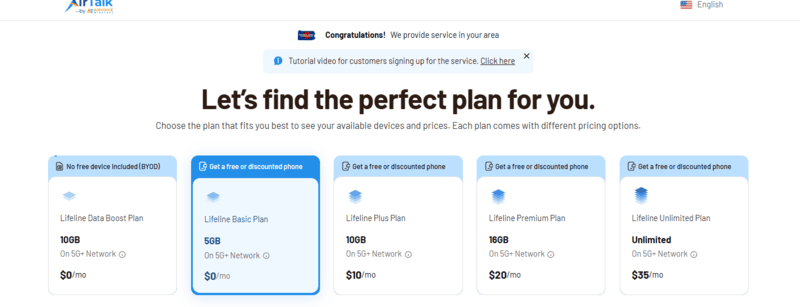
IMPORTANT: The government does not subsidize devices. Lifeline programs cover basic service costs only. Free or discounted devices, upgrade plans, or top-ups are exclusive benefits provided by Cintex Wireless as part of our promotional offers. Terms and conditions apply. Limited-time promotion—offers vary by state, stock availability, and eligibility.
5.2. Short Steps to Apply for Lifeline:
You follow short steps below to know how to apply for Lifeline benefits:
- Check Eligibility: Confirm you participate in a qualifying program like SNAP, Medicaid, or SSI. You can also qualify if your household income is at or below 135% of the federal poverty guidelines.
- Choose Your Provider: Visit the website of a provider like AirTalk Wireless and enter your Philadelphia ZIP code.
- Complete the Application: Select a plan that fits your needs and fill out your personal details.
- Upload Documents (if needed): Provide clear photos of your ID and proof of eligibility, such as a benefits award letter.
- Submit and Track: Most applications through AirTalk Wireless receive approval within 20–30 minutes. Once approved, your free phone and SIM card will ship to your Philadelphia address within 7-14 business days.
Final Words
Finding low income housing Philadelphia can take time, and that’s completely normal. The process often moves slowly, especially with long waitlists, so staying organized and keeping your options open can make a real difference.
As you apply to different programs and properties, each step brings you a little closer. It may not happen right away, but with patience and consistency, the right opportunity will come along.
Stay focused, keep checking for updates, and give yourself the best chance to find a place you can call home.