Does Medicaid cover medical marijuanas? No, Medicaid does not cover medical marijuana products or dispensary purchases in any state. That surprises many patients who assume any doctor-certified treatment qualifies for coverage. The reason comes down to federal drug classification, not state policy.
This guide covers exactly why marijuana is excluded, what Medicaid does cover instead, and what a medical marijuana card actually costs out of pocket in states like Florida.
1. Does Medicaid Cover Medical Marijuanas?
No, Medicaid does not cover medical marijuana products or dispensary purchases in any state. This applies universally regardless of whether your state has legalized medical cannabis, because the exclusion comes from federal Medicaid funding rules, not individual state cannabis laws.
Even states with well-established medical marijuana programs, like Florida or California, cannot direct Medicaid dollars toward dispensary purchases.
State legalization changes what a patient can legally buy, not what a federally funded program can pay for.
2. Why Doesn’t Medicaid Cover Medical Marijuana?
Three factors explain the exclusion, each from a different layer of federal policy. Understanding all three clears up why a doctor’s recommendation alone is never enough. None of these factors depend on your specific state or condition.
- State medical marijuana laws and Medicaid coverage are different systems. A state can legalize and regulate dispensaries while still being unable to pay for them through its Medicaid program, since Medicaid funding rules are set federally.
- Dispensary cannabis lacks FDA drug approval. Even with federal reclassification to Schedule III, Medicaid can only reimburse medications that have completed the formal FDA approval process. Botanical raw cannabis sold in state-licensed dispensaries has not gone through these clinical trials.
- FDA-approved cannabinoid drugs follow different rules entirely. A small number of cannabinoid-based medications have cleared FDA approval and are treated like any other prescription drug, separate from dispensary marijuana.

>>> Read more: Emergency Dentist That Take Medicaid: How to Find One Fast
3. What Does Medicaid Cover Instead of Medical Marijuana?
Medicaid often covers FDA-approved cannabinoid medications when prescribed for specific conditions. These are synthetic or purified cannabinoid drugs, not the cannabis plant itself, so they follow the normal prescription drug process instead of a dispensary visit. A doctor prescribes them the same way as any other medication on the Medicaid preferred drug list.
- Epidiolex, approved for severe epilepsy
- Dronabinol (Marinol), approved for cancer-related nausea and appetite stimulation
- Syndros, a liquid form of a similar synthetic cannabinoid
- In a few state programs, the doctor visit for a cannabis evaluation may be reimbursed, though the cannabis product itself is not
4. How Much Does a Medical Marijuana Card Cost Without Insurance Coverage?
While Medicaid never pays for dispensary products, out-of-pocket costs for the certification process depend on your state. In some states (like New York and New Jersey), participating Medicaid doctors can bill the evaluation visit directly to Medicaid.
Additionally, several state medical marijuana programs offer waived or discounted state registration fees for Medicaid beneficiaries. However, in states like Florida, patients pay out-of-pocket ($150–$250 for evaluations plus a $75 state fee)
| Cost Item | Typical Range |
| Physician evaluation | $150–$250 |
| State registration fee (Florida) | $75 |
| Total first-year cost | $225–$375 |
| Physician recertification | Every 210 days |
>>> Read more: Medicaid Number: How To Find ID & Contact Support.
5. Medicaid Eligibility May Qualify You for a Separate Benefit
Medicaid may not pay for medical marijuana, but that same eligibility can still work in your favor elsewhere. One benefit worth checking is Lifeline, a federal program that lowers your monthly telecommunication costs.
What Is the Lifeline Program?
Lifeline has provided a discount on phone service or internet service for qualifying low-income households since 1985, run through the Universal Service Fund and available in every state, territory, and on Tribal lands.
Being enrolled in Medicaid automatically qualifies your household. The discount itself is worth up to $9.25 a month for standard households, or up to $34.25 a month on qualifying Tribal lands.
The best way to receive it is through an Eligible Telecommunications Carrier rather than applying directly to the government, since an approved carrier can pair that subsidy with its own device promotion. That combination is how an eligible household ends up with a free phone and a full monthly service plan, instead of just a smaller bill.
Which Lifeline Benefits Can You Get?
Each Lifeline carrier, like Cintex Wireless, builds its own specific plans for the state you live in. Beneficiaries receive these through an approved service plan rather than a standalone discount. What you get through the plan is often enough to cover everyday calls, messages, and browsing without a separate paid line.
For example, in a Florida ZIP code like 34997, the Lifeline carriers above offer:
- Unlimited talk and text
- Free 5G data
- Free international calling
- 5G hotspot capacity
UPDATE: Cintex Wireless has now merged into AirTalk Wireless. So eligible applicants can receive larger Lifeline benefits, a wider coverage area, and a faster review process.
What Devices Are Available Through the Discount?
Device selection and pricing depend on your plan and current stock, but the discount regularly brings well-known phones down to a fraction of retail price.
| Device | Original Price | Price After Discount |
| iPhone 11 | $220.05 | $89.99 |
| iPhone SE 3 | $143.75 | $49.99 |
| iPhone X | $155.25 | $49.99 |
| Galaxy A42 5G | $92.00 | $29.99 |
| Galaxy A32 5G | $86.25 | $19.99 |
Note: These deals are extremely popular and subject to change. Be sure to check the latest availability directly on the AirTalk website before applying.
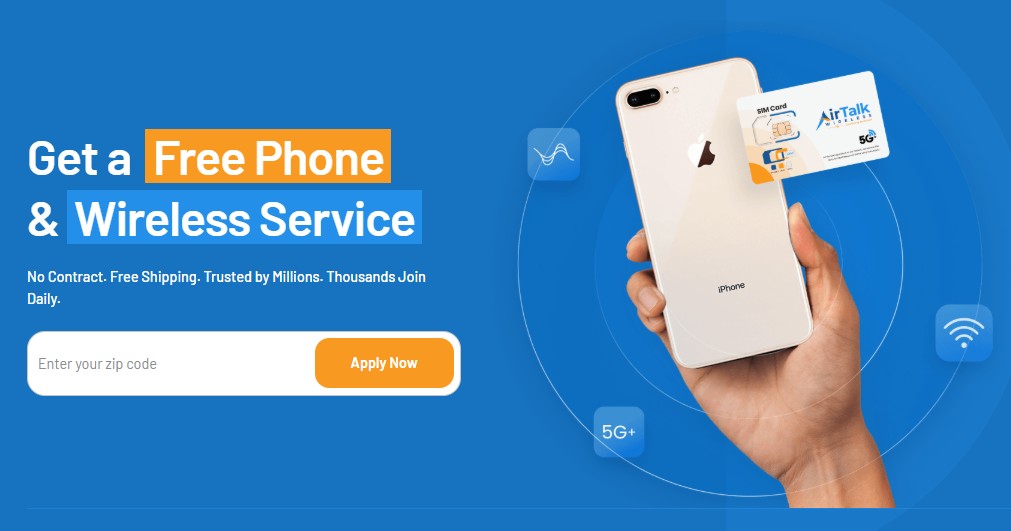
IMPORTANT: The government does not subsidize devices. Lifeline programs cover basic service costs only. Free or discounted devices, upgrade plans, or top-ups are exclusive benefits provided by AirTalk Wireless and Cintex Wireless as part of the promotional offers. Terms and conditions apply. Limited-time promotion—offers vary by state, stock availability, and eligibility.
6. Frequently Asked Questions
Q1. Does Medicaid pay for a medical marijuana card?
It depends on your state. In states like NY and NJ, participating Medicaid providers can bill your initial evaluation visit directly to Medicaid. Many states also offer reduced or waived state registration fees for Medicaid recipients, though dispensary products must always be paid out of pocket.
Q2. Does Medicaid cover CBD products?
Over-the-counter CBD products are not covered, since they are sold as supplements rather than FDA-approved drugs. Only prescription cannabinoid medications like Epidiolex qualify for coverage.
Q3. Does Medicaid cover Epidiolex or dronabinol?
Yes, in most cases, when a doctor prescribes them for an approved condition, since both are FDA-approved medications rather than dispensary cannabis.
Q4. Does Medicare or Medicaid cover medical marijuana?
No. Both programs follow the same federal rule and exclude dispensary marijuana, though both can cover the same FDA-approved cannabinoid medications under standard prescription drug rules.
Conclusion
Does Medicaid cover medical marijuanas? No, not in any state for dispensary products, regardless of your condition or your state’s cannabis laws. Ask your doctor about FDA-approved cannabinoid alternatives that Medicaid does cover, since one may treat your condition without the out-of-pocket cost. A short conversation at your next visit can save you from an unexpected bill.