For years, every iPhone relied entirely on a removable SIM card. However, that changed in 2018 when Apple introduced eSIM, giving users a new way to activate mobile service without inserting additional hardware.
What started with a handful of devices has now become a standard feature across much of the iPhone lineup. Looking back at the first iPhone with eSIM will help explain why Apple has continued moving toward a more digital approach to cellular connectivity.
1. What Was the First iPhone with eSIM?
The first iPhone with eSIM technology arrived in 2018 with the iPhone XS, iPhone XS Max, and iPhone XR.
These models included support for a physical nano-SIM and a digital eSIM. Apple enabled Dual SIM functionality through the iOS 12.1 update released in October 2018.
This allowed users to keep two mobile plans active on one device, such as separate personal and work numbers or a primary line paired with a travel plan.
Users could keep two mobile plans active simultaneously, making it easier to separate personal and business numbers or to use a local data plan while traveling.
Although the hardware was ready, eSIM adoption didn’t happen overnight.
In 2018, only a limited number of carriers supported eSIM activation, and availability varied significantly by country.
As more mobile operators added support over the following years, eSIM gradually became a standard feature across Apple’s iPhone lineup.
2. Benefits of eSIM Technology
The introduction of eSIM was more than just a hardware change. It simplified how users activate mobile service and gave them greater flexibility when managing multiple plans.
- Easier Activation
Many carriers now allow users to activate an eSIM digitally without waiting for a physical SIM card to arrive.
In many cases, the process only requires scanning a QR code or following the carrier’s instructions.
- More Convenient for Travel
Travelers can often purchase and activate a local data plan before or during their journey, rather than buying a physical SIM card after landing in another country.
This makes staying connected abroad faster and may help reduce roaming costs.
- Dual SIM Support
The first eSIM-compatible iPhones used one physical nano-SIM together with one eSIM, allowing two mobile plans to remain active.
Starting with the iPhone 13 series, compatible models can also use two active eSIMs. The available combination still depends on the model, purchase region, and carrier support.
- Better SIM Management
Since eSIM profiles are stored digitally, switching between supported plans or adding another mobile line no longer requires handling small SIM cards.
Everything can be managed directly through the device settings.
- Reduced Plastic Waste
Because eSIM eliminates the need for physical SIM cards and much of their packaging, it can help reduce plastic waste and shipping materials over time.
>>>Read more: Can You Get Free eSIM Service For iPhone? Real Answers 2026
3. Which iPhone Models Support eSIM Now?
Since Apple introduced the first iPhone with eSIM in 2018, the feature has gradually expanded across almost the entire iPhone lineup.
Support first appeared on the iPhone XS, iPhone XS Max, and iPhone XR, and later extended to the iPhone 11 series and the second-generation iPhone SE.
Below is a list of eSIM-compatible iPhones:
- iPhone XR
- iPhone XS, iPhone XS Max
- iPhone 11, iPhone 11 Pro, iPhone 11 Pro Max
- iPhone SE 2 (2020), iPhone SE 3 (2022)
- iPhone 12, iPhone 12 Mini, iPhone 12 Pro, iPhone 12 Pro Max
- iPhone 13, iPhone 13 Mini, iPhone 13 Pro, iPhone 13 Pro Max
- iPhone 14, iPhone 14 Plus, iPhone 14 Pro, iPhone 14 Pro Max
- iPhone 15, iPhone 15 Plus, iPhone 15 Pro, iPhone 15 Pro Max
- iPhone 16, iPhone 16 Plus, iPhone 16 Pro, iPhone 16 Pro Max, iPhone 16e
- iPhone 17, iPhone 17 Pro, iPhone 17 Pro Max, iPhone 17e
- iPhone Air
Note: eSIM support can vary by the country or region where the iPhone was purchased. In mainland China, only the iPhone 17e and iPhone Air currently support eSIM. Some iPhone models sold in Hong Kong and Macao use two physical nano-SIM cards instead, although selected models in those markets also support eSIM. Always check the exact model and purchase region rather than relying only on the iPhone series name.
Earlier eSIM-compatible iPhones generally combined a physical nano-SIM with an eSIM. However, iPhone 14 models and later purchased in the United States do not include a physical SIM tray and must be activated with eSIM.
Moreover, although eSIM support is now common across modern iPhones, activation still depends on your wireless provider.
Before switching to eSIM, it’s a good idea to confirm that your carrier supports the feature and offers eSIM activation in your country or region.
4. Why eSIM Is Becoming More Common
The popularity of eSIM has grown rapidly over the past few years, driven by both smartphone manufacturers and mobile carriers.
According to industry reports, the number of smartphone models supporting eSIM increased by approximately 90% year over year in 2023, reflecting how quickly the technology is being adopted.
Several factors have contributed to this growth.
First, mobile carriers have expanded eSIM support, making digital activation available in more countries and across more service plans than before.
Second, smartphone manufacturers continue to embrace eSIM because it simplifies device design while providing users with more flexible connectivity options.
Apple has already introduced eSIM-only iPhones in the United States, signaling a long-term shift toward digital SIM technology.
Beyond smartphones, eSIM is also becoming increasingly important for smartwatches, tablets, connected vehicles, and Internet of Things (IoT) devices.
Since these products often have limited internal space, eSIM provides a practical alternative to removable SIM cards.
As network infrastructure continues to improve, eSIM is expected to become even more widely available across consumer electronics and connected devices.
5. Using an eSIM-Compatible iPhone? Your Service Plan Still Matters
Having an eSIM-compatible iPhone is only part of the experience. You’ll also need a carrier and service package that allows eSIM activation if you want to truly benefit from the simplicity of digital SIM technology.
For eligible households, the Lifeline program can make staying connected much more affordable.
This federal assistance program helps qualifying low-income consumers reduce the cost of wireless service by offering a monthly discount through participating Eligible Telecommunications Carriers (ETCs) rather than providing service directly.
You may qualify if your household participates in government assistance programs such as SNAP, Medicaid, SSI, or other approved programs. In many states, eligibility is also determined by household income.
Notably, carriers such as Cintex Wireless work with the Lifeline program to help eligible applicants verify their qualifications, complete enrollment, and access wireless plans with the Lifeline benefit already applied.
Depending on eligibility, location, and current inventory, qualified applicants may also receive a free smartphone.
As Cintex Wireless continues merging with AirTalk Wireless, applicants can now apply through AirTalk to access various eSIM-compatible devices, such as:
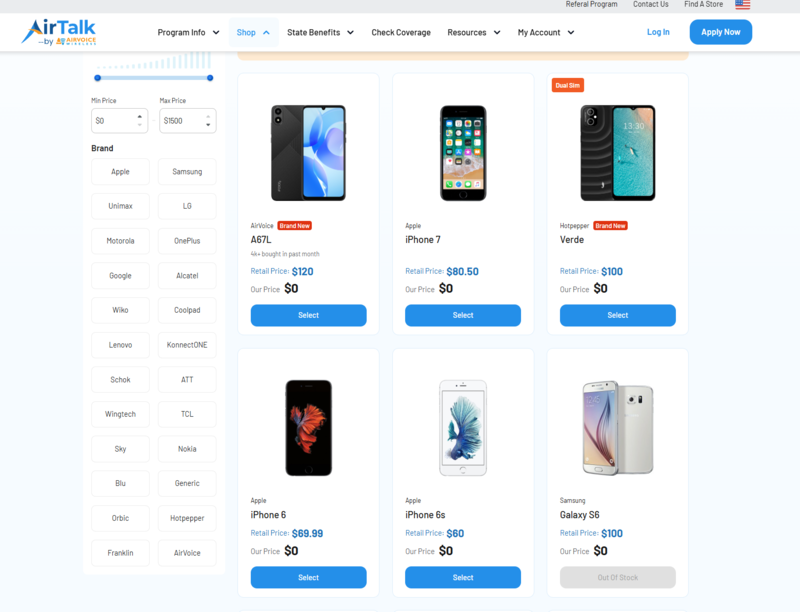
Notice: The government does not cover device costs, only basic service through Lifeline. Any free or discounted devices, upgrades, or top-ups are limited-time Cintex Wireless and AirTalk Wireless offers and may vary by state, eligibility, and availability. Terms and conditions apply.
Conclusion
Looking back at the first iPhone with eSIM shows how quickly Apple’s approach to mobile connectivity has evolved.
As carrier support continues to expand, eSIM is becoming a practical choice for more users, not only for travel or managing multiple lines, but also for everyday mobile service.
Whether you’re upgrading to a newer iPhone or simply exploring your connectivity options, understanding where eSIM started helps you see where the technology is headed.