
Owning life insurance does not automatically make someone ineligible for Medicaid. In many cases, the policy has little or no effect.
The important details are the type of life insurance, whether it has accessible cash value, and which Medicaid eligibility rules apply. Life insurance and Medicaid become more closely connected in programs that use an asset test, especially certain coverage for older adults, people with disabilities, and long-term care.
1. Different Types of Life Insurance Policy
First, it is crucial to understand the distinction between term and permanent life insurance.
It is because Medicaid asset rules generally focus on what a person can currently access, not simply the amount that might eventually be paid after death.
Term Life Insurance
Term life insurance provides coverage for a set period, such as 10, 20, or 30 years, and most policies do not build cash value.
Because there is typically no amount the policyholder can withdraw while alive, ordinary term policies are usually not treated as countable assets for Medicaid programs with an asset limit.
Permanent Life Insurance
Permanent policies, including whole life insurance, can remain in force for life and may build cash value.
This does not mean every permanent policy automatically affects Medicaid. The value available to the policyholder may be relevant to Medicaid categories that count assets.
Three terms are especially useful here:
- Cash value: Money that builds inside certain permanent life insurance policies and may be accessible while the insured person is alive.
- Surrender value: The amount the policyholder would receive if the policy were surrendered, generally after applicable charges or fees.
- Face value: The stated death benefit the insurer is expected to pay when the insured dies. This is different from the policy’s current cash value.
2. How Does Life Insurance Affect Medicaid Eligibility
The effect of life insurance on Medicaid depends mainly on which Medicaid category you’re applying for and whether the policy has accessible value.
A typical term life insurance policy does not build cash value, so it generally does not create a countable resource for Medicaid programs that apply an asset test. However, permanent policies such as whole life may accumulate cash value that can matter when resource limits apply..

MAGI Medicaid
Medicaid eligibility for many children, pregnant people, parents, and expansion adults is determined using Modified Adjusted Gross Income, or MAGI.
These groups generally do not undergo the same asset/resource test used for other Medicaid categories, so the value of a life insurance policy is usually not the main eligibility issue.
Medicaid Programs with Asset Limits
Different rules can apply to Medicaid programs for people who are aged, blind, or disabled, as well as to certain long-term care programs.
These non-MAGI pathways may review countable resources, which means the accessible value of a life insurance policy can become relevant.
The exact resource limit and treatment of life insurance depend on the state and program.
Term vs. Permanent Life Insurance
A typical term policy has no cash value, so it generally has little impact under an asset test. A permanent policy may have cash or surrender value that could be considered a resource.
However, states can apply different exclusions and thresholds, so face value should not automatically be treated as the amount that counts toward a Medicaid asset limit. Check the rules for your specific Medicaid program before assuming a policy will affect eligibility.
>>>Read more: How Long Does It Take To Get Medicaid? Tips To Avoid Unnecessary Delays
3. What Happens to Life Insurance Benefits After the Policyholder Dies?
The death benefit is a separate issue from whether the policy affected Medicaid eligibility while the policyholder was alive.
Benefits Paid to a Named Beneficiary
When a life insurance policy names an individual beneficiary, the insurer generally pays the death benefit directly to that beneficiary rather than through probate.
However, that does not automatically mean the proceeds are outside Medicaid estate recovery.
Whether Medicaid can seek recovery against those proceeds depends on how the state defines the deceased person’s estate and which assets are subject to recovery.
Some states use only the probate estate, while others may apply a broader definition that can include certain non-probate assets.
Benefits Paid to the Estate
If the policy names the deceased person’s estate as the beneficiary, the proceeds generally become part of the estate.
They may then be subject to estate claims, probate rules, and Medicaid estate recovery when applicable.
Medicaid Estate Recovery
Medicaid Estate Recovery is separate from the eligibility decision made while a person is alive.
Federal rules generally require states to seek recovery for certain long-term-care services provided to Medicaid beneficiaries age 55 or older, subject to protections and hardship rules.
Because states can define the recoverable estate differently, a life insurance benefit should not automatically be assumed to be either protected from or subject to Medicaid recovery.
4. What If Your Life Insurance Affects Your Medicaid Eligibility?
Now you know the relationship between Life insurance and Medicaid.
If a life insurance policy appears relevant to a Medicaid application, the first question is usually what Medicaid eligibility rules are actually being applied.
A person in a MAGI category may face very different financial criteria from someone seeking long-term-care Medicaid.
Confirm Whether Your Medicaid Program Has an Asset Test
The Medicaid category matters before the policy itself is evaluated.
Many MAGI programs focus on income rather than assets, while certain aged, blind, disabled, and long-term-care programs do review resources.
Find Out Which Policy Value Is Being Counted
Face value and cash surrender value serve different purposes.
When a life insurance policy is considered a resource, its accessible cash or surrender value may be relevant, rather than simply the policy’s death benefit.
However, states can apply different exclusions, thresholds, and valuation rules, so check your specific Medicaid program before making changes to the policy.
Ask How Your State Treats the Policy
States can use different resource limits and exemptions for life insurance.
A policy that is excluded under one state’s Medicaid rules may receive different treatment elsewhere. Hence, state-specific Medicaid information is important for an accurate determination.
Review Your Options Before Changing the Policy
Changes to ownership, beneficiaries, cash value, or the policy itself can have financial, tax, insurance, or Medicaid consequences.
Because those effects depend heavily on individual circumstances and state rules, it is useful to understand exactly why a policy is being counted before making any change to it.
>>>Read more: 10 Reasons For Medicaid Cancellation: Don’t Miss Your Medicaid Coverage!
5. Reduce Your Phone Bill While Accessing Affordable Healthcare Services
Someone reviewing life insurance and Medicaid eligibility may also come across Lifeline, another federal assistance program with its own qualification rules.
Lifeline is a government assistance program that reduces the cost of eligible phone service or internet service for qualifying households.
There are two relevant pathways:
- A household may qualify through Lifeline’s income standard, generally 135% of the Federal Poverty Guidelines,
- Or through participation in an approved assistance program like SNAP, SSI, Federal Public Housing Assistance (FPHA), etc. If a Medicaid application is ultimately approved, participation in Medicaid can serve as one of those qualifying programs.
Lifeline service is non-transferable and delivered through participating Eligible Telecommunications Carriers (ETCs).
Cintex Wireless is one of the mentioned ETCs, which is merging with AirTalk Wireless, where qualifying applicants may find benefits such as free talk and text service, and generous monthly mobile data. etc.
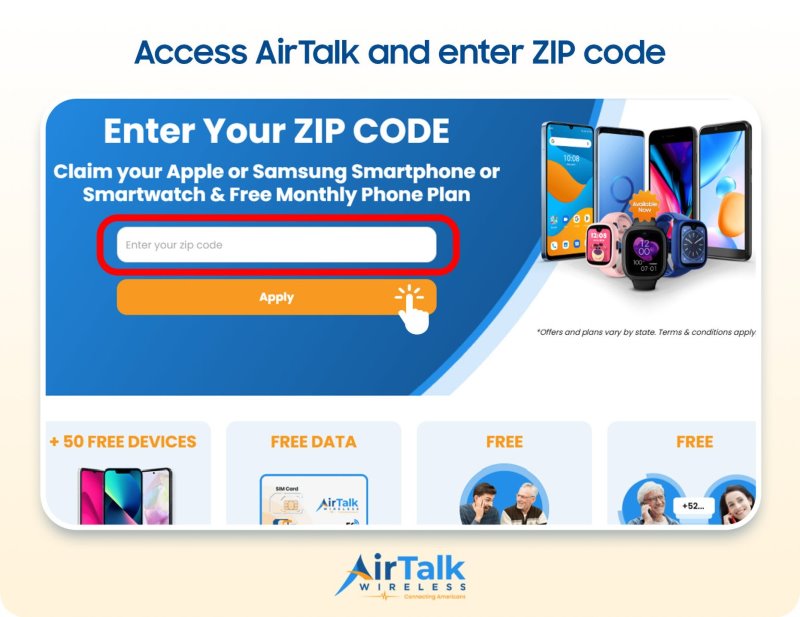
Moreover, participants may qualify for a free or discounted phone through provider promotions, such as:

Note: Eligibility varies by state and program. Offers depend on availability and qualifications. AirTalk Wireless and Cintex Wireless operate under the federal Lifeline Program as Eligible Telecommunications Carriers (ETCs). Service is non-transferable and limited to one service per household.
Conclusion
Life insurance and Medicaid do not interact the same way for every applicant. A standard term policy usually has little effect because it lacks cash value, while permanent life insurance can become relevant when a Medicaid program applies an asset test.
The policy type, accessible value, Medicaid category, and state rules all matter, and estate recovery after death is a separate issue from the eligibility decision made while a person is alive.