
Are you wondering about Medicaid for college students? Navigating healthcare while managing tuition and dorm fees is stressful. While students can qualify for free government health insurance, eligibility heavily depends on their tax dependency status and out-of-state residency.
This 2026 guide will explain exactly how to qualify, handle out-of-state coverage, and secure the benefits you need to stay healthy.
1. Can College Students Qualify for Medicaid?
Yes, college students can qualify for Medicaid if they meet income, residency, and household size requirements, generally regardless of their student status.
There is no special “student exception” for Medicaid. It all comes down to your Modified Adjusted Gross Income (MAGI) and tax dependency.
Eligibility is primarily based on having a low income, typically up to 138% of the federal poverty level (FPL) in states that have expanded Medicaid. In non-expansion states, limits and eligibility rules may be stricter.
If a parent claims you on their taxes as a dependent, your eligibility is usually based on the household income reported on that tax return, even if you earn your own income.
However, if you are an independent student who files your own taxes and is not claimed by anyone else, only your personal income is assessed. This makes it much easier to qualify for Medicaid for college students.

2. Will Your Medicaid for College Students Work at College?
Yes, your Medicaid can work at college, but your coverage heavily depends on whether you stay in-state or move out-of-state. If you attend a local university, your current benefits should work normally.
However, Medicaid is a state-run program, meaning your health coverage does not easily cross state lines.
For example, if you have New York Medicaid but go to school in Pennsylvania, your New York plan will generally only cover severe emergencies in a Pennsylvania ER. It will not pay for routine visits to the campus clinic or prescriptions at the local pharmacy.
If you move out of state for school, you may need to apply for Medicaid in your new state to access full local coverage. Before making changes, check with both states’ Medicaid offices to understand your options and avoid gaps in coverage.
3. Do Medicaid Work Requirements Apply to Students? 2026 Updates
In most cases, Medicaid work requirements do not currently apply to students. While some states have proposed or tested policies that require certain adults aged 19 to 64 to work or complete community engagement activities, these rules are not widely enforced and can change over time.
For college students, enrollment in school is generally not treated as a requirement you must “prove” to keep Medicaid. Instead, eligibility continues to be based mainly on income, household size, and residency status.
That said, policies can vary by state, and future changes are always possible. Some states may revisit work requirement rules or introduce new conditions, so it is important to check your state’s Medicaid website or contact a local office to stay updated.
Overall, most students do not need to work a set number of hours to maintain Medicaid coverage, but staying informed about your state’s current rules can help you avoid unexpected issues.
>>> Read more: How to Find a Dentist Near Me That Accepts Medicaid in 2026
4. Alternatives: What If You Don’t Qualify for Medicaid?
If your parents make too much money for you to qualify for Medicaid, you still have excellent ways to get affordable health coverage. You do not have to go uninsured while earning your degree.
Stay on Your Parents’ Plan
Thanks to the Affordable Care Act (ACA) “Under 26” rule, you can stay on your parents’ private health insurance until you turn 26. This rule applies even if you move to another state for college, get married, or live on your own.
However, you must check the plan’s network coverage before you leave for school. Call the insurance provider to verify if local doctors and clinics near your campus accept the out-of-state plan.
Student Health Insurance Plans (SHIP)
Most major universities offer their own Student Health Insurance Plans, commonly known as a SHIP. These plans provide comprehensive medical coverage specifically designed for students and are widely accepted at campus health clinics.
Getting a SHIP is usually very convenient. You can easily roll the cost of the health plan directly into your student loans or pay for it alongside your regular semester tuition bill.
5. Get a Free Smartphone Plan for Medicaid-Eligible Students
College students heavily rely on internet access for submitting homework, creating mobile hotspots, and attending telehealth appointments.
Paying a monthly bill for a cell phone plan creates heavy financial stress on top of tuition and housing costs. You can eliminate this monthly bill and free up cash for textbooks and groceries by using the federal Lifeline program.
How Does Lifeline Work
Lifeline is a federal assistance program built to lower the cost of communication services for low-income individuals.
Because Medicaid is strictly income-based, your active Medicaid enrollment may help you qualify for this telecom benefit.
Other than Medicaid, you can also qualify for Lifeline if you meet the household income requirements or participate in other programs like SNAP, SSI, Federal Public Housing Assistance, Section 8, Tribally-Administered Temporary Assistance to Needy Families (TANF), or Tribal Head Start.
It helps to understand that the federal government only pays for your monthly service costs, not the physical phone itself.
Any free or discounted devices you see advertised are special promotional offers provided directly by the telecommunications companies.
You can claim your telecommunications benefit through Eligible Telecommunications Carriers (ETCs) like Cintex Wireless.
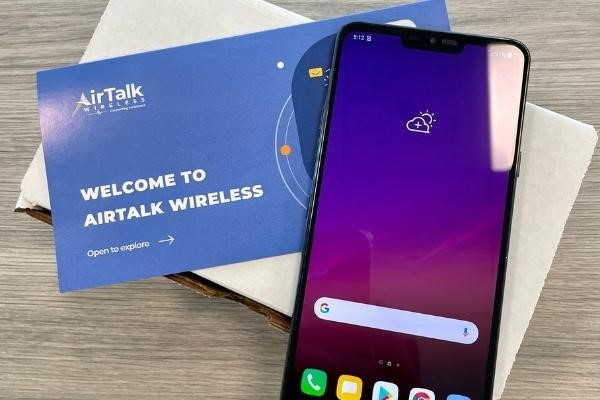
Recently, Cintex has merged with AirTalk Wireless, to offer students even larger Lifeline benefit packages. By applying, eligible students receive:
- A free 4G/5G smartphone
- Unlimited talk and text
- Monthly 5G data
Note: Eligibility varies by state and program. Offers depend on availability and qualifications. Cintex Wireless operates under the federal Lifeline Program as an Eligible Telecommunications Carrier (ETC). Service is non-transferable and limited to one service per household.
How to Apply
Applying for your free student phone plan takes just a few minutes online.
Visit the website of an approved provider, enter your ZIP code, and choose your preferred plan and phone.
You will simply need to provide essential information for verification and upload a clear photo of your Medicaid card or an official state approval letter to prove your eligibility. Further documentation might be required if auto-verification fails.
Once your application is complete, review it carefully before submitting. After approval, your device will be shipped to your address.
>>> Read more: Free Government iPhone With Medicaid Near Me: Claim One At $0
6. FAQs
Q1. Do financial aid or student loans count as income for Medicaid?
No. Generally, federal student loans and most grants or scholarships used for education expenses (like tuition and books) are not counted as income for Medicaid. However, portions used for living expenses may be treated differently in some cases.
Q2. Can I have Medicaid and a Student Health Insurance Plan (SHIP) at the same time?
Yes. If you have both, Medicaid acts as the “payer of last resort.” Your university’s SHIP will pay your medical bills first, and Medicaid will cover any remaining eligible out-of-pocket costs.
Q3. Does living in a college dorm count as state residency for Medicaid?
Yes. In some states, living in a dorm or off-campus housing may help establish residency for Medicaid, but rules vary. Many states still consider students residents of their home state, so you should confirm with the state Medicaid office before applying.
Final Words
Securing Medicaid for college students requires careful attention to your tax filing status and state residency rules. Whether you apply in your home state or your college state, having reliable coverage is vital.
Since navigating these portals requires data, check if your Medicaid status helps you qualify for a free Lifeline smartphone, helping you stay connected without the monthly bill.