
Foot pain can make even simple tasks like walking the dog or standing at work feel difficult. Once you realize you may need a podiatrist, the next question is often whether your insurance will help.
If you’re searching for a podiatrist that accept Medicaid, here’s what you need to know before scheduling an appointment.
1. Do Podiatrists Accept Medicaid?
Yes, some podiatrists accept Medicaid, but whether your visit is covered depends on both your state Medicaid benefits and your specific health plan.
Podiatrist services are considered an optional Medicaid benefit under federal rules, which means each state can decide whether to cover podiatry and what limits or medical-necessity requirements apply. Even when podiatry is covered, you still need to find a provider that participates in your specific Medicaid plan.
When looking for a podiatrist that accept Medicaid, keep these important differences in mind:
- Coverage varies by state: Every state Medicaid program sets its own rules for podiatry benefits and provider participation.
- Managed care plans have different networks: Even within the same state, your Medicaid plan may have its own list of participating podiatrists.
- Accepting Medicaid doesn’t mean accepting every Medicaid plan: A provider may work with one Managed Care Organization (MCO) but not another.
- Covered services and participating providers are different things: Your Medicaid plan may cover a podiatry service, but you’ll still need to see an in-network podiatrist that accepts Medicaid to receive full benefits.
When searching for a podiatrist that accept Medicaid, confirm both your plan’s coverage and the provider’s participation before scheduling a visit.
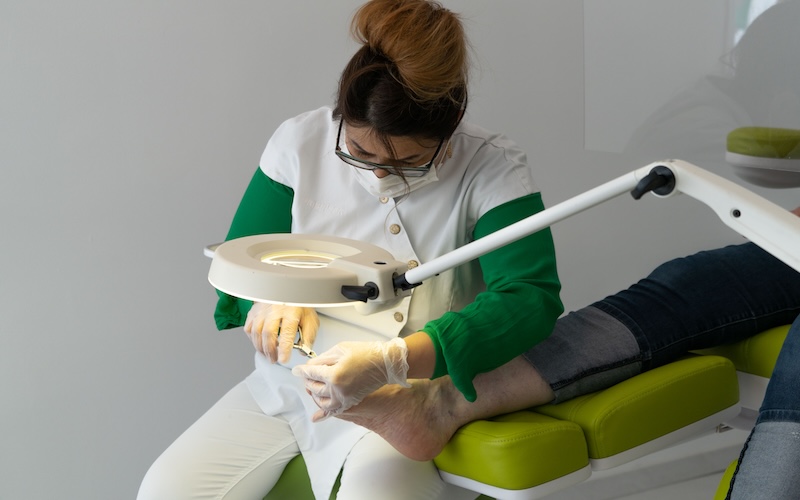
2. What Foot Care Does Medicaid Usually Cover?
Choosing a podiatrist that accept Medicaid can help you access medically necessary foot care, but covered benefits depend on your state and Medicaid plan.
Medically necessary podiatry services versus routine foot care
When a state Medicaid program includes podiatry benefits, coverage usually focuses on services that meet that state’s medical-necessity requirements.
The exact services, visit limits, authorization rules, and provider requirements can differ significantly by state and plan.
Common conditions Medicaid may help treat
Depending on your state’s Medicaid benefits and the medical reason for treatment, covered podiatry services may involve conditions such as:
- Diabetes-related foot problems: Medicaid coverage may include evaluation or treatment of ulcers, infections, circulation problems, or other complications when the service meets the state’s coverage criteria.
- Foot and ankle injuries: Certain fractures, sprains, wounds, or other injuries may require evaluation and treatment by a qualified provider.
- Persistent heel pain: Conditions such as plantar fasciitis may be treated when the service is medically necessary and covered under the plan.
- Bunions or other structural problems: Treatment may be covered when symptoms interfere with normal function and applicable coverage requirements are met.
- Ingrown toenails or infections: Treatment may qualify for coverage when there is pain, infection, or another documented medical reason.
Foot care that may not be covered
Services that may be excluded or restricted include:
- Routine nail, corn, or callus care without a qualifying medical reason
- Services performed primarily for cosmetic or hygienic purposes
- Treatments that do not meet the state’s medical-necessity criteria
- Orthotics, specialized footwear, or other supportive devices that do not meet the plan’s specific coverage requirements
Because benefits differ, check your plan before assuming a service is covered by the podiatrist that accept Medicaid in your network.
>>> Read more: Doctors That Accept Medicaid: How to Find One & What To Expect
3. How to Find a Podiatrist That Accept Medicaid Near You
Coverage is only half of the equation. The next step is finding a podiatrist who participates in the same plan you do.
Step 1: Identify your Medicaid plan, especially if you’re enrolled in a Managed Care Organization.
Step 2: Start with your Medicaid health plan’s provider directory or your state Medicaid agency’s provider search, then confirm participation directly with the podiatrist’s office.
Step 3: Filter results by podiatry or foot specialists in your area.
Step 4: Call the office directly and ask whether they currently accept your specific Medicaid plan, since provider participation can change.
Step 5: Confirm whether you need a referral or prior authorization before scheduling your appointment.
Taking a few extra minutes to verify these details can help you avoid unexpected delays or billing issues.

4. What to Know Before Visiting a Podiatrist That Accept Medicaid
Before visiting a podiatrist that accept Medicaid, taking a few minutes to prepare can help your appointment go more smoothly.
- Bring your Medicaid ID card: Your provider will need it to verify your coverage and benefits.
- Check if you need a referral: Some Medicaid managed care plans require a referral from your primary care provider before you see a specialist.
- Confirm the provider accepts your specific Medicaid plan: A clinic may accept Medicaid but not every Managed Care Organization (MCO).
- Prepare your medical history: Bring a list of medications, previous foot treatments, and any recent X-rays or test results if available.
- Write down your symptoms and questions: Note when the pain started, what makes it better or worse, and any concerns you’d like to discuss with the podiatrist.
- Arrive early if you’re a new patient: This gives you enough time to complete paperwork and verify your insurance information before your appointment.
>>> Read more: Pediatricians That Accept Medicaid Near Me: A Simple Finding Guide
5. Using Medicaid for Ongoing Foot Care? You May Also Qualify for Lifeline
Managing ongoing foot care often means staying connected with providers for follow-up visits and so on. Beyond healthcare coverage itself, reliable communication can make it easier to keep that care on track.
If you receive Medicaid, you may also qualify for the Federal Lifeline Program, which helps eligible households lower the cost of qualifying phone or internet service.
That connection exists because Medicaid is one of the recognized eligibility pathways, along with certain other assistance programs and income-based qualification.
Once eligibility is confirmed, Lifeline-supported service is provided through participating Eligible Telecommunications Carriers (ETCs), which help approved customers access available wireless plans and activate service.
One of those providers is Cintex Wireless, which has supported eligible Lifeline customers for years and has now merged into AirTalk Wireless, giving customers a more unified way to access available Lifeline-supported service.
Depending on your eligibility and location, AirTalk Wireless may include benefits such as:
- Unlimited talk and text
- Monthly data benefit
- International calling to supported destinations
- No activation fee, no annual contract, and no credit check
- Customer support to help manage your wireless service
Whether you’re confirming your next podiatry appointment, speaking with your care team, or receiving Medicaid updates, dependable wireless service helps you stay connected throughout your ongoing treatment.
NOTE: The government does not cover device costs, only basic service through Lifeline. Any free or discounted devices, upgrades, or top-ups are limited-time Cintex Wireless and AirTalk Wireless offers and may vary by state, eligibility, and availability. Terms and conditions apply. Limited-time promotion—offers vary by state, stock availability, and eligibility.
6. FAQs
Does Medicaid cover routine foot care?
Sometimes, but not always. Routine foot care is generally covered only when it’s medically necessary, such as for people with diabetes or certain circulation disorders.
Do I need a referral before seeing a podiatrist?
It depends on your Medicaid plan. Some Managed Care Organizations require a referral from your primary care provider, while others allow direct appointments.
Will every podiatrist accept Medicaid?
No. Not every podiatrist participates in Medicaid, and those who do may only accept certain Medicaid managed care plans. Always verify before scheduling.
Can I change podiatrists if my current provider leaves my Medicaid network?
Yes. If your provider is no longer in your plan’s network, you can usually select another participating podiatrist that accepts Medicaid within your plan’s provider directory.
Conclusion
Finding a podiatrist that accept Medicaid involves more than locating a nearby foot specialist. Coverage depends on your state, your Medicaid plan, the medical necessity of your treatment, and whether the provider participates in your network.
By verifying your benefits, choosing an in-network provider, and preparing before your appointment, you can access the foot care you need while making the most of your Medicaid coverage.