
Many families struggle to balance income and essential expenses, making access to healthcare a challenge. For this reason, understanding what is the income limit for Medicaid can help determine eligibility and ensure that you and your household can get the medical coverage you need.
This guide will break down the details of Medicaid income limits and how to make the most of your benefits.
1. What Is the Income Limit for Medicaid?
Medicaid is a government-funded health-care program for people with specific conditions.
Because each state administers its own program, there is no single national Medicaid income limit. Instead, eligibility is calculated as a percentage of the Federal Poverty Level (FPL), sometimes referred to as the Federal Poverty Guideline (FPG), which updates annually.
Depending on your state, household size, and eligibility category, the income thresholds generally fall into the following brackets:
- Affordable Care Act (ACA) Expansion Adults (138% FPL)
In the 40+ states that have adopted Medicaid expansion, adults aged 19–64 can qualify if their household income is at or below 138% of the FPL.
- Children and Teenagers (Varies by State)
Income thresholds for children under 19 are typically much higher than they are for adults. For example, in Illinois, the “All Kids” program covers children in families earning up to 318% of the FPL, while other states may cap coverage between 150% and 200% FPL.
- Pregnant Individuals (138% to 213%+ FPL)
Pregnant applicants are fast-tracked into coverage with generous income limits. The federal baseline requires coverage up to 138% FPL, but many states expand this to 200% or 213% FPL.
For household sizing, the unborn infant is automatically counted as a family member.
For most children, pregnant individuals, parents, and expansion adults, states use a calculation called Modified Adjusted Gross Income (MAGI) to determine financial eligibility. MAGI looks at your taxable earned and unearned income.
However, because MAGI mirrors federal tax rules, several specific income sources are completely excluded from the calculation:
- Supplemental Security Income (SSI) payments
- Investment earnings accumulated inside an ABLE account (for individuals with disabilities)
- Pre-tax contributions made to qualified retirement plans (like a traditional 401k or IRA)
- Most child support payments received

2. How is Income Counted?
Now you know what is the income limit for Medicaid. But do you know how it is counted?
Single Applicants
All of one’s countable monthly income is put together and calculated toward the income limit.
If an applicant’s total monthly income is below the Medicaid limit, they are eligible. If their monthly income exceeds the income limit, they are ineligible.
Married Applicants
Income is calculated differently depending on the Medicaid program for which one is applying and the state of residency.
When applying for Nursing Home Medicaid or an HCBS Medicaid Waiver, many states treat each spouse as a separate applicant. This implies that each spouse can earn up to the income limit.
Moreover, the “name on the check” rule applies in this scenario. The name on the cheque is deemed the owner of the income, and it is added to that spouse’s income eligibility.
Married Couples with One Applicant
When one spouse of a married couple applies for an HCBS Medicaid Waiver or Nursing Home Medicaid, only the applicant spouse’s income is considered, sometimes known as the institutionalized spouse.
Meanwhile, the non-applicant spouse’s income, also known as the community spouse, is not included in determining the spouse’s income eligibility.
Even if the community spouse has a significant monthly income, it does not count toward their spouse’s Medicaid eligibility limit.
>>> Read more: Does A Dermatologist That Accepts Medicaid Exist? 3 Tips to Find One
3. What If Your Income Exceeds the Medicaid Income Limit?
Understanding what is the income limit for Medicaid is crucial, but what if your income exceeds it? Below are what you need to know to avoid losing your benefits.
Qualified Income Trust
A Qualified Income Trust (QIT) refers to an irrevocable trust into which an applicant’s income is put, and no longer counts against the Medicaid income limit.
Trust funds, also known as Miller Trusts, are overseen by a trustee selected by the Medicaid applicant. The funds are only available for very specific purposes.
Please keep in mind that not all states allow QITs. Nevertheless, those that do are known as Income Cap States.
Spend Down on Care / Medically Needy
Several states have a Medically Needy Pathway for Medicaid eligibility, which may be called differently in each state.
In simple terms, an applicant who exceeds the income restriction but has significant medical expenses can still qualify for Medicaid by “spending down” their income on medical bills until they reach the medically needy income level.
Just keep in mind that not all states have a Medically Needy Pathway, and even when they do, the income limit differs by state.
Important Distinction: If you live in a state that offers a “Medically Needy” (Spend-Down) Pathway, you generally do not need and cannot use a Miller Trust. In those states, you qualify simply by proving your medical bills offset your excess income.
4. Other Criteria to Qualify for Medicaid Benefits
To be a Medicaid beneficiary, you must meet both financial and non-financial criteria.
Medicaid recipients are often required to be residents of the state in which they receive Medicaid.
In addition, they must be US citizens or qualifying noncitizens, such as lawful permanent residents.
Also, some qualifying categories are restricted by age, pregnancy, or parental status.
>>> Read more: Medicare And Medicaid For Dummies: Top 5+ Key Differences
5. Additional Medicaid Benefits You May Qualify For
If you are eligible for Medicaid, you may also qualify for additional support through Lifeline.
Lifeline is a federal program that helps eligible low-income households lower the cost of phone or internet service, and Medicaid is one of the direct qualifying programs.
Other qualified programs include SSI, SNAP, Housing Assistance Program, Tribal Head Start, or fulfilling the Federal Poverty Guidelines at or below 135%.
This extra support can make it easier to stay connected for appointments, follow-ups, and everyday needs.
Just note that the eligibility requirements vary by state and program. Offers are based on availability and qualifications. Moreover, the service is nontransferable and limited to one per home.
Eligible participants, in particular, can obtain a free smartphone or tablet from a reputable provider, such as Cintex Wireless.
This company works with the government to offer free equipment, free speak and text, unlimited monthly data, and other perks.
This enables you to obtain essential communication assistance during emergency medical situations.
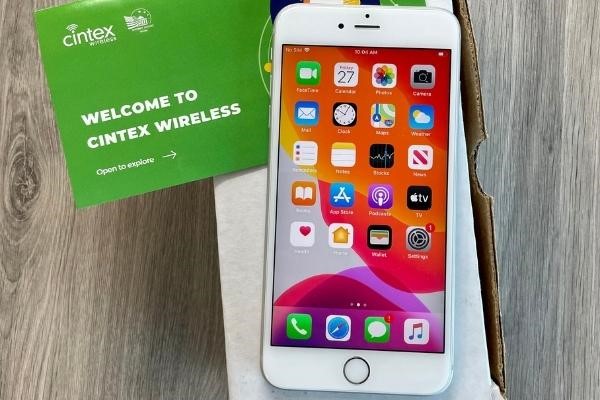
Furthermore, Cintex Wireless is merging with AirTalk Wireless to offer more device options to qualifying applicants. For instance:
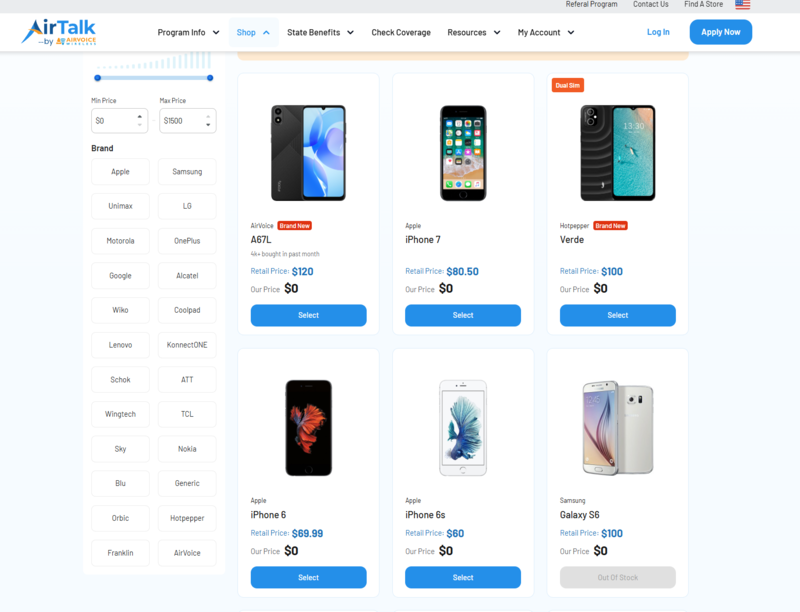
DISCLAIMER: The government does not cover device costs, only basic service through Lifeline. Any free or discounted devices, upgrades, or top-ups are limited-time Cintex Wireless offers and may vary by state, eligibility, and availability. Terms and conditions apply.
Conclusion
Finally, knowing what is the income limit for Medicaid is crucial for low-income individuals seeking access to healthcare without financial strain. These limits determine eligibility for vital services like doctor visits, prescriptions, and preventive care.