
A fever at night, a painful sprain, or an infection that cannot wait several days for a regular appointment may prompt you to seek urgent care. For Medicaid members, one practical question often comes first: Can people on Medicaid go to urgent care?
In many cases, yes. However, the clinic must accept your specific Medicaid plan. An urgent care that takes Medicaid can provide a middle ground between primary care and the emergency room when the problem needs prompt attention but is not life-threatening.
1. Does Urgent Care Now Take Medicaid?
Yes, many urgent care centers accept Medicaid, and medically necessary urgent care is generally covered under state Medicaid programs.
However, not every clinic participates in Medicaid, and a location that takes Medicaid may still be outside the network of your particular managed care plan.
What to Expect at an Urgent Care Visit?
Most urgent care centers accept walk-ins or same-day appointments.
At check-in, the clinic may ask for your Medicaid card, identification, symptoms, and medical history before a clinician evaluates you and orders any necessary tests or treatment.
In fact, urgent care is designed for health problems that need prompt attention but are not life-threatening. Depending on the clinic and your Medicaid benefits, covered services may include:
- Treatment for colds, flu, and infections
- Minor cuts and burns
- Sprains and strains
- Rashes and allergic reactions
- Urinary tract infections
- Basic laboratory tests
- X-rays for minor injuries
- Other medically necessary outpatient care
Coverage for tests, imaging, medication, or procedures can vary, so the clinic should verify your specific plan before providing non-emergency services.
Also, additional services such as lab work, X-rays, or procedures may affect billing depending on your plan.
>>>Read more: How Long Does It Take To Get Medicaid? Tips To Avoid Unnecessary Delays
Emergency Care vs. Urgent Care Under Medicaid
Urgent care is appropriate for problems that need timely treatment but are not immediately life-threatening.
Meanwhile, severe chest pain, major trauma, difficulty breathing, stroke symptoms, or another true emergency belongs in the emergency room.
Medicaid cost-sharing rules also treat emergency services differently, with emergency services generally exempt from out-of-pocket charges under federal Medicaid rules.

2. How to Find an Urgent Care Provider That Accepts Medicaid?
To locate an urgent care that takes Medicaid, start with the provider directory for your exact Medicaid plan rather than searching only for clinics that say they “accept Medicaid.”
Managed care networks can differ even within the same state, so the plan name on your card matters.
The following checks can save you a wasted trip:
- Use your Medicaid plan’s online provider directory and search for urgent care.
- Call the member services number on your Medicaid card.
- Contact the urgent care clinic and give them the exact plan name.
- Ask whether the specific location is in-network and accepts Medicaid patients.
- Confirm whether any services you expect, such as X-rays or lab testing, have separate coverage rules.
Online healthcare directories can help narrow the search, but call the clinic before leaving home because insurance participation can change.
Current listings show that some urgent care centers accept Medicaid while others explicitly do not.
>>>Read more: How To Locate An Oral Surgeon That Accepts Medicaid? Easy Guide 2026
3. How Much Will Urgent Care Charge Medicaid Patients?
There is no single nationwide price.
States can impose copayments and other cost-sharing for some Medicaid outpatient services, but most charges are limited and vary by income, eligibility group, and state rules.
Some Medicaid members may pay little or nothing for a visit to an urgent care that takes Medicaid.
Certain groups and services are exempt from cost-sharing, including children and pregnancy-related services, while other members may have a small copay.
The final amount can also depend on what happens during the visit. Laboratory testing, imaging, medication, or other procedures may be billed differently from the basic office visit.
For these reasons, before treatment, you should ask the clinic whether it accepts your exact Medicaid plan and whether any copay applies.
Your Medicaid member services line can provide the most accurate answer for your coverage.
4. What If No Nearby Urgent Care Accepts Your Medicaid Plan?
A nearby clinic does not necessarily make it the only option if you are looking for an urgent care that takes Medicaid.
If your first choices are outside the network, there are several other ways to get timely care.
- Ask member services for another clinic
Call the number on your Medicaid card and ask for another in-network urgent care location. Member services may have more current network information than a general online search.
- Look for same-day primary care
Your primary care clinic may offer same-day appointments, after-hours visits, or a nurse line. For a non-emergency issue, this can be a simpler alternative to searching for another urgent care center.
- Check community health centers
Community health centers can provide primary and same-day care to Medicaid patients in many areas. Some also offer extended hours or can direct you to another participating provider.
- Ask about virtual urgent care
Telehealth may work for conditions such as mild respiratory symptoms, rashes, allergies, pink eye, or uncomplicated urinary symptoms. Availability and Medicaid coverage differ by state and plan, so verify before booking.
- Use the ER only for true emergencies
The emergency room should not replace routine urgent care simply because finding an in-network clinic is difficult.
If symptoms are severe or potentially life-threatening, however, seek emergency care immediately rather than delaying treatment to verify insurance.
5. Already Enrolled in Medicaid? Check out Lifeline Benefits Now
Medicaid coverage can help with healthcare expenses, but staying connected also matters when you need to call a clinic, receive test results, reach a pharmacy, or arrange follow-up care.
People already enrolled in Medicaid may also satisfy one of the eligibility pathways for Lifeline, a federal program that lowers the cost of qualifying wireless service.
Medicaid is one qualifying assistance program, while other pathways include certain federal assistance programs like SSI, SNAP, etc., or meeting Lifeline’s household-income standard.
Instead of providing the support directly, the Lifeline service is provided through participating Eligible Telecommunications Carriers (ETCs).
One such ETC is Cintex Wireless, which is merging with AirTalk Wireless, to continue offering Lifeline service and expanding available benefits.
Depending on eligibility, location, and current offers, benefits may include:
- Talk and text service
- Monthly mobile data
- International calling to supported destinations
- A SIM or compatible service option
- A free or discounted smartphone through provider promotions
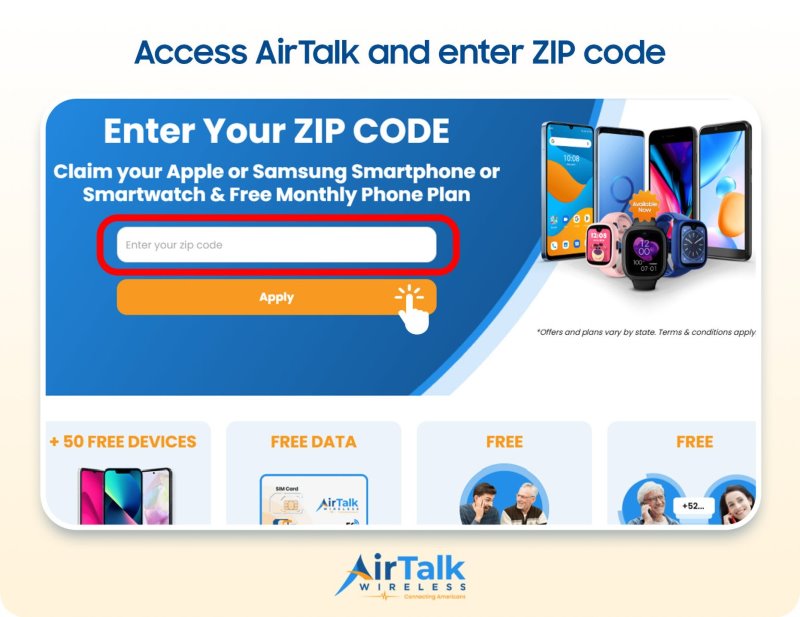
However, note that Lifeline service is limited to one household and is non-transferable. Available plans and devices vary by ZIP code and inventory.
NOTE: The government does not cover device costs, only basic service through Lifeline. Any free or discounted devices, upgrades, or top-ups are limited-time Cintex Wireless and AirTalk Wireless offers and may vary by state, eligibility, and availability. Terms and conditions apply.
Conclusion
An urgent care that takes Medicaid can be a convenient option when a health problem needs attention soon but does not require the emergency room.
The safest approach is to verify your exact Medicaid plan, network status, and possible charges before the visit, then use member services or other covered care options if the nearest clinic does not participate.