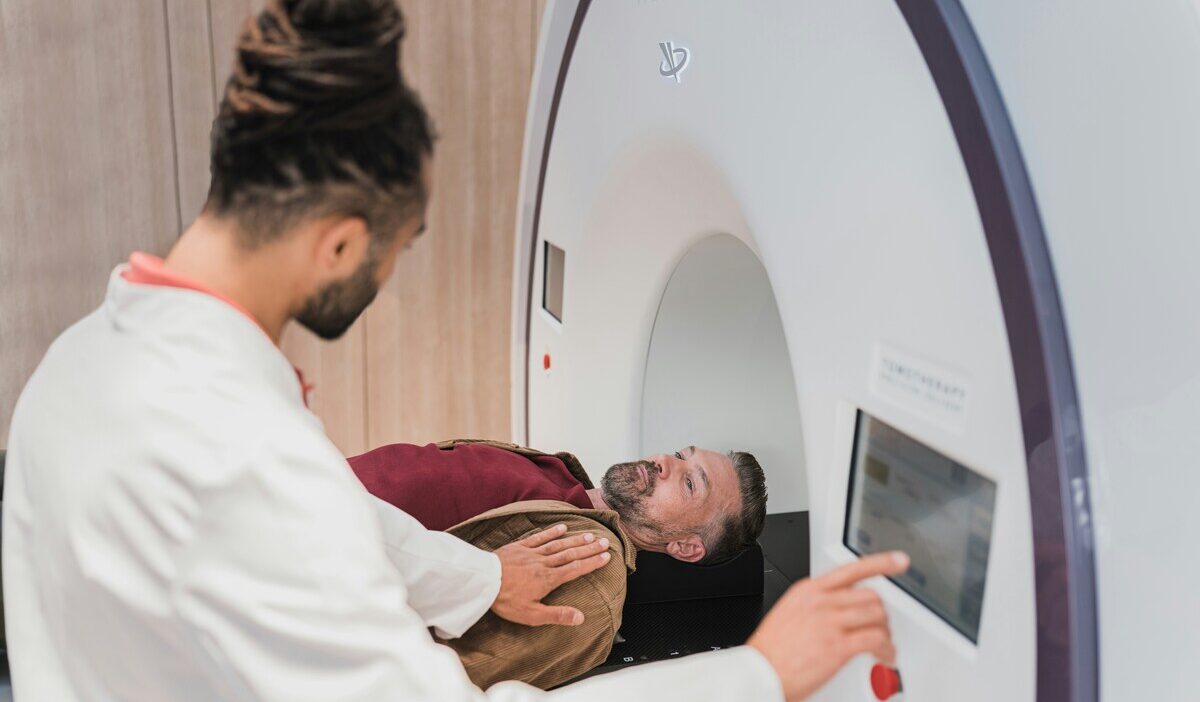
Does Medicaid cover MRI? Yes, Medicaid generally covers MRI scans when they are medically necessary and approved under your state’s program rules. However, coverage is not automatic. Your diagnosis, provider network, and whether your plan requires prior authorization can all affect approval.
This guide covers those rules, why claims get denied, and what an MRI costs without coverage. It also shows what to do if the bill feels out of reach, including free and low-cost options.
1. Does Medicaid Cover MRI?
Yes, Medicaid generally covers MRI scans when they are ordered by a licensed doctor and deemed medically necessary to diagnose or treat a medical condition. Coverage is not automatic just because a doctor suggests it; specific rules still apply.
So, how much does Medicaid pay for an MRI? For Medicaid members, a medically necessary MRI is often covered with little to no out-of-pocket cost.
The exact amount depends on your state Medicaid program, eligibility category, managed care plan, and whether your plan applies a copay for certain services.
In practice, Medicaid usually covers MRI scans when they are needed to:
- Diagnose or monitor serious medical conditions
- Evaluate unexplained pain or neurological symptoms
- Guide treatment decisions after injury or surgery
2. What Can Affect Whether Medicaid Covers Your MRI?
An MRI approval depends on more than a doctor’s request. Four separate rules decide whether Medicaid actually pays for the scan. If you miss any one of them, an approved-sounding order can turn into a denial.
- Medical necessity: the scan must be needed to evaluate symptoms, an injury, or a specific disease, and elective or full-body preventative scans are not covered
- Prior authorization: many Medicaid programs and managed care plans require approval before covering advanced imaging like MRIs. Your doctor’s office usually handles this request with your Medicaid plan.
- Network providers: both the doctor ordering the MRI and the imaging facility may need to be approved providers under your Medicaid plan. Confirming network status before scheduling helps avoid unexpected bills.
- State variations: Medicaid is managed at both the federal and state level, so rules, copays (often $0 to $20), and approval steps change depending on where you live

>>> Read more: Does Medicaid Cover Hearing Tests? Coverage Easy Explain
3. Why Would Medicaid Deny an MRI?
Common reasons Medicaid may deny an MRI include:
- Medical necessity isn’t clearly documented, and prior authorization was never submitted or approved.
- The ordering doctor or imaging facility is out of network.
- A scan requested for general screening, without specific symptoms, is also a common reason.
A denial can often be appealed if your doctor submits more documentation showing why the scan is medically necessary.
4. How Much Does an MRI Cost Without Medicaid or Insurance?
Without coverage, an MRI typically costs $400 to $3,500 nationally, depending on the body part scanned and where you go.
Freestanding imaging centers are often less expensive than hospital-based facilities, although prices vary depending on your location, the type of MRI, and whether contrast dye is needed.
Contrast dye, when your doctor orders it, usually adds $100 to $500 to the total.
How Do You Get an MRI If You Can’t Afford One?
You don’t have to go without a needed scan if Medicaid coverage feels out of reach. A few paths exist before paying full hospital price. Trying more than one improves your chances of a lower cost.
- Apply for Medicaid if you’re not enrolled, since your income may already qualify you
- Ask your doctor for a referral to a freestanding imaging center instead of a hospital, since cash prices there run much lower
- Check with a Federally Qualified Health Center (FQHC) for affordable medical care, referrals, and guidance on finding lower-cost diagnostic options if you do not have coverage.
- Ask the imaging facility directly about payment plans or cash pay discounts
>>> Read more: Does Medicaid Cover Physical Therapy In 2026? Benefits & Eligibility
5. What Should You Do If Medicaid Won’t Approve the MRI?
A denial isn’t the final word. Your doctor’s office can usually fix the problem and try again. These four steps show the usual order.
- Find the reason. Read the denial notice to see what’s missing, like paperwork, prior authorization, or network status.
- Add the missing documents. Ask your doctor for notes that show why the scan is medically necessary.
- Resubmit the request. Your doctor’s office sends the fixed request back to your plan.
- Appeal if needed. If the plan still says no, file a formal appeal through your state Medicaid office before the deadline on your notice.
6. If Medicaid Covers Your MRI, It May Help You Qualify for This Too
While you’re working through approval for an MRI, it’s worth knowing that your Medicaid eligibility can unlock a separate benefit: the Federal Lifeline Program, which reduces what you pay each month for phone service or internet service.
Lifeline isn’t a new program. It’s been running since 1985, established by the Federal Communications Commission and administered nationally by the Universal Service Administrative Company (USAC).
Eligible households get a standard discount of $9.25 per month, or $34.25 per month for those on Tribal lands.
Medicaid enrollment usually meets Lifeline’s rules on its own. Enrollment in SNAP, SSI, Section 8, or Veterans Pension also works, and so does household income at or below 135% of the federal poverty guidelines. Each household gets one discount, and it can’t be passed to a relative.
Getting connected to actual service means going through a participating Eligible Telecommunications Carrier, since Lifeline funds the discount without providing service directly.
Cintex Wireless is one of these carriers, pairing the standard monthly savings with a free or discounted device for qualifying applicants.
Cintex has since merged with AirTalk Wireless, another participating ETC, bringing a broader device selection and a smoother sign-up process into the mix.
Applying can get you:
- A free or discounted phone or tablet
- Monthly data paired with talk and text
- International calling
- No contracts, credit checks, or activation fees

IMPORTANT: The government does not subsidize devices. Lifeline programs cover basic service costs only. Free or discounted devices, upgrade plans, or top-ups are exclusive benefits provided by AirTalk Wireless and Cintex Wireless as part of the promotional offers. Terms and conditions apply. Limited-time promotion—offers vary by state, stock availability, and eligibility.
7. Frequently Asked Questions
Q1. What procedures does Medicaid not cover?
Medicaid usually excludes purely cosmetic procedures and experimental treatments. It also skips elective scans without a medical reason, like a full body MRI for screening. Some services, such as adult dental care, depend on your state.
Q2. How to get a free MRI scan?
If Medicaid approves the scan, it’s often free or costs $0 to $20. Without coverage, ask a nonprofit hospital’s billing office about charity care, since these hospitals generally offer free or discounted care based on income. Your county health department can also list charity clinics, and some partner with local hospitals for free scans.
Q3. Does Medicaid require prior authorization for an MRI?
In most states, yes. Advanced imaging like MRIs and CT scans commonly requires approval before the procedure, so confirming with your specific plan avoids a denied claim.
Conclusion
Does Medicaid cover MRI? Yes, Medicaid generally covers MRI scans when they are medically necessary and meet your state’s coverage requirements. However, approval depends on factors like your diagnosis, your Medicaid plan’s rules, prior authorization requirements, and whether you use an approved provider.
Before scheduling an MRI, confirm that both your doctor and the imaging facility work with your Medicaid plan. Taking that extra step can help prevent claim delays, unexpected bills, and unnecessary stress during an already important part of your care.