
How often will Medicaid pay for a nebulizer depends on your state, Medicaid plan, the exact device, and why it needs to be replaced. There is no nationwide rule that automatically gives every member a new nebulizer every three or five years.
This guide explains what affects replacement timing, how machine and supply limits differ, and what to do if you need another nebulizer sooner than the usual schedule.
1. How Often Will Medicaid Pay for a New Nebulizer?
There is no nationwide Medicaid replacement schedule for nebulizers. How often Medicaid will pay for a new machine depends on your state, plan, the exact nebulizer and HCPCS code, and why replacement is needed.
What Can Affect How Often Medicaid Covers a Nebulizer?
Several factors can determine whether Medicaid will pay for a replacement and when you can receive it.
- State Medicaid rules: Some programs set a specific utilization or replacement limit.
- Managed care requirements: Your plan may have its own documentation or prior authorization process.
- HCPCS code: Different nebulizer types can be billed under different codes with separate limits.
- Medical necessity: Your provider may need to explain why the equipment is still needed or why the current machine should be replaced.
- Equipment condition: Repair may be considered before replacement.
- Utilization limits: The machine and its accessories can have different coverage frequencies.
A standard replacement interval is not necessarily an automatic approval date or an absolute rule against earlier replacement.

A MassHealth Example: One E0570 Nebulizer Every Five Years
MassHealth provides a useful example of how state-specific rules work. Its current respiratory equipment guideline lists HCPCS E0570, nebulizer with compressor, at one unit per five years.
That does not mean every Medicaid program follows a five-year rule. Other states may use different limits, and another type of nebulizer may have a different billing code.
If you need to know how often will Medicaid pay for a nebulizer under your coverage, ask your equipment supplier for the HCPCS code and confirm the applicable replacement rule with your Medicaid plan.
Children under 21 may also have additional protections through EPSDT. Medicaid cannot apply a standard equipment limit in a way that prevents an eligible child from receiving a medically necessary, Medicaid-coverable service.
2. Does the Same Replacement Rule Apply to Nebulizer Supplies?
No. The replacement interval for a nebulizer machine does not automatically apply to its supplies. Items used with the machine may have separate HCPCS codes, quantity limits, and coverage requirements.
Depending on the device and your plan, these items may include:
- Tubing
- Filters
- Masks and mouthpieces
- Disposable nebulizer sets
- Other accessories
Follow your clinician’s instructions and applicable product guidance for when these supplies should be replaced. Then check your Medicaid plan separately to find out how often it will pay for each item.
Do not assume that a five-year machine limit means you must keep the same tubing, mask, or filter for five years.
>>> Also read: What All Does Medicaid Cover? What’s Guaranteed And What Varies
3. Can Medicaid Replace a Nebulizer Before the Usual Limit?
Potentially. A normal replacement interval does not always prevent Medicaid from covering another nebulizer sooner.
An earlier replacement may be considered when the machine no longer works properly, no longer meets your medical needs, or cannot reasonably be repaired. Your provider or equipment supplier may need to document the problem, and prior authorization may be required.
For example, MassHealth currently allows replacement respiratory equipment when the existing device no longer meets the member’s medical needs or when repair would cost more than replacement. Other states may use different criteria.
Children under 21 also have EPSDT protections. CMS has warned states against applying rigid nebulizer or supply limits when doing so would prevent medically necessary care.
If your nebulizer fails before the normal replacement period, contact both your prescribing provider and Medicaid-participating supplier before purchasing another machine yourself.
4. What If Medicaid Won’t Pay for Your Nebulizer Yet?
If Medicaid says you have not reached the replacement limit, first confirm why the request was denied before paying out of pocket.
- Step 1. Confirm the HCPCS code and limit: Ask which equipment code applies and when Medicaid last paid for that item.
- Step 2. Review medical necessity: Ask your provider whether the current machine still meets your treatment needs and whether an earlier replacement is medically justified.
- Step 3. Check prior authorization: Find out whether additional documentation or approval is required.
- Step 4. Ask about repairs: If the machine is broken, check whether Medicaid covers repair and whether repairing it is practical.
- Step 5. Review appeal rights: If Medicaid or your plan denies the request, read the denial notice and follow the appeal instructions and deadlines.
When you ask how often will Medicaid pay for a nebulizer, the key is to confirm whether the stated limit applies to your specific nebulizer and situation, rather than assuming every replacement request follows the same schedule.
>>> Also read: Does Medicaid Cover CPAP Machines? What Determines Approval
5. What Other Assistance Can You Get Through Medicaid Eligibility?
Your Medicaid eligibility can also help you save on phone service. It qualifies you for the federal Lifeline program, which gives eligible households a monthly discount on qualifying phone service or internet service.
You may also qualify based on your household income or participation in other eligible assistance programs, such as SNAP or Supplemental Security Income (SSI).
Lifeline benefits are provided through participating service providers rather than directly by the federal program. Cintex Wireless is one of these providers, offering eligible customers phone service and device deals through Lifeline.
Now merged with AirTalk Wireless, Cintex connects eligible customers with AirTalk’s Lifeline offerings, including plans with monthly talk, text, and data, as well as free or discounted smartphones and other devices through available offers. The options available to you depend on your location, eligibility, and device availability.
Follow these steps to apply for Lifeline with AirTalk Wireless:
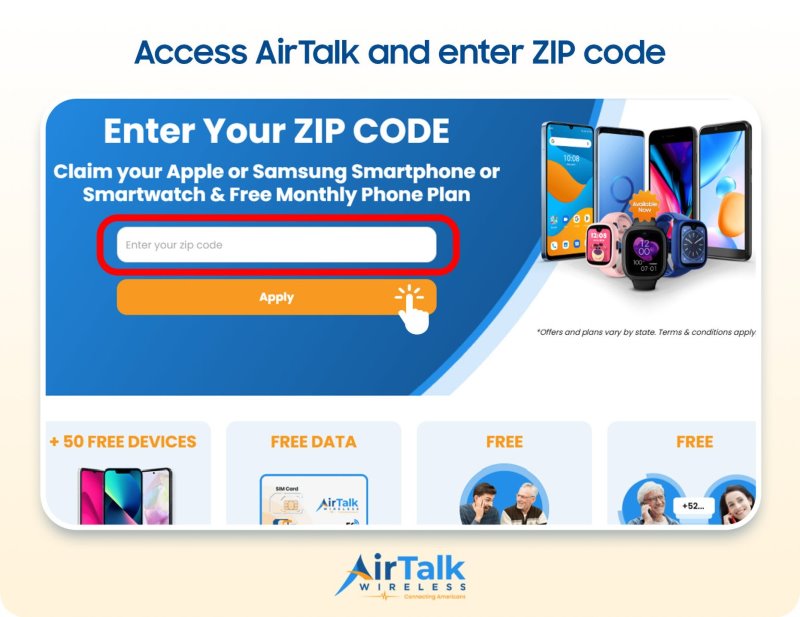
- Visit AirTalk Wireless: Go to AirTalk Wireless and enter your ZIP code to check whether service is available in your area.
- Review available offers: Check the Lifeline plans and free or discounted devices available to you.
- Complete the application: Fill out the application with your information and provide proof of eligibility if required. Medicaid participation may qualify you for Lifeline, but you still need to complete the application and verification process.
- Wait for the review: AirTalk and the National Verifier will review your application and determine whether you qualify for the available service and device offers.
Visit AirTalk Wireless today to start your application and see which offers you may qualify for!
DISCLAIMER: The government does not cover device costs, only basic service through Lifeline. Any free or discounted devices, upgrades, or top-ups are limited-time Cintex Wireless and AirTalk Wireless offers and may vary by state, eligibility, and availability. Terms and conditions apply.
FAQs
Does Medicaid pay for nebulizers?
Medicaid may cover a nebulizer when it is medically necessary and meets the state’s coverage requirements. Your provider may need to prescribe the equipment and submit supporting documentation. Coverage, prior authorization, and replacement limits vary by state and plan.
Can Medicaid replace a broken nebulizer?
Possibly. Your plan may cover repair or an earlier replacement if the machine no longer works or cannot meet your medical needs. Contact your equipment supplier and provider to document the problem and confirm the applicable rules.
Do I need a prescription for a Medicaid-covered nebulizer?
A prescription or other medical documentation is commonly required, but the exact requirements depend on your state’s program and the equipment. Ask your provider or supplier what paperwork and authorization are needed before ordering the device.
How to get a free nebulizer through Medicaid?
Start by asking your healthcare provider whether a nebulizer is medically necessary. If prescribed, contact a Medicaid-participating equipment supplier to confirm coverage, documentation, and any out-of-pocket costs. Medicaid does not guarantee approval for every device or supplier.
What diagnosis will cover a nebulizer?
There is no single diagnosis that guarantees coverage. A provider may prescribe a nebulizer for a respiratory condition when it is an appropriate way to deliver medication. Your state’s coverage criteria, the prescribed treatment, and medical documentation determine whether the equipment qualifies.
Final Thoughts
Knowing how often will Medicaid pay for a nebulizer can help you plan ahead for replacement costs. That way, when your equipment wears out or stops working properly, you’ll know where to turn for help.
Keep your Medicaid plan’s contact information handy, and don’t wait until your device fails completely to ask about repair or replacement options. A quick check now can save you time and unexpected expenses later.