
Many people and families are finding it difficult to pay for housing while simultaneously meeting their food, transportation, and other basic necessities. Finding a place to live may be even more difficult when rents continue to rise faster than incomes.
That is why many individuals look for low income apartments for rent to discover more cheap, dependable, and budget-friendly living solutions. Discover potential options in this blog post!
What Are Low Income Apartments for Rent?
Demand is strong, supply is restricted, and the majority of properties have extensive waiting lists or short application periods.
That is why low income apartments for rent near me are becoming increasingly popular among individuals and households.
Overview of Low Income Housing
Low income apartments for rent are rental housing properties particularly designed to keep monthly rent inexpensive for households earning less than a set income level.
It is typically 80% of the Area Median Income (AMI).
These units are often subsidized by federal, state, or municipal housing programs that limit the amount landlords may charge. This helps keep rent affordable for renters with financial difficulties.
Most low income rentals charge rent as a part of household income instead of market rates.
In many circumstances, tenants pay around 30% of their monthly income for rent, with the remaining subsidized by housing programs.
As demand greatly surpasses availability, many properties have lengthy waitlists, which is why searching for low-income apartments with no waiting list has become so popular.
>>>Read more: Where To Find Low Income Housing Near Me With NO Waiting List?

Low-Income Housing vs Affordable Housing
Many people confuse affordable housing and low-income housing.
In fact, knowing the distinctions between the two can help you protect your bottom line.
| Aspects | Low-Income Housing | Affordable Housing |
| Eligibility criteria | Housing is reserved for households that fall below government-set income limits. | Housing is considered affordable when total housing costs do not exceed 30% of a household’s gross income. |
| Targeted group | Usually serves households earning <80% of AMI, with many programs focused on <50% or even <30% of AMI. | Often serves households earning around 40-80% of AMI, and in some cases, workforce housing can go higher. |
| Government involvement | Strongly tied to government programs, regulations, and compliance requirements. | Can exist without direct government oversight in market-rate settings. |
| Application process | Often involves housing authorities, income verification, and long waitlists due to high demand. | Usually follows a normal rental application process with no centralized waitlist. |
Which Programs Support Low Income Rentals Near Me?
Several major housing initiatives provide low income apartments for rent.
Each program caters to distinct tenant conditions and has its own eligibility and application procedures.
Section 8 Housing
This program assists low-income families, veterans, the elderly, and those with disabilities in affording private market housing.
Participants can pick any qualified housing unit, including single-family homes, apartments, and townhouses, with the rent partially covered by a direct subsidy to the landlord.
U.S. Department of Housing and Urban Development (HUD) funds HCV programs and administers about 2,000 Local Public Housing Agencies (PHAs) around the country.
Here are some qualifying requirements:
- In general, families must have an extremely low or very low income to qualify.
- Applicants must be US citizens or eligible non-citizens, as defined by HUD.
- The head of the household must possess a valid Social Security number.
Public Housing
Over 2.2 million low- and extremely low-income families, the elderly, and people with disabilities benefit from the public housing program.
It offers safe, quality, and inexpensive rental accommodation for those looking for low income apartments for rent near me.
The HUD distributes federal funds to local housing agencies (HAs), which manage housing for low-income individuals at affordable rates.
Also, your local public housing agency (PHA) will assess your case and determine if you are eligible for this benefit. In general, your eligibility depends on:
- Your annual gross income
- U.S. citizenship or immigration status
- If you are eligible as a senior, a person with a disability, or a family
How to Apply for Low Income Apartments for Rent?
Most low income housing programs require participants to apply to get federal support. Below is a general instruction:
- Check your eligibility by reviewing local income guidelines for public or affordable housing, usually through HUD website or local housing information.
- Contact your PHA to understand what programs you may qualify for, estimated rent, apartment size, and available housing options.
- Submit an application through the local PHA for public housing, or apply directly to the landlord if the property is privately owned but income-restricted.
- Prepare your documents, including proof of income for everyone in the household, government-issued ID for adults, and birth certificates for children if required.
- Expect a waitlist, since income-restricted housing is often in high demand and may take time.
- Keep your PHA updated if your income changes while you are waiting or after you move in, as this can affect your rent and eligibility.
How the Lifeline Program Helps Low-Income Renters
For low-income renters, the problem is not only finding inexpensive accommodation, but also keeping connected while hunting.
When it comes to contacting landlords, checking listings, submitting applications, or following up on housing assistance, having a functional phone and internet connection can make a big difference.
This is where Lifeline may assist.
Lifeline is a government assistance program that provides qualified low-income consumers with a monthly discount on qualifying phone service or internet service from participating providers.
Basically, you can qualify through participation in other programs like Medicaid, SSI, SNAP, etc., or by meeting the income limit set by the Federal Poverty Guidelines. So if you’re already receiving housing support, that’s actually a sign you might be closer to qualifying than you think!
Once you confirm your eligibility, your next step is connecting with a Lifeline provider, as they are the ones who handle the entire enrollment process. Some providers even offer free devices to eligible households to make the experience even more worthwhile.
That said, it’s important to understand that Lifeline is a government assistance program with a few key guidelines: the benefit is non-transferable, limited to one discount per household, and only available to eligible consumers. To ensure a smooth process, make sure you’re working with a certified Eligible Telecommunications Carrier (ETC) from the start.
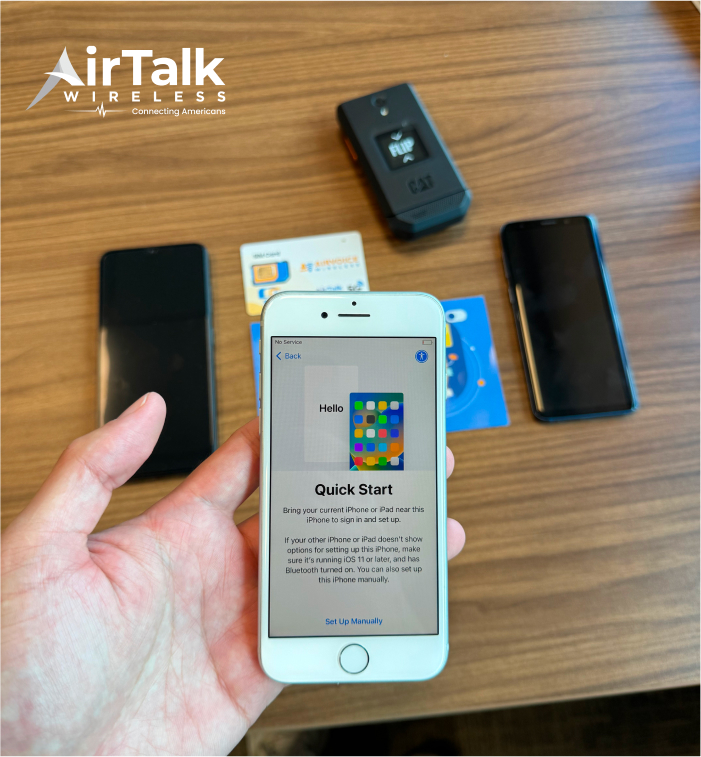
Certain certified carriers, such as Cintex Wireless, are the perfect examples of Lifeline-approved providers who have been trusted by many households in delivering the Lifeline benefits and free devices, depending on their stocks and the participation time of the application.
In particular, Cintex is being combined with AirTalk Wireless as part of a larger service transition. Customers may now access more device offers, such as:
- iPhone 7
- iPhone 8
- iPhone 8 Plus
- iPhone 11
- iPhone 11 Pro Max
- Samsung Galaxy S21 5G
- Samsung Galaxy A12
- Motorola One 5G ACE, etc
IMPORTANT: The government does not subsidize devices. Lifeline programs cover basic service costs only. Free or discounted devices, upgrade plans, or top-ups are exclusive benefits provided by Cintex Wireless as part of our promotional offers. Terms and conditions apply. Limited-time promotion—offers vary by state, stock availability, and eligibility.
Conclusion
Finding low income apartments for rent takes more than just satisfying income requirements. Renters need to know which housing programs are available, how waiting lists operate, and where applications frequently stall.
Staying connected throughout the application process is also vital, since missed communication might lead to missed opportunities. Then claim your free phone and Internet benefit with Lifeline now!