
Paying for vehicle insurance might be challenging when you’re already attempting to balance everyday costs. For many drivers, the expense of coverage might feel like an additional financial burden, especially when every payment counts.
That is why many individuals look for low income car insurance to find more affordable coverage options that keep them safe and allow them to drive lawfully.
What Is Low Income Car Insurance?
In the United States, car insurance for low income households refers to state-sponsored programs or reduced-rate private policies designed to make auto insurance affordable.
Plans like these are generally more affordable, but they do come with their own coverage limitations and qualifying conditions worth looking into.
Although car insurance is legally required for most drivers, not everyone can afford it.
Industry data shows that the average annual cost of minimum coverage in the United States sits around $621, while full coverage can average up to $2,315 per year. Keep in mind that actual rates vary depending on your state, driver profile, and chosen insurer, so your personal premium may look different.
That is why low income auto insurance policies come to help motorists who cannot afford car insurance maintain basic coverage, thereby protecting themselves and other drivers.
Which States Offer Car Insurance for Low Income Drivers?
Currently, three states have low income car insurance assistance programs: California, Hawaii, and New Jersey. Check the details below:

California
Low-income drivers in California can purchase the minimal liability insurance required to drive lawfully under the California Low-Cost Automobile (CLCA) program.
You may also add:
- Uninsured motorist bodily injury coverage: It covers medical expenses if you are involved in an accident with an at-fault driver who does not have insurance.
- Medical payments coverage: It pays your medical bills and those of your passengers, regardless of who is at fault in an accident.
The program’s insurance will not cover damage to your own vehicle, which is covered by collision coverage in conventional plans.
To qualify for CLCA, your yearly income must fulfill strict qualifying criteria and fall within 250% of the federal poverty line.
The CLCA allows an individual to earn up to $37,650 a year, while a family of four can earn up to $78,000.
Furthermore, you must have a valid California driver’s license, own a car worth less than $25,000, be 16 or older, and have a clean driving record.
Income limits are updated annually based on the Federal Poverty Level. Please verify current thresholds before applying
Hawaii
Certain low-income drivers in Hawaii can obtain no-fault insurance under the Aid to the Aged, Blind, and Disabled program.
To be eligible for this program, you must:
- Currently receive public assistance payments in the form of direct cash benefits, supplementary security income benefits from the Social Security Administration, or medical treatments that began before July 1, 1994.
- Possess a valid driver’s license or be unlicensed, permanently disabled, or unable to drive your own car.
- Are the only registered owner of the insured vehicle.
Eligibility requirements for Hawaii’s AABD program are subject to change. Contact the Hawaii Department of Human Services directly to confirm current conditions before applying
New Jersey
Its low income car insurance program is known as the Special Automobile Insurance Policy (SAIP). You may have heard it referred to as “dollar a day insurance,” because the annual cost is limited to $365.
Aside from a valid New Jersey license, the only condition is that drivers be enrolled in federal Medicaid with hospitalization.
Unlike other low income auto insurance programs, the SAIP excludes traditional coverage such as liability insurance. Instead, it provides two benefits: $250,000 in medical care and a $10,000 death benefit.
Nevertheless, the policy’s medical coverage is only available for emergency medical care following a vehicle accident or for ongoing treatment costs related to brain and spinal cord damage.
How to Find the Best Low-Income Car Insurance?
Finding inexpensive coverage has become more challenging for drivers who are struggling to make ends meet.
But do not worry! The methods below might help you get started on your search for low-cost auto insurance.
- Search for state-sponsored programs: Hawaii, California, and New Jersey residents may be eligible for their state’s low income car insurance program. Coverage information and eligibility requirements differ by state.
- Find the cheapest vehicle insurance companies: Car insurance rates differ greatly between insurers. Furthermore, some firms charge reduced average rates for particular driver groups, such as those with a speeding ticket or a DUI. When looking for businesses, consider the risk factors that might affect your rate.
- Compare quotes from several providers: When looking for car insurance, you should compare quotes from at least three companies for the same types of coverage and limits.
Other Ways to Get Car Insurance for Low Income
If your state does not offer a low income car insurance program, or you do not qualify, there are alternative options:
- Pay-per-mile insurance: Unless you drive much, a pay-per-mile insurance plan might help you save money. These plans often include a cheap base rate plus a per-mile rate.
- Look for vehicle insurance discounts: Almost every insurer offers several discounts, and many are easy to obtain. For example, if you buy both a car and house insurance from the same carrier or have more than one car on your policy, you may usually get a good discount.
- Increase your deductible: If you have comprehensive and collision insurance, a higher deductible will lower your costs, but it may not be worthwhile. Raising your deductible normally only makes sense if you can afford to pay that amount out of pocket if you file a claim.
- Participate in a telematics program: Many insurers have telematics services, which let your insurance provider track your driving to determine how safe you are on the road. Upon enrollment, you may typically receive an initial discount, though the exact amount varies by insurer and program.
- Enhance your credit score: Attempting to build or improve your credit score can have a significant influence on how much you pay for vehicle insurance.
Maximize Benefits for Low Income Drivers with Lifeline Program
Managing car expenses is only one piece of the puzzle. For many low-income households, having reliable phone or internet access is just as critical, whether it is for comparing insurance quotes, staying in touch with employers, or taking care of daily needs online.
This is where the Lifeline program can make a real difference. Backed by the federal government, Lifeline was created to make communication services more affordable for households that qualify, connecting them with participating providers who offer discounted phone or internet plans.
The good news is that eligibility is often more within reach than people realize. If you are already enrolled in programs like Medicaid, SSI, or SNAP, you may already meet the criteria. Alternatively, qualifying based on household income through the Federal Poverty Guidelines is another path in, and those already receiving housing assistance are often closer to the threshold than they expect.
From there, a Lifeline-certified provider takes care of the rest, guiding you through enrollment and, in some cases, offering free devices to qualifying households to round out the benefit.
Before you get started, here are a few key guidelines to keep in mind:
- The benefit is non-transferable and cannot be shared or passed on
- Only one discount is allowed per household
- The program is reserved for eligible consumers only
To make sure everything is set up correctly, always work with a verified Eligible Telecommunications Carrier (ETC) when choosing your provider
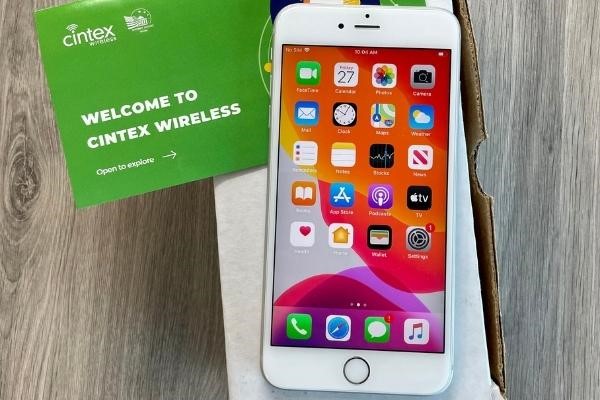
For instance, Cintex Wireless is a reputable provider, which is currently merging with AirTalk Wireless). As this transition unfolds, eligible customers stand to benefit from a stronger, more expansive network.
When you apply through it, you may get a free government phone, such as the iPhone 7, iPhone 11, iPhone 13, Samsung Galaxy A12, Motorola One 5G ACE, etc.
Conclusion
To summarize, low income car insurance is state-sponsored coverage offered to people who fulfill certain income eligibility requirements. The coverage levels may be at or below the state-mandated minimums for vehicle insurance, and they may not include collision or comprehensive coverage.
Moreover, knowing where car insurance for low income drivers is offered and who qualifies will help you understand your alternatives if you cannot afford auto insurance.