
A Medicaid annuity can help you keep some financial security while still qualifying for long-term care coverage. Too much savings can disqualify a person from Medicaid, even when they genuinely need nursing home care. An annuity is one legal way to lower countable assets without giving them away.
This guide covers how it works, the rules that keep it compliant, and why marital status changes the strategy.
1. What Is a Medicaid Annuity?
A Medicaid annuity, also called a Medicaid compliant annuity, is a financial contract with an insurance company. It turns a lump sum of savings into a fixed monthly income.
This lowers countable assets so an applicant can meet Medicaid’s asset limit for long-term care, while payments count as income instead of savings.
A Medicaid annuity is most useful when one spouse needs nursing home care, and the other does not, since the healthy spouse can hold the annuity and keep the income. It is worth noting that the annuity does not erase assets; it converts them into a different form that Medicaid treats differently.
A similar strategy, moving assets into a Medicaid Asset Protection Trust, works on the same basic idea but through a different legal structure.
2. How Can an Annuity Affect Medicaid Long-Term Care Eligibility?
The basic mechanism is simple: a lump sum goes to an insurance company, and the company pays it back on a fixed schedule. What changes is how Medicaid treats that money at each stage, since resource rules, income rules, and transfer rules all apply differently once the annuity is set up.
- Resource treatment: once the lump sum moves into the annuity, it stops counting as a savings asset
- Income treatment: each scheduled payment counts as income for the month it arrives
- Transfer-of-assets rules: buying a compliant annuity is not treated as a penalized gift, unlike giving money away outright
- Actual eligibility: these three effects combine to lower countable assets while keeping the applicant within Medicaid’s income limit
A short example makes this concrete. A $60,000 lump sum paid back over 5 years works out to about $1,000 a month in income. The state must be named as the remainder beneficiary for this to qualify, which is what makes an annuity compliant, not just any annuity contract purchased from an insurer.

3. What Rules Must an Annuity Meet to Stay Medicaid Compliant?
Not every annuity qualifies. Six rules decide whether Medicaid treats it as compliant, and missing even one can turn the purchase into a penalized transfer instead of a protected asset move.
These rules apply on top of any state-specific requirements, so the table below covers the federal baseline first.
| Rule | What It Means |
| Immediate | Payments must start right away, no waiting period |
| Irrevocable | The contract cannot be canceled or cashed out |
| Fixed and equal | Monthly payments stay the same amount every time |
| Non-assignable | The annuity cannot be sold or transferred to anyone else |
| State as beneficiary | Your state Medicaid agency must be named as primary beneficiary (or secondary behind a surviving spouse or minor/disabled child) |
| Actuarially sound | Payments cannot run longer than your life expectancy |
The Contract Must Meet Federal Payment Rules
Four of the six rules above work together as one package. Payments must begin immediately, stay fixed and equal, and come from a contract that cannot be changed, sold, or cashed out once signed.
The Payment Term Must Be Actuarially Sound
The length of the payment term cannot exceed the owner’s official life expectancy, based on federal actuarial tables.
A term set longer than that life expectancy signals an attempt to shelter money rather than genuinely convert it to income, and Medicaid can penalize it as a disguised gift.
Medicaid Must Receive the Required Beneficiary Position
The state Medicaid agency must be named as the primary beneficiary to receive remaining funds up to the total care paid.
However, if the owner has a surviving spouse, a minor child, or a disabled child, those individuals may be named as primary beneficiaries ahead of the state.
Leaving this out is one of the most common reasons an otherwise well-structured annuity gets rejected.
State Medicaid Rules Still Matter
These six rules form the federal baseline, but individual states can add their own requirements on top.
Checking your specific state’s Medicaid annuity policy before purchase avoids a costly mistake after the contract is already locked in.
>>> Read more: Medicaid Penalty Period: When It Starts and How Long It Lasts
4. Why Does Marital Status Matter for a Medicaid Annuity?
Marital status changes both whether you need this strategy at all and how you can structure it. A single applicant and a married couple face very different rules, since Medicaid’s spousal protections only apply when there is a healthy spouse to protect.
- When the applicant is single: nearly all assets count against the individual limit, typically $2,000
- When one spouse needs long-term care: the healthy (“community”) spouse can protect assets by converting joint savings above their state’s Community Spouse Resource Allowance (up to $162,660) into an annuity in their own name.
- Note: If both spouses apply for Medicaid at the same time, a combined asset limit of $3,000–$4,000 applies instead, making spousal annuity strategies far less effective.
- Whose name is on the annuity matters: an annuity owned by the community spouse generally does not count against the applicant, while payments to the applicant do
5. If You’re Protecting Savings, Check This Benefit Too
If you’re looking to protect your savings, every extra benefit counts. In fact, your Medicaid eligibility opens the door to several other ways to save money.
The Lifeline program is a government assistance program that discounts a monthly phone service or internet service by up to $9.25 a month standard or $34.25 a month on Tribal lands. Lifeline itself gives the discount, not a device.
Applicants automatically qualify for Medicaid, or if they are on SNAP, SSI, Section 8, or Veterans Pension, they might also qualify. Households under 135% of the federal poverty guidelines qualify too.
To receive the Lifeline subsidies, you need to apply through Lifeline providers (ETCs).
For example, Cintex Wireless is a federally approved ETC that combines the Lifeline discount with their own promotions, offering a Lifeline services plan to eligible applicants.
UPDATE: Cintex Wireless has merged into AirTalk Wireless, another ETC now serving more than 2 million households. This means that eligible households can access faster application review and a wider phone selection when applying.
Through the ETC above, the Lifeline services plan includes monthly discounts and even a free smartphone (depending on your state). The overall plan includes:
- Free smartphone or larger discount for upgraded device
- Unlimited talk, text, and data allowance
- International calling
- Other telecommunication benefits
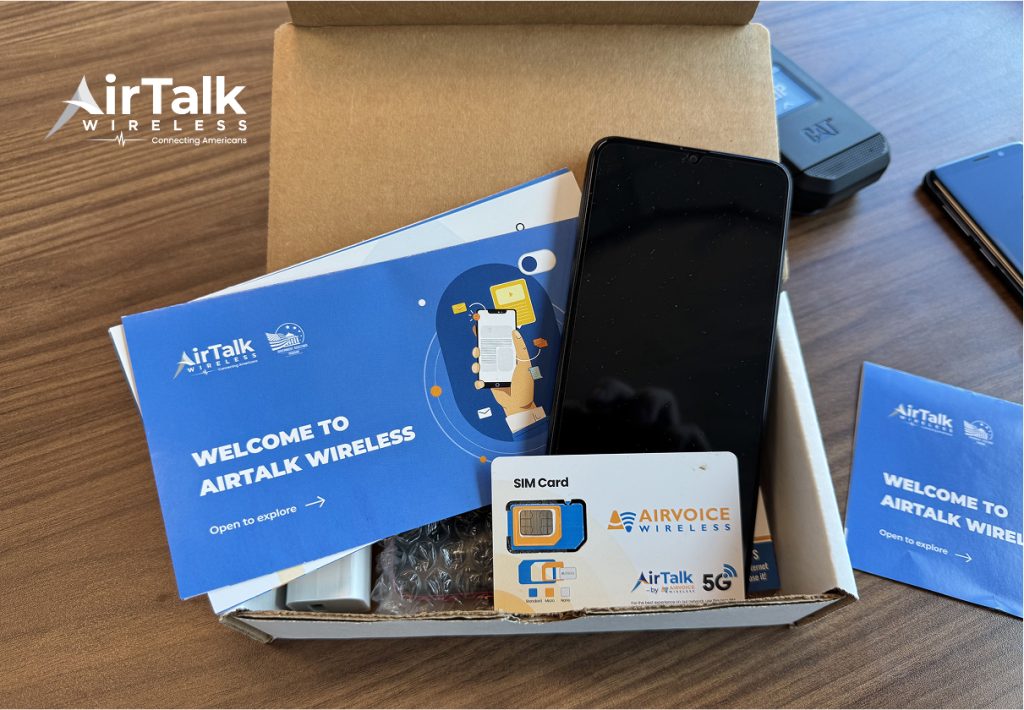
DISCLAIMER: Lifeline covers phone or internet service costs only. A free phone is a promotional offer from Cintex Wireless or AirTalk Wireless as approved ETCs, not from the government directly. Availability, device model, and stock depend on your state and ZIP code.
>>> Read more: Medicaid Planning: An Ultimate Guide To Long-Term Healthcare
6. Frequently Asked Questions
Q1. Is a Medicaid annuity a good idea?
It depends on your finances and care needs. An annuity works best when you have savings above your state’s Medicaid limit and expect to need long-term care. Talking with a Medicaid planner first can confirm whether it fits your situation.
Q2. What is the Medicaid annuity loophole?
“Loophole” is a common nickname for a Medicaid-compliant annuity. It is a legal planning tool, not a trick. It lets a healthy spouse keep income while the other spouse qualifies for Medicaid long-term care.
Q3. Does Medicaid have to be named as a beneficiary of an annuity?
Yes, in most cases. The state Medicaid agency must be named as the primary beneficiary, up to the amount paid for care. The only legal exception is if you have a surviving spouse, a minor child, or a permanently disabled child, in which case they can be named as primary beneficiaries, with Medicaid named second.
Q4. Can you buy a Medicaid-compliant annuity after entering a nursing home?
In some cases, yes, though timing matters more once care has already started. A Medicaid planner can confirm whether it still helps at that stage, since the look-back period may already be in motion.
Conclusion
Medicaid annuity rules are about timing, structure, and who holds the contract. Talk with a Medicaid planner before purchasing one, since exact rules vary by state.
Protecting savings is only one part of planning ahead for long-term care. Checking your Lifeline eligibility while you are at it is a quick way to lower another monthly cost.