
Medicaid planning plays a vital part in long-term financial planning for people and families who want to ensure healthcare coverage while also protecting their assets.
As healthcare expenses rise and the aging population grows, understanding the best planning strategies will significantly impact your ability to receive the care you require.
1. What Is Medicaid Planning?
Medicaid planning refers to any assistance offered to a potential Medicaid applicant before, during, or in anticipation of the preparation of their Medicaid application.
It can range from assisting with document collecting and preparation to a complete restructuring of one’s financial assets.
Furthermore, Medicaid planning is also necessary for those who are already Medicaid-eligible but anticipate receiving a large sum of money (such as an inheritance) that would render them ineligible for benefits.
Much of the complexity of Medicaid planning arises when an individual’s monthly income or resources approach or exceed the financial eligibility criteria.
Some states allow excess income to be directed into Qualified Income Trusts (Miller Trusts) for Medicaid eligibility purposes.
Also, surplus resources can be repositioned into non-countable assets in a variety of ways, depending on state Medicaid regulations and federal guidelines.

2. Why Does Medicaid Planning Matter?
Generally, individuals who do not plan carefully may end up squandering their life savings to meet Medicaid’s strict eligibility requirements.
Below are some common reasons you should engage in Medicaid planning:
- Protect assets: Proper Medicaid planning may help preserve certain assets for a spouse or family members while still addressing long-term care needs.
- Maintain eligibility: Planning helps you avoid financial actions that could unintentionally disqualify you from Medicaid benefits.
- Alleviate family stress: A well-organized plan simplifies the Medicaid application process, reducing paperwork and easing the burden on loved ones.
- Secure quality care: Medicaid planning can give you access to nursing or in-home care services without creating financial hardship.
>>>Read more: Therapist That Take Medicaid & What to Expect In 2026
3. Common Types of Medicaid Planners
Many people are seeking a Medicaid planning attorney or a Medicaid planning lawyer. However, not all Medicaid planners are the same.
Understanding the differences among these types allows you to select the best specialist for your needs.
Elder Law Attorneys
They specialize in Medicaid eligibility laws for their licensed states and can establish trusts to restructure assets or income to meet Medicaid financial requirements.
Also, they provide comprehensive Medicaid planning and legal guidance, ensuring advice aligns with the client’s best interests.
However, these planners are the most expensive option, with fees typically ranging from $300 – $600 per hour, which may vary depending on the attorney, location, and complexity of the case.
Geriatric Care Managers (GCMs)
GCMs focus on client-centered care, providing care planning, assessments, and coordination. Also, they are knowledgeable about local support programs and build trusting relationships with families.
Services are paid out of pocket, and they cannot perform legal tasks such as trusts or formal Medicaid planning.
Certified Medicaid Planners (CMPs)
CMPs have extensive knowledge of Medicaid rules, eligibility, and planning strategies, especially for long-term care. They guide clients on qualifying, even if income or assets exceed limits, and can assist with appeals.
Although CMPs are less costly than Elder Law Attorneys, they may not fully understand individual care needs.
>>>Read more: Find An Emergency Dentist Medicaid To Avoid The Worst Situations
Public Benefits Counselors / Case Managers
These professionals work at state agencies, AAAs, ADRCs, or Medicaid offices and understand Medicaid eligibility and alternatives.
Their services are free, but they cannot advise individuals on restructuring income or assets to qualify.
Public Benefits Counselors are best for applicants who already meet the state’s income and asset limits and primarily assist with completing applications.
State Health Insurance Program (SHIP) Counselors
SHIP Counselors are typically trained volunteers who inform clients about public benefits like Medicare and Medicaid.
Their support is best suited for applicants whose income and assets are clearly below eligibility thresholds. Services are free, but their role is limited to explaining benefits and the application process.
Commission-Based Medicaid Planners
These planners help individuals whose assets exceed Medicaid limits by guiding them to purchase Medicaid-compliant annuities, earning commissions from these transactions.
Their services may be advertised under asset protection, but users should be cautious, given their commission-based structure.
4. Best Strategies for Medicaid Planning
Medicaid planning can involve a variety of financial and legal strategies, including:
- Medicaid Spend-Down Strategies: Reduce excess assets by paying debts, making home improvements, or buying exempt items like a vehicle, while carefully following Medicaid rules.
- Income Trusts (Miller or Qualified Income Trusts): Redirect surplus income into a trust to cover care costs without disqualifying from Medicaid.
- Asset Protection Trusts: Transfer assets into a Medicaid Asset Protection Trust before the 5-year look-back period to maintain eligibility.
- Gifting Strategies and Look-Back Period: Asset transfers and gifting strategies may affect Medicaid eligibility because of the Medicaid look-back period. Individuals should consult qualified legal or financial professionals before transferring assets.
- Spousal Protection Strategies: Protect the non-applicant spouse’s income and assets using provisions like the Community Spouse Resource Allowance to prevent impoverishment.
5. How Medicaid Recipients May Not Know They Can Get Even More Perks with Lifeline
Medicaid-enrolled households are immediately eligible for the Lifeline program.
It is a federal telecommunications program that gives monthly savings on phone or internet service to qualifying low-income families.
Eligible individuals nationwide can receive up to $9.25 per month for phone service or internet access under the Lifeline program.
However, the Lifeline benefit is non-transferable, restricted to a single discount per family, and given only to eligible consumers.
Many Lifeline carriers use government Lifeline subsidies to offer free or heavily reduced monthly plans.
Qualifying applicants may also be eligible for a free or low-cost smartphone, as well as call, text, and data services.
One of the most popular providers is Cintex Wireless, which is currently merging with AirTalk Wireless.

Follow these easy steps to claim your free device with AirTalk:
- Visit AirTalk Wireless and input your ZIP code
- Select a plan and device available in your region
- Enter information and upload the relevant documents if required
- Submit and wait for approval
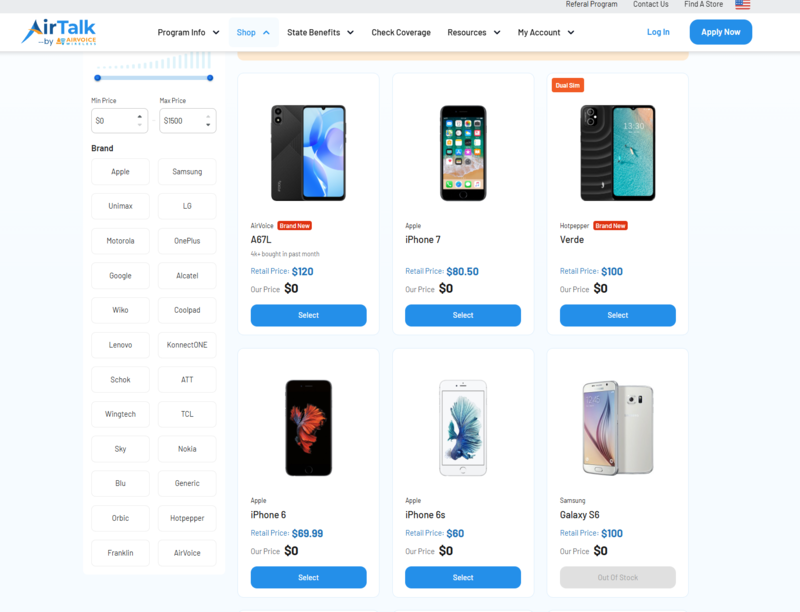
DISCLAIMER: The government does not cover device costs, only basic service through Lifeline. Any free or discounted devices, upgrades, or top-ups are limited-time Cintex Wireless offers and may vary by state, eligibility, and availability. Terms and conditions apply.
Conclusion
To summarize, Medicaid planning covers financial and legal techniques to safeguard your assets while guaranteeing that you are eligible for Medicaid benefits if and when you need them.
Moreover, an expert Medicaid planner can assist you in navigating the complicated requirements of Medicaid eligibility, making sure that you can qualify for benefits without sacrificing all of your assets.