Cheap SIM free phone shopping is less about finding the smallest number on a price tag and more about finding a device that will still feel useful a year or two from now. A bargain can lose its shine quickly if the battery struggles, software support is ending, or the phone cannot activate on your network.
The better approach is to set a realistic budget, decide which features you actually use, and check the details that can turn a low-cost purchase into either a smart buy or an expensive mistake.
1. How Cheap Can a SIM Free Phone Be?
There is no official price that makes a phone “cheap.” Prices vary by model, age, condition, storage, and promotions.
For a new unlocked smartphone in 2026, the $200–$300 range is a useful starting point for budget shopping. For example, Samsung currently lists the unlocked Galaxy A17 5G at $249.99 with 128GB of storage.
Phones below that range certainly exist, but the lower the price goes, the more carefully you should check what has been sacrificed.
Budget phones under $200
If your phone is mainly for calls, messages, maps, social media, video, and browsing, you may not need premium hardware.
Instead of insisting on one specification, look at the package as a whole:
- Enough memory for your normal apps
- Storage that will not fill immediately
- Reliable real-world battery life
- Current security support
- 4G or 5G compatibility with your network
Four gigabytes of RAM may be perfectly workable on some entry-level phones, for example, but RAM alone does not tell you whether the phone will feel smooth.
Older flagships
A previous-generation premium model can also be a good route to a cheap SIM free phone.
Higher-end phones from a few years ago may offer stronger cameras, better displays, or faster processors than similarly priced entry-level devices. But age brings its own baggage.
Before buying, you should check:
- Battery condition
- Remaining software-support period
- Carrier-lock status
- Storage capacity
- Physical condition
- Seller return policy
A once-expensive phone is not automatically a bargain simply because time knocked a few hundred dollars off the price.

2. Check These Before Buying a Cheap SIM Free Phone
Once you find a promising deal, slow down before hitting Buy.
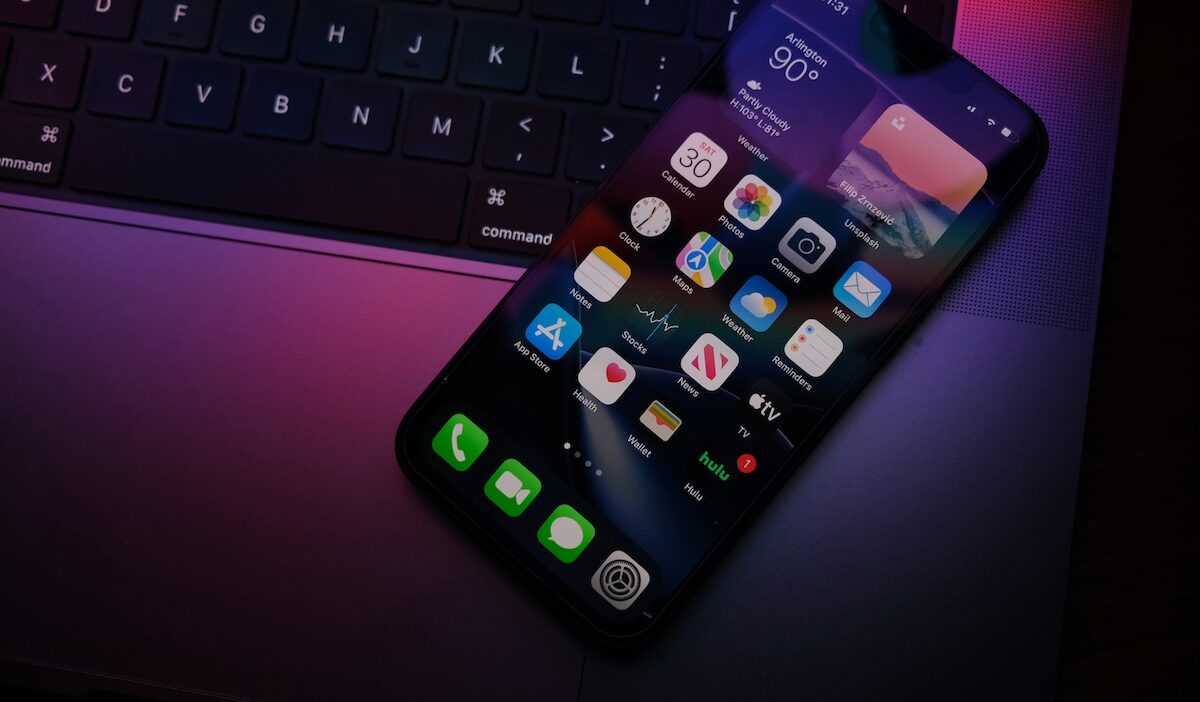
First, confirm that the phone is actually unlocked. On iPhone, for example, No SIM restrictions besides Carrier Lock in Settings > General > About indicate that the device is unlocked.
Then you should check:
- Network compatibility: Make sure the exact model works with your intended wireless provider.
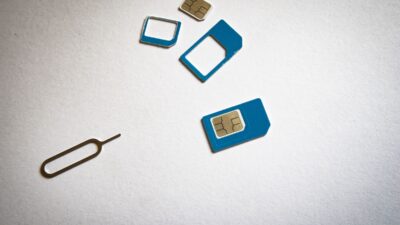
- SIM setup: Confirm whether it uses a physical SIM, eSIM, or both.
- Battery condition: Especially important for older or pre-owned devices.
- Software support: Check how much security and operating-system support remains.
- Storage: Make sure today’s bargain will not become tomorrow’s “Storage Full” notification.
- Warranty and returns: A good return window gives you somewhere to turn if the phone arrives with problems.
That last bit of homework may feel less exciting than opening the box, but it is usually much cheaper than solving compatibility problems afterward.
>>> Read more: Free SIM Card: What’s Actually Free and How to Get One
3. Get More Value From Your Budget
Spending less and getting good value are not always the same thing.
One way to stretch the budget is to look one generation back rather than immediately choosing the cheapest new model. Another is to buy a carefully checked pre-owned phone from a reputable seller.
Storage deserves attention too. Paying extra for capacity you will never use wastes money, but buying too little can shorten the phone’s useful life.
It also helps to ask what you do not need.
If you rarely play demanding games, a top-end processor may add little value. If you mostly take casual family photos, paying a large premium for advanced camera tools may not change your everyday experience.
The trick is to trim the features you can live without, not the ones you depend on.
4. Is a Cheap SIM Free Phone Right for You?
A lower-cost SIM-free phone works particularly well when your needs are straightforward.
| If you… | Budget SIM-free may fit |
| Mainly call, text, browse, and stream | Yes |
| Need a backup phone | Yes |
| Want to choose wireless service separately | Yes |
| Play demanding games regularly | Consider stronger hardware |
| Edit large videos or run heavy creative apps | A higher-performance device may be worthwhile |
Buying SIM-free does not require paying the entire cost at once, either. Depending on where you shop, separate device financing may still be available.
What matters is whether you are paying for enough phone, not simply the least phone.
>>> Read more: Free SIM Card With Free Service Government iPhone
5. What If the Phone Is Affordable but Service Is Still Costly? Consider This
A cheap handset solves only the first half of the budget problem. The phone may be a one-time purchase, but wireless service keeps showing up month after month.
For households that qualify, Lifeline can help with that recurring cost. It is a federal benefit that lowers the price of qualifying phone service or internet service by up to $9.25 per month, or up to $34.25 per month for eligible subscribers living on qualifying Tribal lands.
Eligibility may be based on income or participation in programs such as Medicaid, SSI, SNAP, etc.
Lifeline itself does not hand out phones. Eligible customers receive supported service through participating telecommunications providers.
Cintex Wireless is an Eligible Telecommunications Carrier that provides Lifeline-supported wireless service. Depending on location, eligibility, and current availability, customers can select an available plan and then choose the device setup that fits their situation.
That is where the definition of “cheap” can change. You may already have found an inexpensive SIM-free phone, but Cintex can separately offer free or heavily discounted device promotions to eligible customers. Those phone offers come from the provider, not from the Lifeline benefit itself.
Cintex is also merging into AirTalk Wireless. The migration gives customers access to a wider selection of discounted premium devices and a more unified service experience.
That creates a useful budgeting checkpoint: before paying even $150 or $250 for a phone, eligible households can compare that retail purchase against the current provider offers available to them.
Sometimes saving money means finding the cheapest phone on the shelf. Other times, it means realizing you may not need to buy that phone at retail in the first place.
IMPORTANT: The government does not subsidize devices. Lifeline programs cover basic service costs only. Free or discounted devices, upgrade plans, or top-ups are exclusive benefits provided by Cintex and AirTalk Wireless as part of the promotional offers. Terms and conditions apply. Limited-time promotion—offers vary by state, stock availability, and eligibility.
6. FAQs
Are cheap SIM free phones reliable?
They can be. Reliability depends more on the model, condition, remaining software support, and seller than on price alone. Check these details before buying rather than assuming every budget phone will perform the same.
Can I finance a cheap SIM free phone?
Often, yes. Some retailers and manufacturers offer separate installment options even when the handset is purchased without a wireless-service contract.
Can I use a cheap SIM free phone overseas?
Yes, if the phone is unlocked and compatible with the network at your destination. You will also need a supported physical SIM, travel eSIM, or roaming arrangement.
Conclusion
A cheap SIM free phone is a good deal only when the savings survive beyond checkout. Compatibility, battery condition, software support, and storage can matter far more than shaving another few dollars off the purchase price.
Think beyond what the phone costs today and ask what it will cost to own, use, and eventually replace. The smartest budget purchase is the one that stays affordable after the bargain sticker comes off.