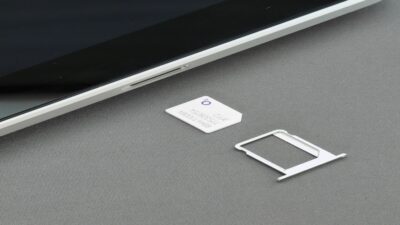
What can you do without a SIM card depends on one simple thing: does the feature need your carrier, or just an internet connection? Take the physical SIM out and your phone does not suddenly become a brick. With Wi-Fi, it can still browse the web, stream videos, run apps, make internet calls, and handle plenty of everyday tasks.
There is one wrinkle worth clearing up first. A phone with no physical SIM may still have an active eSIM, which provides normal cellular service. So below, “without cellular service” means there is no active physical SIM or eSIM. With that distinction out of the way, it becomes much easier to see what your phone can still do.
1. What Can You Do Without a SIM Card?
Without active cellular service, Wi-Fi becomes your phone’s lifeline to the internet. Once connected, most features that do not depend on your carrier continue working much like they normally would.
So, here’s what can you do without a SIM card:
- Browse websites and use online apps over Wi-Fi
- Watch YouTube, Netflix, and other streaming services
- Use social media
- Send messages through WhatsApp, Messenger, Signal, Telegram, and similar apps
- Use iMessage through an Apple Account when properly configured
- Make voice or video calls through FaceTime and other internet-based services
- Check email
- Take photos and record videos
- Listen to downloaded music or stream over Wi-Fi
- Play offline games or online games through Wi-Fi
- Use cloud storage and productivity apps
- Control compatible smart-home devices
You can also use maps without cellular service, but there is a catch. GPS can still determine your position without a SIM, while map data and live information normally need an internet connection.
If you download an area beforehand, Apple Maps can provide turn-by-turn navigation even when neither Wi-Fi nor cellular service is available.
That makes an old SIM-free phone surprisingly useful. Instead of gathering dust in a drawer, it can become a media player, navigation backup, smart-home controller, or Wi-Fi communication device.
Wi-Fi covers a lot of ground, but sooner or later you reach the edge of what it can replace.
2. What Stops Working Without a SIM Card?
If there is no active physical SIM or eSIM, normal carrier service is where the door starts to close.
You generally cannot:
- Make ordinary cellular calls through your carrier
- Send or receive carrier SMS or MMS on an inactive line
- Use mobile data when Wi-Fi is unavailable
- Receive SMS verification codes sent to that inactive number
- Access carrier voicemail tied to the inactive line
- Use carrier features such as traditional call forwarding
The common thread is easy to spot: these services belong to your mobile line rather than the phone itself.
Emergency calling is an exception in some situations. Certain phones and networks may allow an emergency call even without a SIM or active subscription, but availability depends on the device, nearby network, and country or region. It should not be treated as guaranteed everywhere.
And remember the eSIM exception. If your phone has no card in the SIM tray but has an active eSIM, none of these normal cellular limitations necessarily apply. An eSIM is simply a digital version of the subscriber connection your carrier needs.
>>> Read more: Can You Use A Phone Without A SIM Card? Fully Explained 2026
3. Do You Need a SIM Card for Every Situation?
Not necessarily. Once you know what works over Wi-Fi, the real question shifts from “Do I need a SIM?” to “How often do I need cellular service?”
You may be perfectly comfortable without an active mobile line if the phone:
- Stays mostly at home on Wi-Fi
- Serves as a backup or media device
- Is used mainly for internet messaging
- Already has downloaded entertainment and offline maps
But Wi-Fi has a leash. Walk far enough away from the router and most online features disappear with it.
An active physical SIM or eSIM becomes much more valuable when you need regular calls, mobile data on the road, SMS verification codes, or apps such as rideshare and navigation when Wi-Fi is nowhere in sight.
So the dividing line is not really the little piece of plastic in the SIM tray. It is whether you need your phone to remain connected when Wi-Fi cannot carry the load.

4. If Service Cost Is What’s Stopping You From Getting a SIM, Here’s an Alternative
Using a phone without cellular service can work when Wi-Fi is always nearby. The problem starts when you leave home. Maps stop updating, rideshare apps lose their connection, and regular calls or mobile data are no longer there when you need them.
If the monthly cost of wireless service is the reason you have been relying on Wi-Fi alone, you may not have to choose between staying connected and protecting your budget.
The federal Lifeline program was created to help eligible low-income households reduce the cost of qualifying phone or internet service. Instead of giving customers a phone or paying their entire wireless bill directly, Lifeline provides a monthly service benefit that an approved provider applies to an eligible plan.
You may qualify based on household income or participation in certain assistance programs. Lifeline is limited to one benefit per household, so the first step is simply checking whether you meet the requirements.
But Lifeline itself does not operate a wireless network or activate your phone. That part is handled by an Eligible Telecommunications Carrier (ETC) approved to provide Lifeline-supported service.
One option is Cintex Wireless, an ETC that helps eligible customers turn the Lifeline benefit into actual wireless service. The process is designed to keep things straightforward rather than sending you through a maze of steps.
- Enter your ZIP code to check service availability.
- Choose an available Lifeline-supported plan and device option, either BYOD or a new device, depending on your state and current inventory.
- Complete the Lifeline eligibility application and provide income or qualifying-program documents if requested.
- Wait for approval, then follow the activation instructions for your SIM or eSIM.
Whichever device option you choose, available plans are built around the essentials you would normally lose when relying on Wi-Fi alone. These can include unlimited talk and text, nationwide coverage, free Wi-Fi Calling, international calling to 200+ countries and territories, and a free SIM kit or eSIM.
So if your current phone is compatible, BYOD lets you keep using it with new service. If you need a phone instead, you can choose from available device offers and get connected without having to start from scratch.
There is one more update worth knowing before you apply. Cintex has now merged into AirTalk Wireless, so customers may continue their enrollment through the updated AirTalk experience.
The goal remains the same: help eligible customers move from depending only on Wi-Fi to having wireless service they can use when they step outside it.
IMPORTANT: The government does not subsidize devices. Lifeline programs cover basic service costs only. Free or discounted devices, upgrade plans, or top-ups are exclusive benefits provided by Cintex and AirTalk Wireless as part of the promotional offers. Terms and conditions apply. Limited-time promotion—offers vary by state, stock availability, and eligibility.
5. FAQs
Can a phone work without a SIM card?
Yes. Without an active physical SIM or eSIM, a smartphone can still use Wi-Fi, apps, cameras, downloaded content, and internet-based messaging or calling. Normal carrier service will not be available.
Can I use Wi-Fi without a SIM card?
Yes. Wi-Fi works independently of cellular service, so a phone can connect to a wireless network without a physical SIM card.
Can I receive calls without a SIM card?
You can receive internet calls through services such as FaceTime or messaging apps over Wi-Fi. Normal carrier calls require an active cellular line, which can come from either a physical SIM or eSIM.
Is it safe to remove a SIM card permanently?
Yes. Removing a physical SIM does not damage the phone. It simply removes that line’s cellular connection unless another physical SIM or eSIM is active.
Conclusion
Understanding what can you do without a SIM card shows that the SIM is only one part of what makes a smartphone useful. Wi-Fi can keep apps, entertainment, communication, and even downloaded navigation alive long after cellular service disappears.
The real dividing line is mobility. Wi-Fi can take you surprisingly far, but an active SIM or eSIM is what lets your phone carry that connection beyond the edge of the network you’re standing in.