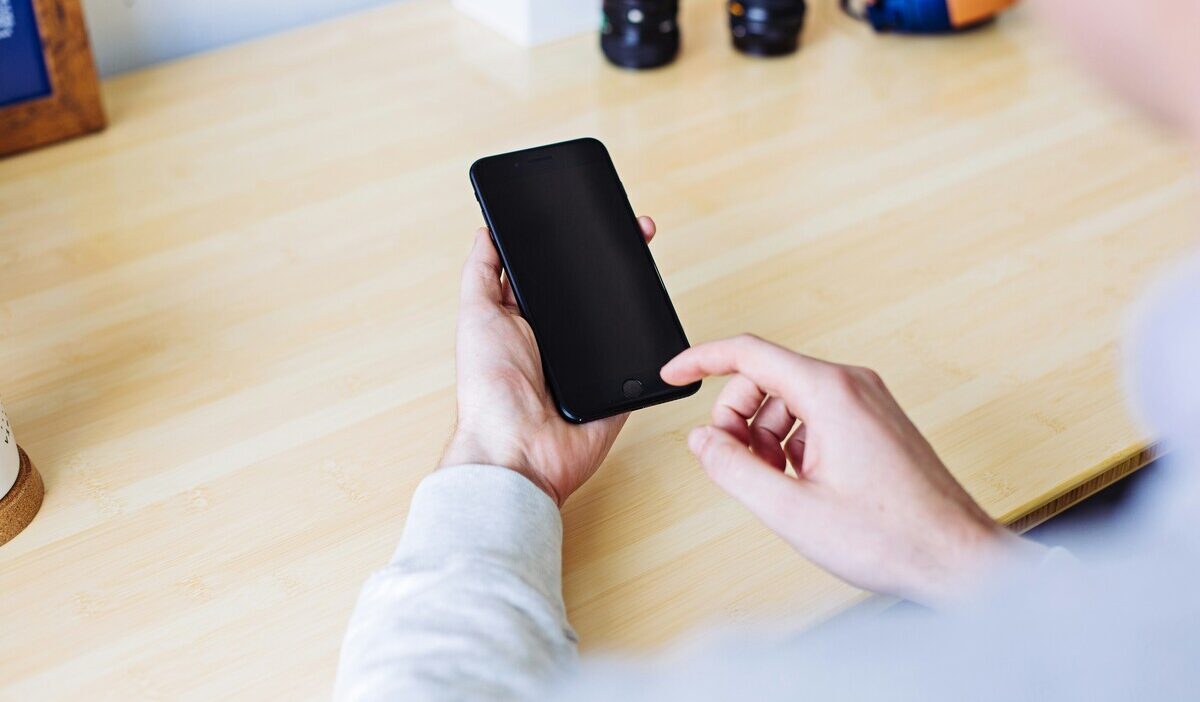
Does iPhone 7 Plus have eSIM? No, and the reason comes down to timing. The iPhone 7 Plus launched two years before Apple added eSIM hardware to any iPhone.
This guide explains exactly why, what that means if you are still using one, and what your options look like if eSIM matters to you.
1. Does iPhone 7 Plus Have eSIM?
No, the iPhone 7 Plus does not support eSIM. It was released in 2016, prior to Apple integrating embedded SIM technology.
The device relies exclusively on a physical nano-SIM card for cellular connectivity. eSIM capability was first introduced by Apple in 2018, with the iPhone XR, iPhone XS, and iPhone XS Max.
2. Can You Add eSIM to an iPhone 7 Plus?
No. eSIM requires a physical chip built into the device at manufacturing.
The iPhone 7 Plus was not built with this chip, so no app, setting, or accessory can add eSIM capability afterward.
The only path to eSIM on an iPhone is upgrading to a model from the iPhone XS onward.
3. Which iPhones Support eSIM?
The iPhone 7 Plus is now roughly a decade old, which affects more than just eSIM access. So, you need to check the list of iPhone generation support eSIM below:
| iPhone Generation | eSIM Support |
| iPhone 7 Plus and earlier | No |
| iPhone XS, XS Max, XR (2018) | Yes, one eSIM plus physical SIM |
| iPhone 11 series | Yes, one eSIM plus physical SIM |
| iPhone 12 series | Yes, one eSIM plus physical SIM |
| iPhone 13 series | Yes, two active eSIMs possible |
| iPhone 14 series (US models) | Yes, eSIM only |
| iPhone 15, 16, 17 series (US models) | Yes, eSIM only |
Any iPhone from the XS generation onward supports eSIM, with iPhone 13 and later offering the most flexibility, including dual active eSIMs.
>>> Read more: Does iPhone 8 Have eSIM? No, Plus Which iPhones Do
4. Considering an Upgrade? You May Qualify for Free
If you are still using an iPhone 7 Plus, eSIM is not the only feature you may be missing out on. If you qualify for government assistance, you may be able to get a free phone through the providers of the Lifeline program instead of paying full price for an upgrade.
What is The Lifeline Program?
The Lifeline program is a federal assistance program. It helps eligible low-income households access phone service at reduced or no cost each month.
Standard households can receive a discount of up to $9.25 per month. Households on Tribal lands qualify for an enhanced discount of up to $34.25 per month.
You may qualify based on income or program enrollment. Your household income must be at or below 135% of the Federal Poverty Guidelines. Or you must be an active participant in Medicaid, SNAP, SSI, Section 8, or Veterans Pension.
IMPORTANT: The government does not subsidize devices. Lifeline covers service costs only. Free or discounted phones are promotional offers from providers. Devices are locked to the provider’s network and are not SIM-free. Availability varies by state, ZIP code, stock, and eligibility.
What benefits can you receive through Lifeline Provider?
The Lifeline program does not handle all things alone. It works with providers to provide support to those in need. And these providers often offer a free device.
Cintex Wireless is one of the trusted Eligible Telecommunication Carriers. It uses these subsidies to offer two options:
- A free or discounted phone with eSIM/SIM Card
- A Bring Your Own Phone (BYOP) plan.
If you choose BYOP, your phone must be carrier-unlocked and compatible with the provider’s network.
UPDATE: Cintex Wireless is officially mering into AirTalk Wireless , another reputable provider. This transition gives customers a stronger network, faster application processing, and access to a larger selection of devices and monthly rewards.
Because the iPhone 7 Plus does not support eSIM, you may want to consider upgrading to a compatible model.
The table below shows eSIM-ready iPhones currently listed through Cintex Wireless for ZIP code 10702.
| iPhone Model | eSIM Support | Price at Cintex* | Promotion |
| iPhone SE 2 | Yes | $73.99 | — |
| iPhone XS | Yes | $129.00 | — |
| iPhone 11 | Yes | $99.99 | Special Deal |
| iPhone 15 | Yes | $514.99 | Daily limit may apply |
Note: Prices shown for ZIP 10702 (Yonkers, NY) as of the time of writing. Availability and pricing vary by ZIP code, inventory, and promotion period. Prices are subject to change without notice.
Limited promotion plan: During limited promotional periods, eligible applicants may find eSIM-ready models, including the iPhone 11, 12, 13, 14, and 15, listed at a significantly reduced price or even at no cost. Promotional pricing is not always available and depends on your ZIP code, current inventory, and the active promotion at the time you apply. If you see a special deal listed when you check eligibility, that offer may only last for a short time.
>>> Read more: Does iPhone 14 Have eSIM? Activation and Dual SIM Guide
5. FAQ
Q1. Why doesn’t the iPhone 7 Plus support eSIM?
The iPhone 7 Plus launched in 2016, two years before Apple introduced eSIM hardware with the iPhone XS, XS Max, and XR in 2018. The device simply does not have the required chip built in, and no software update can add it.
Q2. What SIM card does the iPhone 7 Plus use?
A standard nano-SIM, the same size used across most iPhones since 2012. The tray is located on the right side of the device.
Q3. What is the oldest iPhone that supports eSIM?
The iPhone XS, XS Max, and XR, all released in September 2018, were the first iPhones to include eSIM hardware. Any iPhone from that generation onward supports eSIM.
Q4. Can I use two phone numbers on an iPhone 7 Plus?
Not through any built-in Apple feature. The iPhone 7 Plus has a single nano-SIM slot and no eSIM support, so Dual SIM is not possible on this device.
Conclusion
Does iPhone 7 Plus have eSIM? No. The device was released before Apple introduced eSIM technology, so it relies entirely on a physical nano-SIM card and cannot be upgraded to support eSIM later.
If eSIM compatibility has become important for your carrier or travel needs, upgrading to an iPhone XS or newer is the only solution. Newer models not only support eSIM but also offer additional features such as Dual SIM functionality, improved performance, longer software support, and better connectivity.